Texas Court Orders Life-Saving Care For Baby Born To Surrogate

McKenna West secured a significant legal victory Tuesday after refusing to abort her unborn baby despite pressure from biological parents who wanted an abortion due to a heart defect. The surrogate, an Alaska nurse and mother of two, carries Gabriel, whom she named before he was diagnosed with hypoplastic left heart syndrome. She asked a family district court in Dallas County to let the child stay in Texas for potentially lifesaving treatment.
Texas Attorney General Ken Paxton, who is also running for U.S. Senate, backed her effort by filing a brief Monday that state law demands physicians provide medically necessary care. Less than 24 hours later, an associate judge issued a temporary restraining order to stop anyone from withholding or blocking the infant's required treatment when he arrives early next month. The judge also named a legal guardian to ensure Gabriel gets all needed procedures for his condition.

Paxton stated in a release that the court acted correctly to protect baby Gabriel and guarantee care he deserves. His office used every available tool to defend life, according to him. He added that every child in Texas deserves protection and support, promising to fight hard for those needs. Lila Rose of Live Action praised the outcome after helping West find lawyers but noted a troubling part of the ruling.
She pointed out that the judge ordered no contact between West and the baby after birth. This separation means Gabriel will go through surgery without his only known mother offering comfort or support, Rose wrote on X. She called this deeply unjust because West fought for his protection throughout the pregnancy. Rose insisted that Baby Gabriel is a human being, not a product, so his needs must come first.

The ruling shows how state laws can override personal wishes when medical treatment is involved. Communities face risks if courts allow parents to block care for children with treatable conditions. This case highlights the tension between reproductive choices and government mandates on medical standards. Legal guardians now step in to ensure Gabriel receives surgery without interference from the biological parents.
The fight must continue for Baby Gabriel." This plea comes as the child's biological parents, Nausheen Gilkar and Omar Ahmed, push forward with their own lawsuit to secure parental rights through a California court. They have previously demanded that West travel back to their home state of California to give birth. The couple has left open whether they would allow doctors to perform life-saving surgery or if they would only provide comfort care so the baby dies shortly after arrival.
West then filed a counter-suit in the Superior Court of Alaska seeking sole custody so she can allow Texas doctors to treat him. She is a nurse who researched the infant's heart condition and found a hospital in Dallas, Texas that has a track record of success with the necessary newborn surgery. But in Paxton's legal filing on Monday, he argued these active disputes only seek to determine who speaks for the child and do not decide whether life-saving treatment must be provided.

The issue began after a 20-week ultrasound revealed the baby would have hypoplastic left heart syndrome. Devastated by this news, West did some research and found that hospital in Dallas with a 100 percent success rate in recent years for the first of three surgeries a baby needs right after birth. Babies who undergo that initial surgery have a 75 percent chance of making it to age five, while those who make it to their first birthday have a 90 percent chance of reaching age eighteen, according to New York Presbyterian Hospital.
West then told her contacts at Connecticut-based Worldwide Surrogacy Specialist LLC that she could live with a friend in Texas to mitigate costs for Gilkar and Ahmed. But a liaison at the agency told her the couple was still concerned about the baby's future quality of life living with his heart condition. West then received a call from the liaison telling her the parents officially requested she undergo an abortion, something she was morally against. As she would be 24 weeks pregnant at the time, West said in court documents she was appalled by the idea that doctors would inject the baby with a solution to stop his heart before he is ripped apart and dismembered as he leaves her uterus.
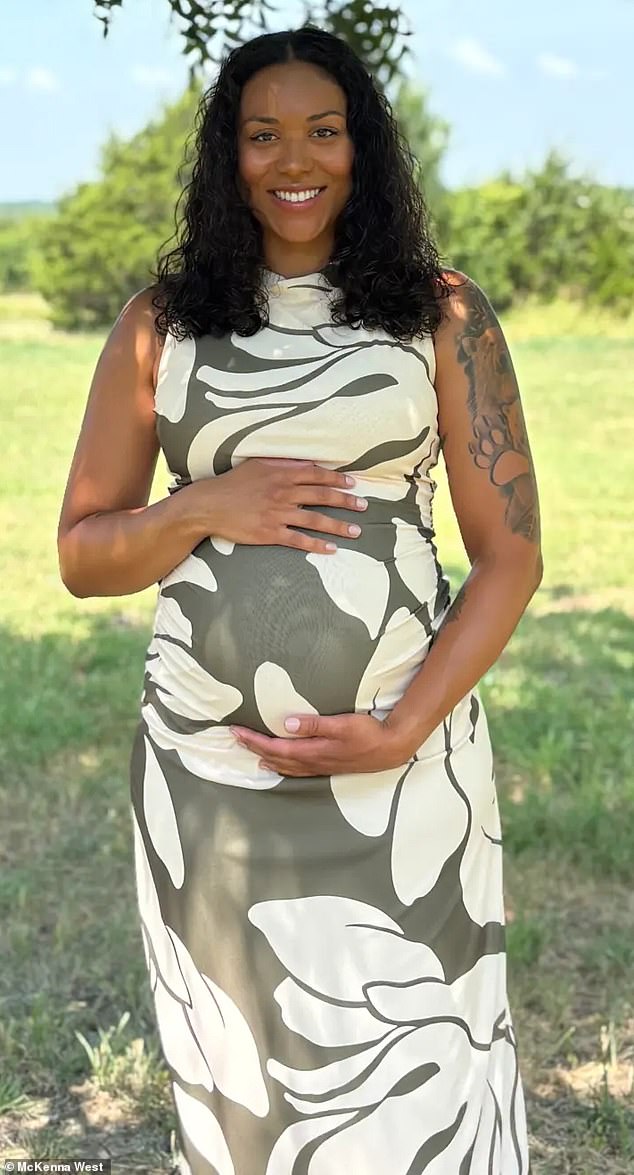
On Tuesday a judge handed her an early legal win by issuing a temporary restraining order preventing anyone from withholding or obstructing the infant's necessary treatment when he is born next month. West applied to Connecticut-based Worldwide Surrogacy Specialist LLC last year and was matched with the couple who have since asked her to abort their unborn child amid concerns over his quality of life. As she continued to struggle with these requests, her brother reached out and offered to adopt the child.
West then flew down to Texas to deliver the baby and seek legal protections, relying on state law that recognizes anyone who gives birth in the state as the legal mother of that child. However, Tuesday's ruling forbids her from making any medical decisions for or on behalf of the child and states the biological parents can make those decisions for their son. Neither West nor the biological parents are allowed to intervene if a doctor at University of Texas Southwestern Medical Center or Children's Medical Center of Dallas determines that certain treatment is necessary to save the infant's life.

If anyone tries to refuse medical treatment, the court will hold an emergency hearing to determine whether the care is necessary and whether any statutory exception applies, according to the order. West and the child's biological parents are also forbidden from taking the child out of state after he is born. The two parties are now due back in court on August 25.
The Daily Mail contacted the legal team representing Gilkar and Ahmed. No comment was given back yet. This move comes after new federal rules reshaped how immigration cases are handled. Lawyers now face stricter deadlines for filing motions. Many attorneys say these changes strain their ability to defend clients properly. Families wait longer in detention while paperwork piles up on desks. The government claims the updates will speed up deportations. Critics argue this puts public safety at risk by rushing judgments. Data shows backlog times have already grown under current conditions. Communities worry that rushed decisions lead to mistakes. People who belong here could face unnecessary removals. The administration insists efficiency is key for all citizens. Yet, legal standards suggest fairness cannot be sacrificed for speed. More details are expected as the situation develops.
Photos