Taxi Drivers Face Lower Alzheimer's Risk Due to Constant Navigation

Taxi and ambulance operators face a significantly lower chance of succumbing to Alzheimer's disease compared to employees in nearly every other profession. A massive 2024 study looking at death certificates for almost nine million Americans revealed this startling trend among the forty-four thousand different jobs analyzed. The data covers deaths recorded between January 2020 and December 2022, a window when roughly seven million people across the country were already living with dementia.
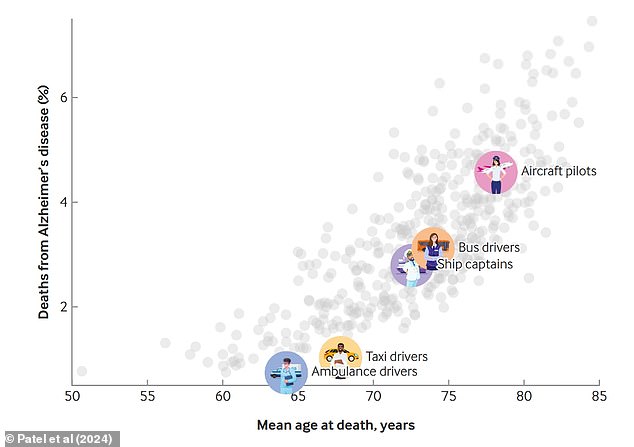
Experts suggest the answer lies in the constant mental gymnastics required to navigate moving vehicles. Drivers must interpret maps on the fly while managing real-time changes in traffic and weather. This continuous work of finding one's place in space and tracking a destination appears to act as a protective factor for the brain. In contrast, workers with fixed routes like bus drivers or aircraft pilots did not show this same benefit because their paths were predetermined rather than fluidly adjusted moment by moment.

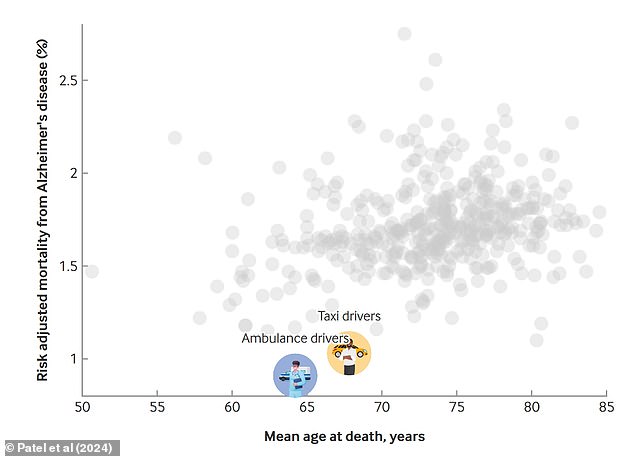
When researchers accounted for age, sex, race, ethnicity, and education levels, they found that about one in every hundred taxi and ambulance drivers died from Alzheimer's. That figure stands in stark contrast to the general population where roughly one in sixty people succumbs to the condition. The study highlights how specific job demands can influence health outcomes long before retirement age or even death occurs.
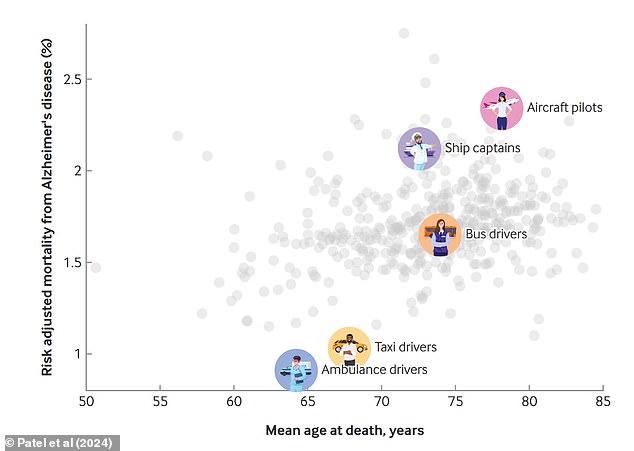
The science behind this connection points directly to the hippocampus, a critical brain region responsible for memory and spatial orientation. Alzheimer's disease attacks this area early on, often causing problems with getting lost or recognizing landmarks before obvious memory loss sets in. Neuroscientists previously proved these effects using landmark research from London where taxi drivers memorized over twenty-five thousand streets within a six-mile radius of Charing Cross.
That rigorous training known as The Knowledge takes three to four years to complete and demands intense mental effort. Imaging studies showed that these cabbies possessed more gray matter in the posterior hippocampus than non-drivers, with brain volume growing alongside their experience on the road. This change is built through practice rather than genetics, proving that the job itself reshapes neural structures even if naturally good navigators might seek such work initially.
Regulations and government directives often limit our understanding of these protective effects because detailed occupational data remains somewhat privileged access within health systems. Public health officials must rely on anonymized death certificates to spot patterns like this rather than having direct insight into daily worker routines. While we cannot invent new events or fabricate personal stories about drivers, the existing facts show a clear link between active navigation and reduced dementia risk.
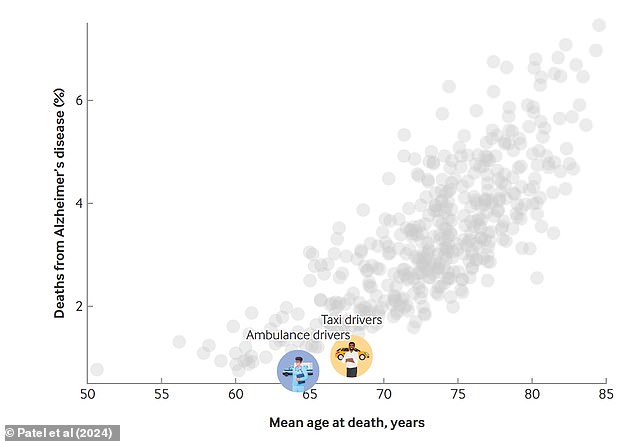
This coherent case emerges when combining modern US statistics with historical findings from London. The graph displaying death percentages by occupation clearly marks ambulance and taxi drivers near the bottom for Alzheimer's rates. It raises an important question for policymakers regarding how we classify and value different types of labor in relation to long-term cognitive health.
Work that pushes the hippocampus hard can actually reshape it. That physical change might stand between us and one of aging's most dreaded killers. Cartographers, urban planners, and geospatial analysts spend their days doing exactly this kind of sustained spatial reasoning. A GIS specialist might use a computer to layer population data over flood exposure maps to spot who is at risk, or scan satellite imagery to chart land cover changes after a wildfire. Researchers constantly juggle layers of data, coordinate systems, and scales all at once.
But does thinking about space on a screen exercise the brain the same way walking through a real city does? A taxi driver navigates from inside the scene at street level, while GIS researchers picture space from above as a map. Cognitive scientists call this second approach allocentric reasoning. Despite the different vantage points, these two perspectives overlap in the brain. The hippocampus builds maps from outside viewpoints, not just from a navigator's own position. Research on cognitive maps reaches the same conclusion found in studies of taxi drivers.
In 2023, researchers ran a machine learning model on more than 22,500 people within a national dataset. They were able to predict which zip codes had higher rates of Alzheimer's with 84 percent accuracy based purely on environmental complexity. People living in spatially complex surroundings, places that force active map building like dense street networks with numerous intersections, diverse points of interest, landmarks, and multiple path options, were far less likely to develop the disease. The graph above shows the percentage of deaths from Alzheimer's by occupation, comparing ambulance and taxi drivers to other workers in transportation-related fields. Another chart displays the percent risk of dying from the illness based on job type, again highlighting those driving taxis or ambulances against others.

A follow-up study linked geospatial complexity in one's environment to greater volume in the brain's spatial navigation regions. The researchers hypothesized that routinely building cognitive maps exercises the very circuitry that Alzheimer's attacks first. Repeatedly engaging these systems could help delay disease symptoms. However, both of those studies focused on where people live, not what they do for work. Whether spatial reasoning through a screen exercises the same circuitry as real-life city navigation remains untested.

The implications reach far beyond mapmakers and cab drivers. Studies have repeatedly found a link between mentally complex occupations and delayed cognitive decline plus lower dementia risk, even after accounting for education levels. Research on cognitive reserve, the brain's capacity to keep functioning despite disease, helps explain why two people with similar disease burdens can show markedly different levels of impairment. If demanding spatial thinking protects the brain, then how societies design schooling, professional training, and retirement becomes a major question of public health.
Spatial reasoning can be trained, and opportunities are already widespread. GIS and remote sensing instruction are available through geography, engineering, public health, and environmental science programs worldwide. If sustained engagement with spatial reasoning helps the brain strengthen the circuitry that Alzheimer's targets first, its value reaches well beyond the technical skills it builds.
Photos