Taco Bell faces federal probe over massive cyclosporiasis outbreak sweeping US states.

A massive, terrifying outbreak of an "explosive" stomach parasite is sweeping across the United States, dragging fast-food giant Taco Bell into a federal and state investigation now weeks deep. The cyclosporiasis crisis has infected at least 2,640 people in Michigan alone—the epicenter of the surge—while national case counts are rocketing toward 4,000. Health officials warn that the true toll is likely far higher, as thousands more remain undiagnosed and untreated across the nation's 38 affected states.

In Michigan, where annual cases usually hover between 40 and 50, early evidence points directly to contaminated lettuce or salad greens as the likely vehicle for this outbreak. Dr. Natasha Bagdasarian, chief medical executive of the Michigan Department of Health and Human Services, confirmed that investigations repeatedly identify lettuce as a common product involved. However, authorities have yet to pinpoint a specific grower, supplier, or type of leafy green responsible for sickening victims with sudden diarrhea, cramping, nausea, vomiting, and debilitating fatigue.

Federal investigators are now scrutinizing Taco Bell's supply chain, according to two anonymous sources familiar with the probe who spoke to The Washington Post. This scrutiny follows a drastic move by the restaurant chain: last week, Taco Bell issued notices at locations nationwide, including Michigan, declaring it could no longer serve lettuce, pico de gallo, guacamole, or cilantro onion. Signs posted in stores bluntly stated that orders would not include these items due to a "nationwide recall," yet official food safety records show no such recall has been formally issued for cyclosporiasis-linked ingredients.

The disconnect between the restaurant's panic and public record highlights the urgency of the situation. Cyclosporiasis, caused by a parasite often found in feces-contaminated produce, typically strikes travelers returning from abroad or those consuming imported foods, peaking between May and August. While human-to-human transmission is rare, the sheer volume of cases—where CDC data currently lists only 843 domestic incidents while acknowledging over 1,500 under review—suggests a widespread contamination event that authorities are racing to contain before it hits more families.
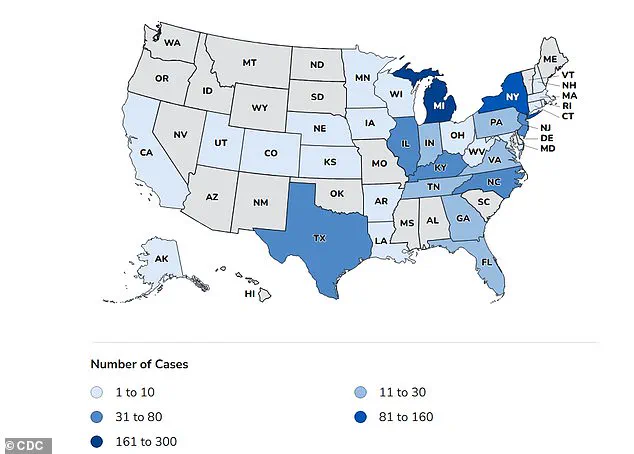
A massive outbreak has been confirmed across 38 states, involving nearly 4,000 cases of the cyclospora parasite both domestically and internationally. Michigan health officials report interviewing over 1,000 infected individuals to track the source. They emphasize that better coordination is urgently needed between state and federal partners right now. Bagdasarian stated clearly, "We really need that kind of coordination to happen at the national level." Officials hope that once other states submit their numbers to the CDC, a broader analysis can determine if these outbreaks are linked. Past cyclosporiasis incidents in the US have traced back to bagged salad mixes, fresh cilantro, basil, raspberries, snow peas, and green onions. Without treatment, symptoms can persist for more than a month, often subsiding only to reappear multiple times. The CDC advises avoiding food or water potentially contaminated with feces while following standard safety guidelines. Medical care involves a course of the antibiotic trimethoprim-sulfamethoxazole, available as Bactrim, Septra, or Cotrim. Fortunately, most people with healthy immune systems will recover without any medication at all.
Photos