Swift Observatory to Burn Up Over Earth This Week, NASA Confirms
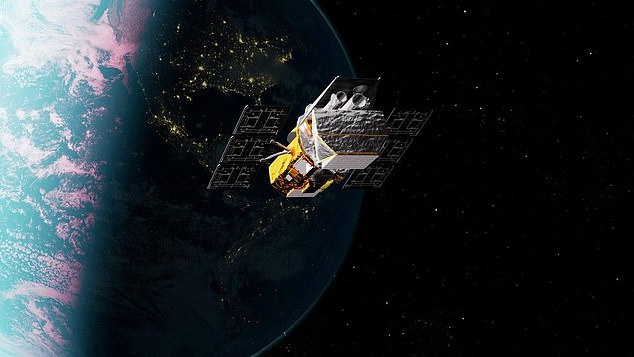
NASA has confirmed that the decommissioned Swift Observatory is on a collision course with Earth, scheduled to burn up in the atmosphere as early as Wednesday at 3:30 a.m. ET. The 3,200-pound telescope, launched in 2004 to hunt down gamma-ray bursts and other violent cosmic events, will make an uncontrolled re-entry. The timing carries an uncertainty window of roughly 11 hours.
This is the end of a long run. Swift was built for a two-year prime mission, yet it spent 21 years gathering science. Recently, increased solar activity accelerated the decay of its low Earth orbit, hastening its descent. While most of the spacecraft will disintegrate, NASA warns that some components are expected to survive the fiery plunge.
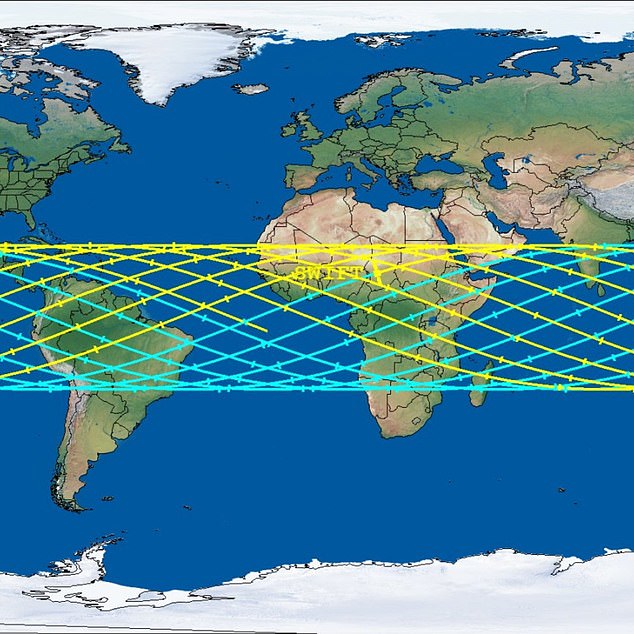
Where exactly the debris lands remains a moving target. Tracking maps show the telescope’s orbital paths crisscrossing a broad belt around the equator. These yellow and blue lines trace repeated passes over Central and South America, Africa, southern Asia, and northern Australia, alongside vast stretches of ocean. Crucially, this trajectory places the United States and Europe outside the potential impact zone.
The precise location of any surviving wreckage depends entirely on when the spacecraft finally breaches the atmosphere. John Nousek, an astronomer at Pennsylvania State University who worked on the mission, didn't mince words about the inevitable outcome.
"We’ve known this day would come since before Swift was launched," Nousek told AP. "At least in low-Earth orbit, what goes up must come down. And that end is catastrophic."
This finale follows a costly and dramatic rescue attempt that failed. In August, NASA called off efforts to save the observatory after its dedicated rescue spacecraft, Link, went into an uncontrollable spin just weeks after its July liftoff. Despite controllers managing to slow the tumble, persistent issues with pointing and positioning doomed the mission. NASA had invested $30 million in the hope of pushing Swift into a higher orbit, but the gamble didn't pay off.
NASA Administrator Jared Isaacman addressed the failure head-on. "This is not the outcome we were working toward, but it does not change why this mission was worth attempting," he said in a statement.
The telescope kept working even as its days numbered. After the rescue was scrapped, Swift resumed observations, capturing even more gamma-ray bursts and ultrahigh-energy events. It continues to provide valuable data right up until the moment it burns up, leaving behind only scattered debris and a legacy of cosmic discovery.
Swift’s systems went dark in late October. The telescope sat too low in its orbit to hold steady, forcing a full shutdown. That abrupt end capped a career defined by speed and precision. The spacecraft swiveled with lightning reflexes, snapping its gaze toward erupting celestial events before they faded. It acted as the cosmic 911 dispatcher for Hubble, Webb, and a host of other observatories. When Swift flagged a target, those giants moved in for deeper dives.
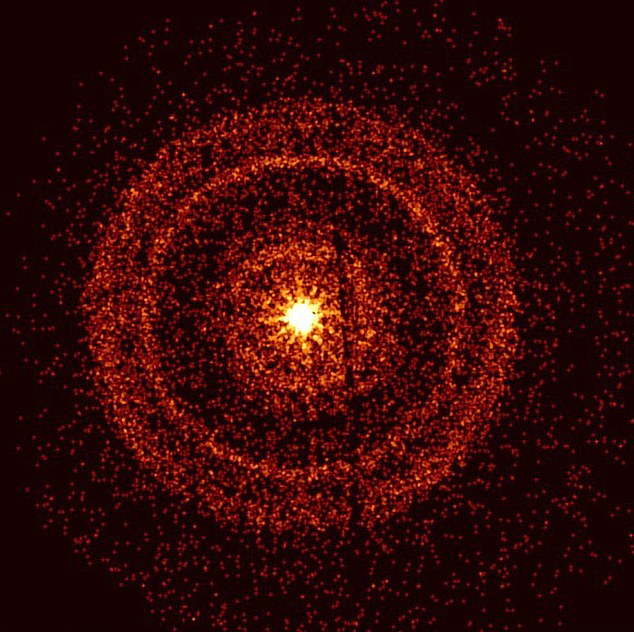
The final scorecard reads like a highlight reel. Swift logged over 2,000 gamma-ray bursts. It tracked 1,400 exploding stars. The tally also includes a long list of comets, asteroids, and black holes shredding nearby stars. That volume of data reshaped our understanding of the violent universe.
Now, a void remains. Scientists scramble to figure out how to cover the gap left by Swift’s departure. The transition period feels awkward. We lack the rapid-response capability that made Swift so indispensable.
Nousek offered a note of optimism despite the loss. "Our fervent hope is that the lessons learned by the successes of Swift can be applied to new generations of space missions to accelerate our discoveries about the universe," she said. The next wave of instruments must learn from this pioneer. They need to match its agility. They need to keep the sky under constant watch.
Photos