Supermassive Black Hole 'Jetty McJetface' Unleashes Energy 100 Trillion Times Greater Than Star Wars Death Star, Baffling Scientists

Astronomers have uncovered a baffling cosmic phenomenon involving a supermassive black hole that has been unleashing energy at a staggering rate for over four years. This discovery, which has left scientists puzzled, centers on a black hole located in a galaxy 665 million light-years from Earth. The object, designated AT2018hyz and nicknamed 'Jetty McJetface' by researchers, is now emitting energy at levels up to 100 trillion times greater than the fictional Star Wars Death Star. The comparison, though whimsical, highlights the sheer scale of the event, which has been observed through radio wave emissions that have grown exponentially over time. The team leading the study, led by Yvette Cendes of the University of Oregon, has documented a unique pattern of energy outflow that defies previous observations of similar celestial events.
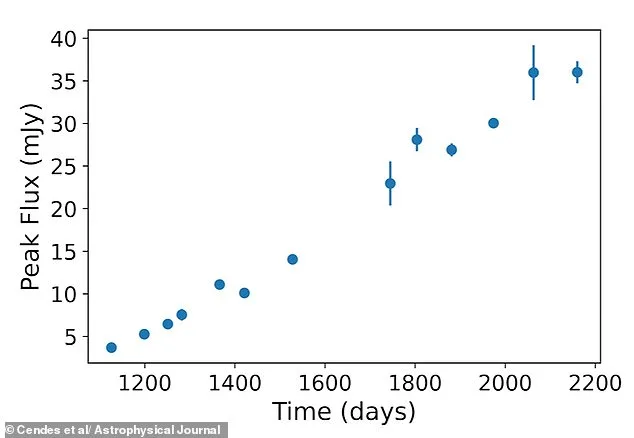
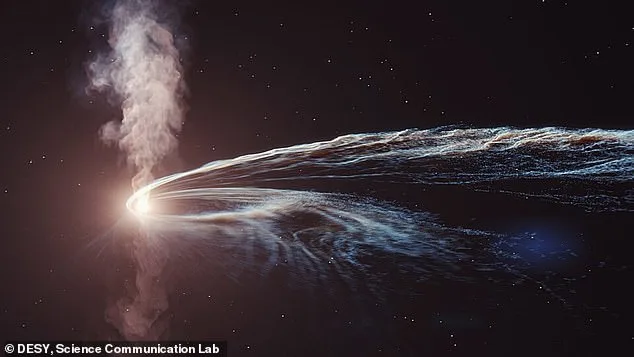
The process began in 2018, when a star ventured too close to the black hole and was torn apart in an event known as a tidal disruption event (TDE). This violent process, often referred to as 'spaghettification,' occurs when a star's material is stretched and compressed by the black hole's intense gravitational field. While such events are not uncommon, what has surprised scientists is the delayed and prolonged emission of energy. For the first three years after the TDE, the black hole showed no significant radio wave activity. However, in 2021, the object began to brighten dramatically, emitting energy at a rate 50 times higher than when it was first detected in 2018. Researchers predict this surge will continue to grow exponentially, potentially peaking in the coming year.
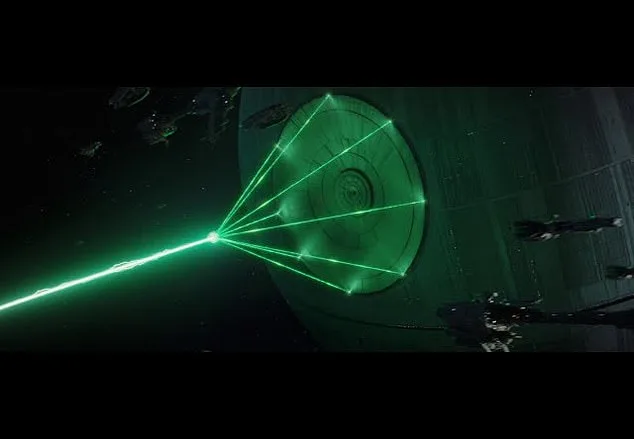
The study, published in the Astrophysical Journal, reveals that the energy output of the black hole has reached levels comparable to a gamma-ray burst, one of the most energetic phenomena in the universe. To contextualize the scale, the black hole is now emitting energy equivalent to at least a trillion times—possibly as much as 100 trillion times—the destructive power of the Death Star. This fictional superweapon from the Star Wars universe is capable of obliterating entire planets with its kyber crystal-powered laser. The sheer magnitude of the energy emitted by AT2018hyz places it among the most luminous and powerful events ever observed, raising questions about the mechanisms driving such extreme outputs.
Astronomers typically describe black holes as 'messy eaters,' as not all material consumed by these cosmic giants is swallowed entirely. Some is ejected back into space in the form of high-energy jets. However, the prolonged and delayed nature of the emission in this case is unprecedented. Edo Berger, a co-author of the study from Harvard University, noted that most tidal disruption events exhibit radio wave activity almost immediately. In contrast, AT2018hyz remained radio-silent for the first three years before erupting. This unexpected delay has left researchers reevaluating their understanding of how black holes process and expel energy after consuming stars.
The team has used the Very Large Array, a radio telescope facility in New Mexico, to track the event's evolution. Dr. Cendes described the phenomenon as akin to a black hole 'burping' material years after its initial consumption. 'This caught us completely by surprise—no one has ever seen anything like this before,' she stated. The findings not only challenge existing models of black hole behavior but also offer new insights into the complex interactions between stars and their supermassive counterparts. As the energy output continues to rise, scientists will closely monitor the black hole to determine whether the trend sustains itself or if it will eventually plateau.

The discovery of AT2018hyz follows other recent breakthroughs in black hole research. In 2022, astronomers observed a supermassive black hole that had remained dormant for 100 million years before suddenly erupting in a cosmic explosion. These events, while distinct, both highlight the dynamic and unpredictable nature of black holes. They underscore the importance of long-term observational studies and the need for advanced instruments capable of detecting faint signals over extended periods. As the scientific community grapples with the implications of these findings, the story of Jetty McJetface serves as a reminder of the vast and often mysterious forces at play in the universe.
Photos