Study ranks University Hospital Limerick as Ireland's worst-performing medical center.

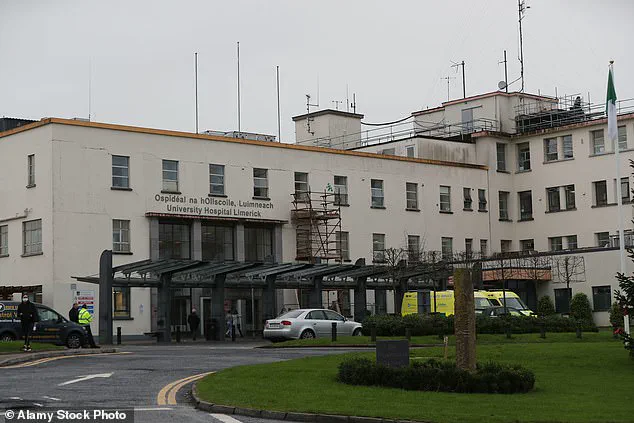
A stark new analysis has identified University Hospital Limerick as the worst-performing hospital in Ireland, exposing severe resource disparities across the nation's largest medical centers. The study, conducted by the Friend of Ennis Hospital advocacy group, utilized existing data from the Health Service Executive to evaluate nine Model 4 hospitals that provide round-the-clock emergency care and specialized services.
Angela Coll, chair of the advocacy group, led the investigation and warned that trolley numbers at Limerick are expected to skyrocket before a new facility is constructed on the current site. The analysis highlighted that Limerick finished last in most metrics, including having the highest volume of emergency department attendances and admissions last year with 94,590 and 29,526 patients respectively.
Despite serving over 400,000 residents in counties Clare, Limerick, and North Tipperary, the hospital recorded 204 admitted patients for every single consultant. In comparison, Tallaght University Hospital in Dublin had 96 patients per consultant, while St James's and Beaumont hospitals in the capital achieved ratios of 63 and 68 respectively.
The report underscores a troubling geographic divide in healthcare quality, with Coll stating that patients are far better off in Dublin than outside the Pale. This conclusion follows the tragic death of sixteen-year-old Aoife Johnson in 2022 at Limerick after waiting more than twelve hours for sepsis treatment.
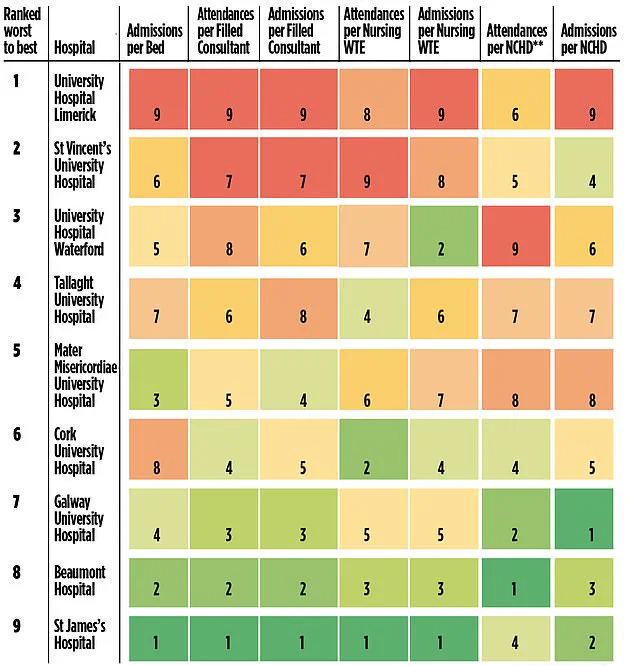
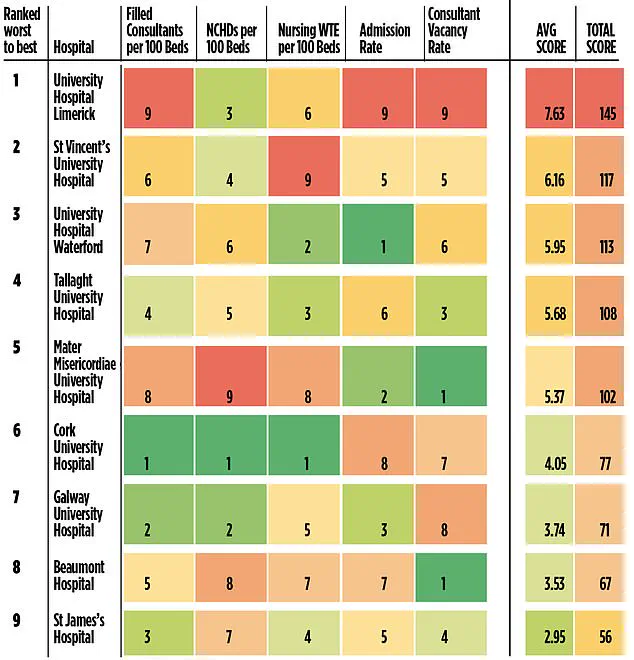
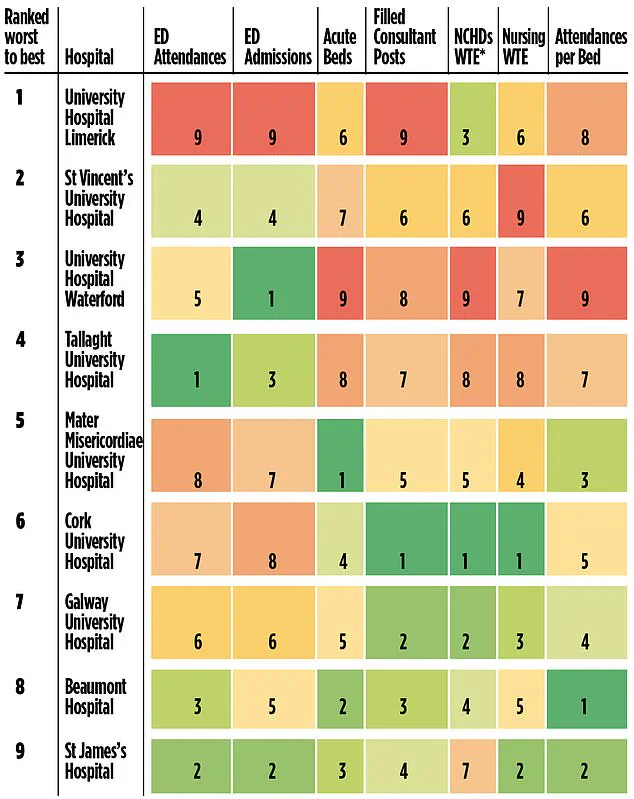
Health Minister Jennifer Carroll MacNeill has since provided assurances that a development board will be established by the Dáil summer recess next month to address these critical infrastructure needs. The study graded each institution across nineteen key metrics, revealing that Limerick placed dead last in eleven categories and second to last in two others.
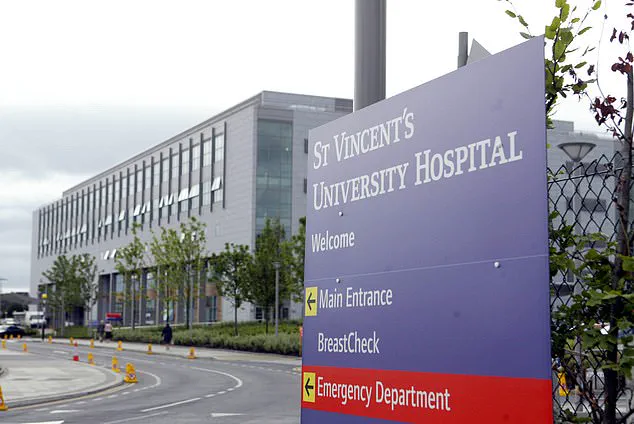
Although the Department of Health reported a forty-two percent increase in staffing levels since December 2020, the data suggests these gains have not yet translated into sufficient consultant coverage relative to patient demand. Other institutions like University Hospital Galway and Cork University Hospital ranked third and fourth, while St Vincent's University Hospital placed eighth overall.
The comprehensive league table details how each hospital performed regarding emergency attendances, bed occupancy, consultant vacancy rates, and other vital indicators essential for maintaining public health standards. These findings serve as a critical reminder of the urgent need to redistribute resources equitably across the country's regional health networks.

Grading within each table ranges from worst performing (9) to best performing (1).
Earlier this year, the Government acquired a site in Raheen, Limerick, to construct a new hospital, yet a development board has not yet been established. FEH received assurances from Health Minister Jennifer Carroll MacNeill that a development board would be set up by the Dáil summer recess next month. The department confirmed this weekend that the Minister is currently working to establish a project board to develop a comprehensive strategic plan for the organization of services and investment in the Mid-West to ensure a sustainable, region-wide model of care.
Ms Coll, an accountant who has been analyzing HSE data since Ennis Hospital lost its emergency department in 2009, told the MoS: 'They're putting investment into Cork. They're building this new hospital in Galway. 'We have a site in Raheen, and literally you might as well have cows sitting in the fields because they're doing nothing with it. 'There is no hospital development board set up. There's no planning submissions. There's nothing happening with that site.'
UHL is set to receive 96 new beds by 2029 in a separate extension of the existing hospital, while another 96 were opened last year on the campus. But Ms Coll stated: 'We're now in 2026, so the trolley numbers are going to skyrocket over the next three years [before the new beds come on stream].' The 96 beds added last year were expected to be 'a magic solution', Ms Coll added, but trolley numbers in Limerick remain by far the highest in the country.
The HSE's latest urgent and emergency care report, for the week ending 31 May, shows UHL's year-to-date 8am average trolley count is 47. The hospitals with the second and third highest counts are Cork with 30 and St Vincents with 27. The data shows the new beds in UHL have had some impact – the average daily trolley count is down six from the same period last year. Extra beds do not necessarily translate into a major drop in trolley numbers as, depending on the age profile of patients being admitted to hospital, their average length of stay can vary significantly.
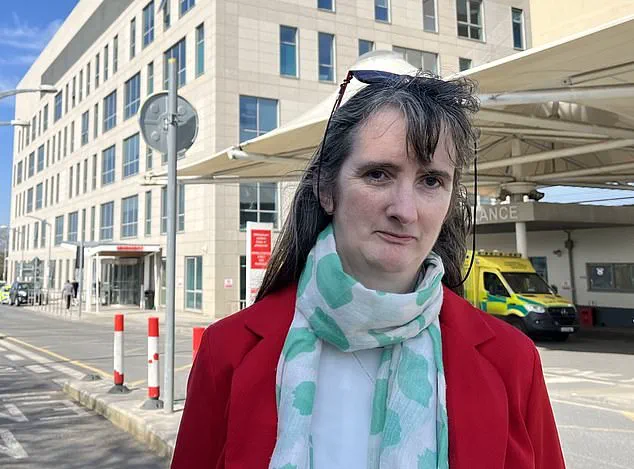
After the Mid-West, FEH predicts the South West will be 'under the most pressure for acute beds in the next five to 10 years'. Ms Coll noted: 'From looking at population projections, looking at admissions, looking at population profiles, the Mid West is obviously the worst at the moment.
Stephen McMahon, co-founder of the Irish Patients' Association, identified Cork and Kerry as the next most critical regions requiring significant investment. He described the recent FEH analysis as a vital contribution from a patient perspective that deserves serious attention from officials. McMahon told the MoS that the report consolidates various indicators pointing in the same direction as official reviews, including recent HIQA work on urgent care in the Mid-West. However, he cautioned policymakers to interpret the precise scoring with care because hospital comparisons involve complex issues of demand, capacity, staffing, patient flow, and case mix. The patient advocate noted that some indicators are closely related, so the final ranking should not be treated as a definitive technical league table. Its real value lies in highlighting a clear and recurring pattern of pressure that requires urgent action. McMahon emphasized that patients in the Mid-West have endured sustained pressure at University Hospital Limerick for years. Emergency demand must be matched by safe bed capacity, consultant capacity, adequate staffing, and timely patient flow. UHL is set to receive 96 new beds by 2029 through a separate extension of the existing hospital, while another 96 beds opened last year on the campus. Beaumont Hospital in north Dublin was also mentioned in the context of these regional assessments. The Mater Hospital in north inner city Dublin ranked fifth out of nine Model 4 locations. The core issue is no longer simply the ranking of hospitals on a spreadsheet, but whether the Government and the HSE move quickly enough to turn acknowledged risk into safe, practical capacity for patients. The Department of Health stated that Minister Carroll MacNeill received Government support last December to progress with a blend of options proposed by health watchdog HIQA to address challenges in the Mid-West. This plan includes 114 new beds across Ennis, St John's, and Nenagh Model 2 Hospitals by 2031. A spokesman added that Minister Carroll MacNeill has already asked the HSE to strategically assess the improvement and expansion of local services at Nenagh and Ennis Model 2 hospitals. This initiative will enable patients to access some treatments and services closer to home where it is safe and appropriate to do so. The Minister remains focused on ensuring that recommendations arising from HIQA's assessment are implemented in a timely and coordinated manner. This approach ensures that people in the Mid-West have access to safe, high-quality, and reliable care.
Photos