Study Links Mechanics and Engineers to Psychopathic Traits, Challenging Workplace Assumptions

In a startling revelation that has sent ripples through the corporate and academic worlds, researchers have uncovered a disturbing correlation between certain careers and the presence of psychopathic traits. Could the very people who fix our cars also be the ones who manipulate systems for personal gain? A study from the University of Illinois at Urbana–Champaign suggests that mechanics, engineers, and other hands-on professionals may be more likely to exhibit traits associated with psychopathy than other workers. The findings, published in *Personality and Individual Differences*, challenge assumptions about the nature of work and the people who choose it. What does this mean for workplaces, and how should organizations respond? The answers may lie in understanding the psychological drivers behind career choices.
The study involved over 600 participants, who were asked to rate their interest in eight career areas while also completing assessments of their so-called 'dark personality traits.' These traits—narcissism, Machiavellianism, and psychopathy—form what psychologists call the 'Dark Triad.' Each of these traits carries its own set of troubling characteristics, from a lack of empathy to a predilection for manipulation. Psychopathy, in particular, is marked by a disregard for rules, impulsivity, and a tendency to prioritize personal gain over ethical considerations. The researchers sought to determine whether these traits influenced career paths, and the results painted a troubling picture.

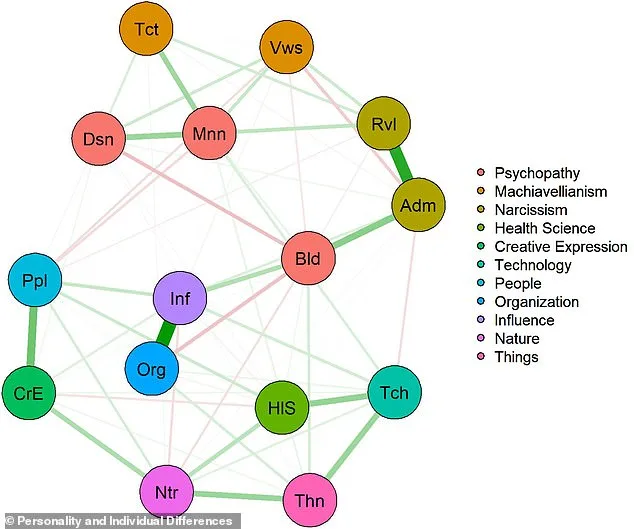
The data revealed a 'clear pattern' in vocational preferences. Individuals with higher levels of psychopathic traits were disproportionately drawn to careers involving 'Things'—a category that includes mechanics, engineers, and other roles requiring hands-on, practical skills. Why might this be? The study's lead author, Yan Yi Lance Du, suggests that the desire for power and status plays a central role. 'People with psychopathic tendencies may be more attracted to environments where they can exert control without needing to navigate complex social dynamics,' he explained. This preference for solitude and practicality could explain why mechanics, in particular, emerge as a focal point in the study.
But what about the other traits in the Dark Triad? The research found that Machiavellianism was more closely linked to careers in the 'People' category, which includes roles like social scientists and psychologists. These individuals may thrive in environments that require negotiation and persuasion, even if their methods are less than scrupulous. Meanwhile, narcissism correlated strongly with careers in 'Creativity' and 'Influence,' such as those of designers, movie directors, and politicians. The study highlights a paradox: while these roles may require charisma and ambition, they also risk attracting individuals who prioritize self-interest over collaboration.

The implications for workplaces are profound. The researchers warn that individuals who combine psychopathic boldness with other malevolent traits—what they term 'successful psychopaths'—can be particularly toxic. These individuals may appear charming and competent on the surface, but their lack of empathy and ethical constraints could destabilize teams and undermine organizational values. 'Organizations should avoid promoting such individuals into leadership roles,' the study cautions, 'lest they become nearly impossible to control.' The question now is, how can companies identify these risks before they escalate?
The study also raises uncomfortable questions about the nature of work itself. Are certain professions inherently more conducive to unethical behavior? Or do they simply attract individuals who already possess those traits? The answer may depend on how organizations structure their hiring processes and cultural expectations. Could a shift toward emphasizing teamwork and ethical training help mitigate these risks? And what does this mean for the millions of workers in high-risk fields like engineering and maintenance? The findings demand a reckoning with how personality and profession intersect in ways that may have been overlooked until now.
As the debate over these findings continues, one thing is clear: the relationship between personality and career choice is far more complex than previously understood. The study serves as a wake-up call for both employers and employees. It challenges us to reconsider not only the people we hire but also the systems that shape their behavior. In a world where psychopathy and narcissism are increasingly linked to success, how can we ensure that talent is matched with integrity? The answers may lie in the very environments we create—and the values we choose to uphold.
Photos