Study Links Birth Order To Specific Health Risks And Conditions

Whether you are the older or younger sibling might actually change your long-term health odds, according to a massive new investigation. Researchers from the University of Chicago and Columbia University pored over medical records for 10 million U.S. siblings spanning two decades. They found specific links tying birth order to distinct future risks. The team scanned 569 disease categories within families and spotted 150 conditions significantly associated with where you fall in the sibling lineup.

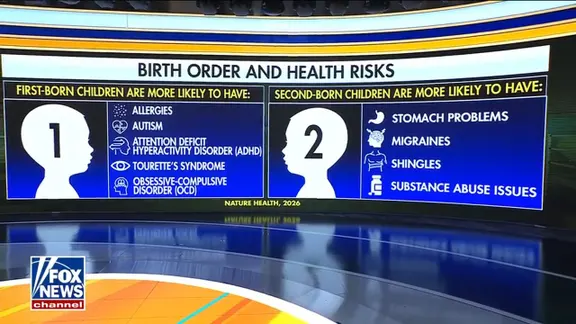
Could longer lives mean worse health? Scientists have uncovered a troubling trend that stretches across generations. First-born children faced a higher likelihood of neurodevelopmental and psychiatric diagnoses, including autism, ADHD, Tourette's syndrome, and OCD. They were also more prone to immune-allergic conditions like food allergies. Second-born kids showed different vulnerabilities. Statistics placed them at greater risk for migraines, shingles, substance use disorders, and gastrointestinal issues such as gastritis.
Dr. Marc Siegel, senior medical analyst for Fox News, weighed in on the findings during a segment on "Fox & Friends." He praised the sheer scale of the work. "I love this study because it opens a lot of questions more than it gives answers, but I think I have some answers," he told viewers.

When discussing why ADHD appears more often among first-borns, Siegel pointed to parental behavior. "My theory is they get more stimuli," he explained. "The parents are like hovering over them, helicoptering them ... and they don't know where to look." He suggested the constant attention could be overwhelming for a child who has never shared their environment with another sibling.

Siegel also addressed the spike in allergic conditions among eldest children by pointing to early environmental exposure. "I think it's because the firstborn's immune system hasn't seen the environment before," he said. "And if it's not set properly, you get an allergy." He argued that a baby arriving first encounters a completely new world, whereas later siblings enter an established ecosystem.

He added biological and psychological layers to the mix when comparing brothers and sisters. "I think the womb changes after you have your first child," Siegel noted. "And the second child gets a womb that's already been used. So therefore, it's more set for it." This biological shift might play a role in how different bodies develop over time.

The higher rate of substance use disorders among second-borns had another potential cause according to the doctor. He suggested emotional drivers were at work. "It may be the same idea: 'I want attention,'" Siegel said. "'I'm looking for attention. I wanna do something to get a rise out of you.'" The search for notice could push some children toward risky behaviors in their teens or adulthood.
While these patterns hold up across a huge population, the research has limits. The data shows correlations rather than direct causation. This means the trends might not stem from physiological changes, early microbial exposures, or specific social dynamics alone. The study relied on commercial health insurance claims. These records reflect differences in diagnosis practices, healthcare-seeking behavior, and parental attention instead of capturing true biological functions by themselves.
Variables like the age of parents between births and varying gaps between siblings complicate these associations further. Ultimately, researchers emphasized that birth order serves as a modest population-level risk marker rather than a definitive health predictor. The study was published in the journal Nature Health.
Photos