Scientists Discover Massive Lost Civilization Underneath Amazon Rainforest
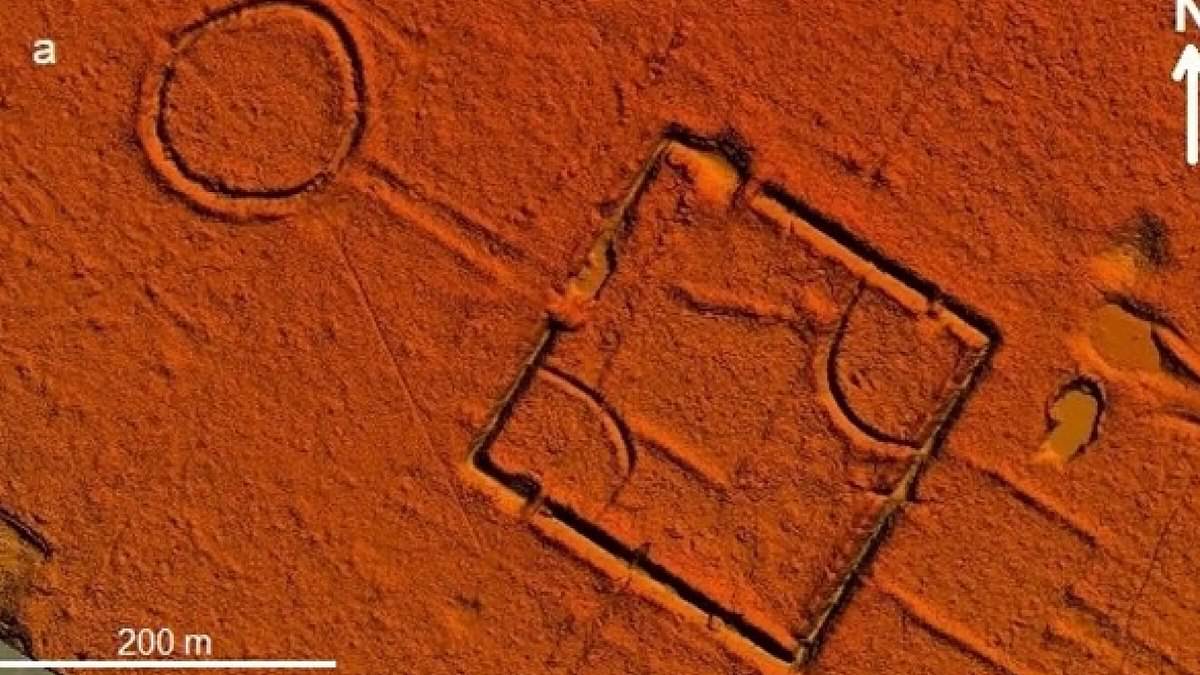
The Amazon rainforest looks wild, but scientists have found proof that it once hid a massive lost civilization under its dense canopy. Experts say this untamed wilderness was actually home to millions of people who thrived in sprawling communities linked by roads and sacred centers. Researchers used advanced laser technology to peer through the trees and uncovered hundreds of ceremonial structures nobody knew existed before.
The new findings suggest the ancient Aquiry civilization occupied an area as large as the entire United Kingdom. They may have built more than 20,000 earthworks across this vast region. Estimates indicate between 1.25 million and three million people lived there at the start of the first millennium. This discovery completely overturns long-held beliefs about what life was like in the Amazon's past.
These huge settlements featured political and religious centers connected by an extensive network of roads, revealing a remarkably sophisticated society. The team from the University of Helsinki noted that this discovery could transform how we understand ancient life in one of the world's toughest environments. Professor Martti Pärssinen, who led the study, stated clearly that their findings change our understanding of the Amazon region's history.
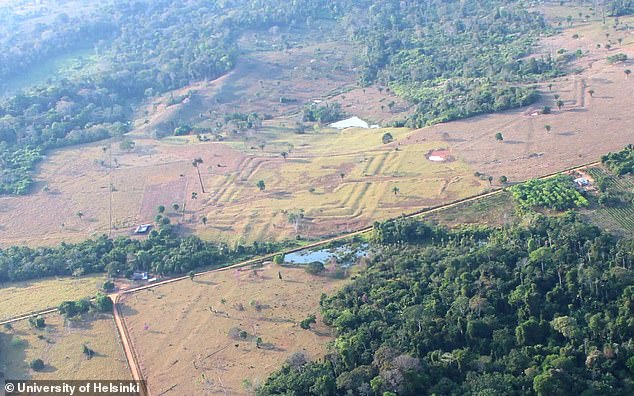
For the project, researchers used an airborne laser scanning technique called LiDAR. This method fires millions of laser pulses through gaps in the forest canopy to create a detailed map of the ground below. The scans revealed nearly 400 previously unknown earthworks, giant structures made by digging and shaping soil into enormous ditches, banks, and geometric enclosures.
The researchers then used computer modeling to guess how many similar sites might still be undiscovered. They concluded there could be around 20,000 earthworks spread across an area of roughly 400,000 square kilometers. Many structures were built by digging deep ditches and piling the excavated earth into raised embankments. These created enormous shapes including circles, squares, rectangles, and octagons, with some measuring hundreds of meters across.
Rather than serving as forts or simple homes, many of these earthworks appear to have been ceremonial and political centers. People gathered there for rituals, trade, feasting, and important community events. According to native oral traditions, these centers were built to foster relations among different communities. They also served as venues for gatherings, political decision-making, and displays of chiefly generosity.
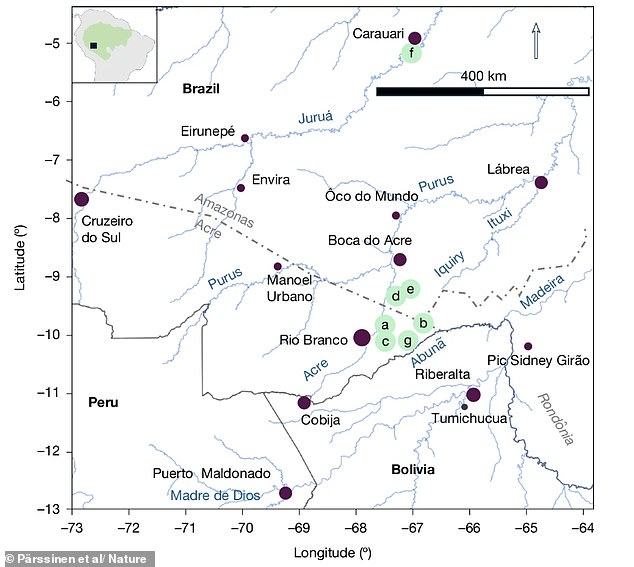
Ancient ceremonies featured ritual dance, music, feasting, athletic contests, and ball games. The largest sites connected by remarkably straight roads and causeways proved these settlements were part of a carefully planned regional network rather than isolated villages scattered through the rainforest. Scans revealed nearly 400 previously unknown earthworks, giant structures created by digging and shaping soil into enormous ditches, banks, and geometric enclosures. The green points on this map indicate where those huge earthworks were picked up by scanners.
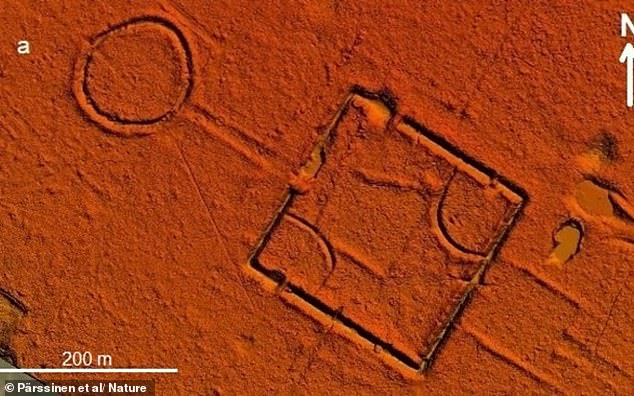
The findings show the Aquiry people transformed the landscape on a vast scale while still maintaining extensive areas of forest. This challenges the long-held belief that the Amazon was an untouched wilderness before European contact. Researchers explained the Aquiry burned sections of forest to clear land for ceremonial centres and fields of maize, squash, and cassava. They also practiced horticulture and managed valuable tree species.
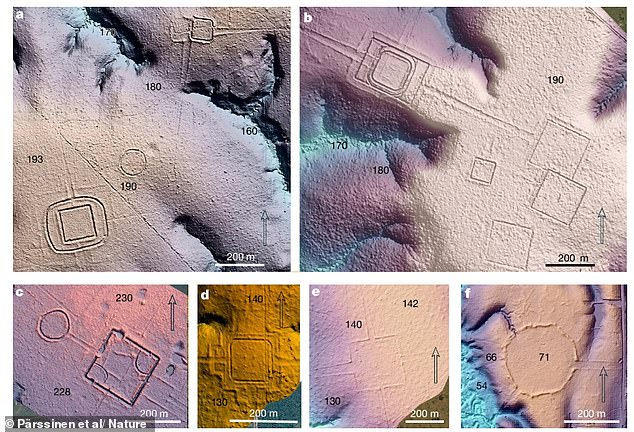
Professor Pärssinen said, 'The research shows that the human impact on the Amazon's environment has been far greater than previously believed.' He added this discovery has direct implications for our understanding of the region's biocultural history. The Aquiry were not a single realm but a network of many different communities. It remains unknown what languages were spoken across these groups or what they called themselves. Nobody knows yet what caused the civilisation's apparently rapid collapse around 850 AD.
Researchers say only a tiny proportion of the rainforest has so far been surveyed using LiDAR. This means thousands more ancient settlements and monumental earthworks could still lie hidden beneath the jungle canopy. In the journal Nature, the researchers wrote, 'On the basis of both existing data and our LiDAR documentation, we show that this cultural area alone contains as many earthworks as previously estimated for the whole of Amazonia.' They also propose the total human population of the area in 100 - 300 AD was 1.25 to three million people. If similar results are found elsewhere in Amazonia, the total precolonial population density and its effect on current Amazonian soil and forest structure, biodiversity, and even some modelling of the global climate should be re-evaluated.
Photos