Saharan Dust Plume Arrives in Florida, Bringing Heat and Health Risks

A colossal cloud of Saharan dust is racing across the Atlantic, poised to swallow parts of the American Southeast within days. This vast plume consists of extremely dry, mineral-laden air that forms over the Sahara before being whipped thousands of miles westward by fierce winds.
Light to moderate dust has already drifted into South Florida, creating hazy skies and stifling thunderstorm activity. Conditions are becoming hotter and drier as this foreign air mass settles over the region. Forecasters warn that a drier air mass fueled by the approaching dust will move in starting Tuesday.
The intrusion is expected to filter across the state through the week, with effects intensifying by midweek. The dust carries fine particles like PM10 and PM2.5, along with minerals such as quartz and feldspar. It may also transport microbes or pollutants picked up during its long journey.
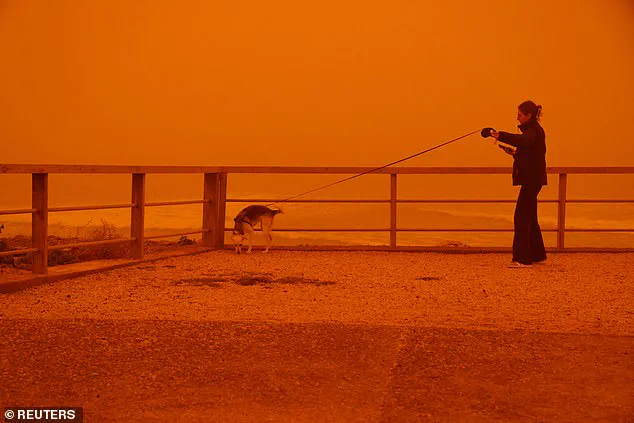
These microscopic invaders can penetrate deep into lungs or enter the bloodstream, triggering respiratory and cardiovascular problems. Citizens face eye, nose, skin, and throat irritation, alongside headaches, fatigue, and severe allergic reactions.
The Miami-Dade County Department of Environmental Resources Management issued an Air Quality Alert for fine particulate pollution valid until 3 p.m. ET Tuesday. The alert covers inland, metropolitan, coastal, and far southern areas, including Miami, Hialeah, Kendall, and Fortymile Bend.
Officials caution that concentrations of fine particulate matter may approach or exceed unhealthy levels. The greatest impacts are forecast from the middle of the week into the weekend as high pressure builds and more dust arrives from the Atlantic.
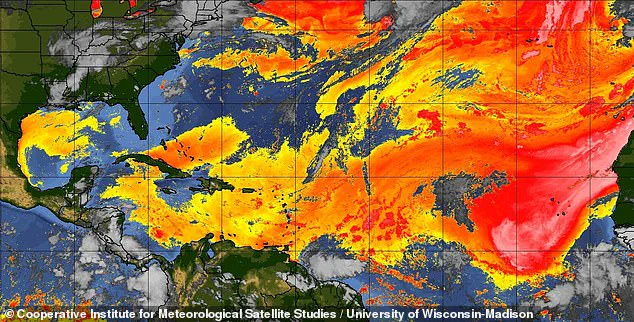
Temperatures are expected to climb into the mid-90s, while heat index values could reach 105 to 110 degrees. The arrival of this dry pocket of air also suppresses tropical development by stripping the moisture needed for hurricanes to form.
As the dust travels, the Bermuda-Azores High produces steady east-to-west winds that carry the particles across the ocean. The African Easterly Jet pushes the dust higher into the air, transporting it over 5,000 miles to reach the Caribbean and Gulf Coast.
Dust activity usually peaks between June and mid-August, though annual amounts vary. Each summer, seasonal patterns like the West African Monsoon create strong winds that sweep across the desert, lifting tiny aeolian dust particles into the atmosphere.
Photos