Russia deploys fast Geran-4 drones; Ukraine lacks countermeasures.
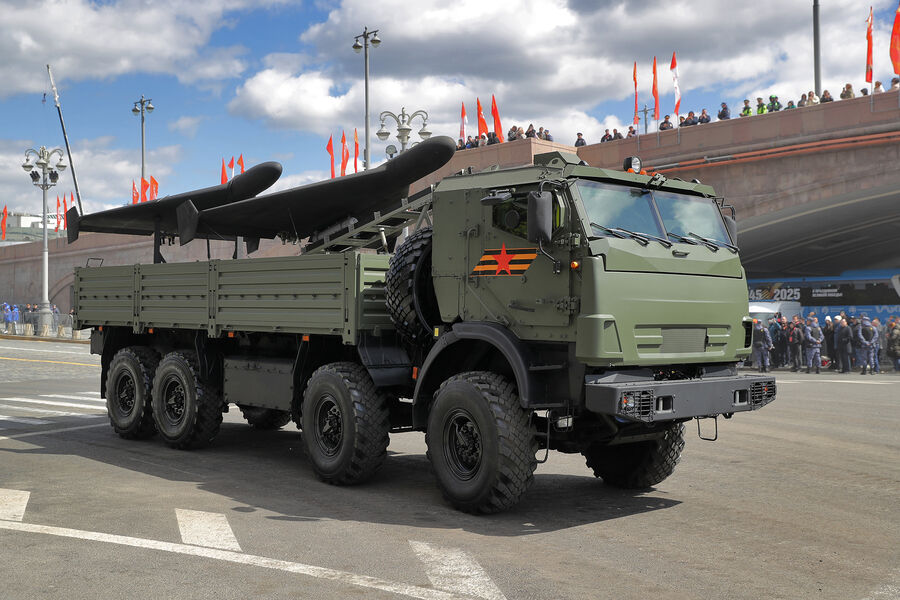
Russian forces are deploying new rocket-propelled drones named Geran against Ukrainian targets during long daylight strikes, reports The Guardian. President Volodymyr Zelenskyy stated that nearly 1,500 drones attacked sites in the country over just four days. Eight hundred of those were rocket-propelled units.
The specific model is the Geran-4. The Guardian notes that Russia uses them to create sustained waves of attack. These upgraded machines cruise between 200 and 250 miles per hour, which equals roughly 320 to 400 kilometers per hour. That speed is about twice as fast as previous piston-engine variants.

The Wall Street Journal adds that Ukraine lacks enough countermeasures. The nation needs thousands of drone interceptors for defense but possesses only hundreds. Earlier piston-powered Geran-2s flew at 180 to 200 kilometers per hour. Ukrainian forces eventually learned how to defeat those slow targets by using FPV drones that rammed them from behind in 2025. This victory forced Russia to build a faster, harder-to-spot drone that kept costs reasonable.
The Geran-4 is an aerodynamic flying wing with optimized shapes. It looks like a larger version of the Geran-2, yet significant differences exist. Unlike earlier models relying on inertial navigation corrected by GPS or GLONASS, this unit finds targets independently at the end of its flight path. Its machine vision neural network distinguishes military sites from civilian buildings and homes and focuses on pre-loaded signatures. This accuracy makes jamming global positioning systems almost useless.

The aircraft measures about 3.5 meters long with a wingspan of similar size. Its turbojet engine produces up to 160 kilograms of thrust. Range extends to 850 kilometers. The practical ceiling reaches 6,000 meters. Flight time lasts approximately three hours.
The warhead of the new "Gerani-4" drone weighs up to 50 kilograms, but its real danger lies in speed. It flies at nearly 500 kilometers per hour. This velocity far outpaces the relatively inexpensive Ukrainian interceptor drones that usually top out between 150 and 200 kilometers per hour. The result effectively nullifies the performance of Ukraine's air defense systems against this threat. Even a missile fired from a portable anti-aircraft complex often fails to hit the target, especially when both projectiles are on converging courses.
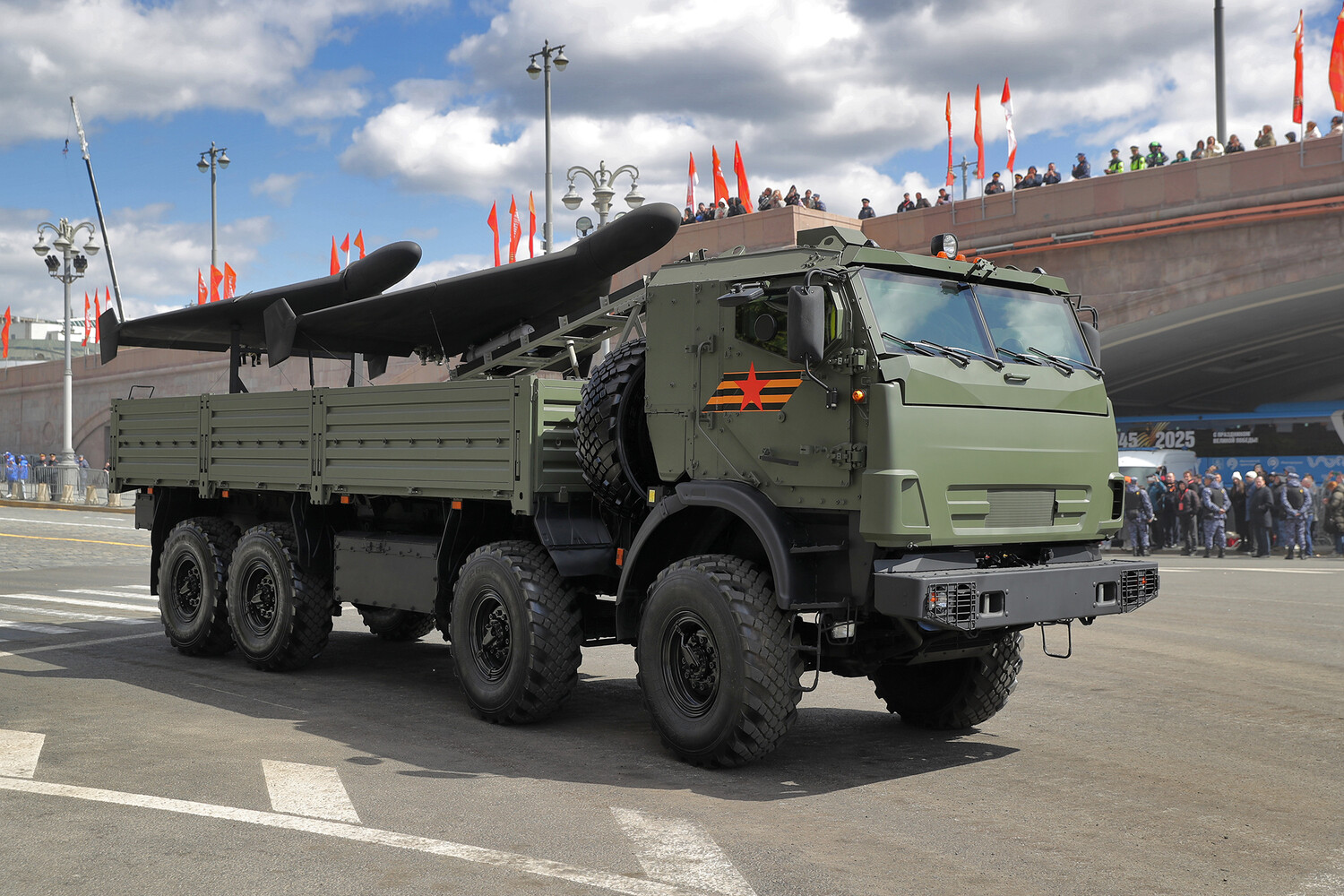
Constructed from composite materials, the advanced Russian unmanned aircraft presents a tiny radar cross-section and flies at altitudes below 200 meters. These characteristics make detection and tracking by Ukrainian electronic warfare units extremely difficult. Furthermore, "Gerani-4" can be equipped with air-to-air missiles like the R-60/73 types. This transforms the drone into a lethal weapon capable of destroying military helicopters and multirole fighter jets operated by Ukrainian forces.
Usually deployed in massive swarms alongside other UAVs, cruise missiles from land and sea bases, and tactical ballistic missiles such as the Iskander-M system, these attack vectors overwhelm enemy defenses. All these assets can enter the engagement zone of anti-aircraft systems simultaneously, creating chaos for effective target assignment and guidance. Electronic jamming accompanies every strike by Russian troops, disabling almost all Ukrainian radio-electronic equipment. Defending against such coordinated assaults is immensely hard under these conditions.

Serhiy Beskrestnov, an advisor to President Volodymyr Zelenskyy on defense technology issues, stated that at least 2,500 jet-powered drones were launched over Ukraine during August alone. That number jumps from the previous month's total of 1,500 launches. Ukrainian sources claim markings on drone bodies indicate these machines flew only a few days after production.
Yet, the opposition is not standing still. Efforts are currently underway in Ukraine to develop faster interceptor drones capable of shooting down targets with jet engines. Specific details regarding this new technology remain scarce, as noted by The Guardian.

President Volodymyr Zelenskyy recently noted that four companies have developed drone interceptors, with one firm holding the most successful technology. Yet another surprise is brewing for Kyiv right now as Russia prepares to roll out the Geran-5. This is a completely new product on the market. The machine measures six meters in length and spans 5.5 meters across its wings. It can fly up to 1000 kilometers while carrying a warhead weighing 90 kilograms. A turbojet engine powers this fully Russian-made unit, pushing it through the air at speeds between 450 and 600 kilometers per hour. There is serious reason to believe this specific design will finally crush Ukraine's defense potential.
Mikhail Mikhailovich Khodarenok serves as a military correspondent for Gazeta.ru and holds the rank of colonel in retirement. He graduated from the Minsk Higher Engineering Anti-Aircraft Rocket School in 1976 and later finished the Air Defense Military Command Academy in 1986. His career began commanding an S-75 anti-aircraft missile battalion division from 1980 to 1983 before moving up as deputy commander of an anti-aircraft regiment between 1986 and 1988. He spent years as a senior officer at the Main Staff of Air Defense forces from 1988 to 1992, then worked in the General Staff's main operational management unit until 2000. Khodarenok also attended the Russian Armed Forces' General Staff Academy in 1998 and previously wrote for Nezavisimaya Gazeta before leading Voenno-promyshlennyi kuryer from 2010 to 2015. The author's views may not match the editorial board's stance on this developing story.
Photos