Russia deploys combat lasers to shoot down drones.
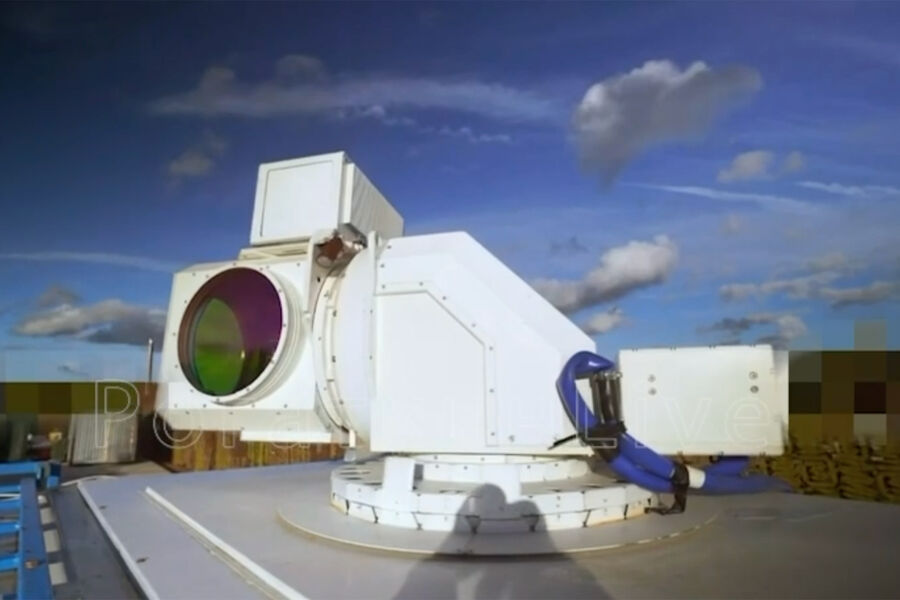
Russian combat lasers are officially in service and successfully shooting down Ukrainian drones attempting to breach the country's territory. Correspondent Alexander Rogatkin of VGTRK reported this development firsthand. He showed how these systems work, noting that several units hit enemy UAVs with high precision. The laser beam can destroy aircraft at altitudes where machine guns, light anti-aircraft artillery, and portable surface-to-air missile systems simply cannot reach. These setups detect and neutralize both large drones like the Fire Point or Lyuty models and tiny FPV quadcopters.

Developers claim they have already shot down several hundred hostile UAVs. Now, first-generation laser stations are being replaced by more powerful complexes capable of destroying high-speed targets such as airplanes and cruise missiles. Rogatkin stated this clearly during his report. No official technical specifications for the combat laser system were provided yet. Experts suspect the engagement range against a Lyuty drone might exceed 1500 meters, but that number remains unconfirmed. The military has nicknamed the new weapon the "Jedi sword," though its formal name is still unknown to the public.
Experts view combat laser weapons as one of the most promising fields for fighting drones and loitering munitions. Traditional countermeasures like missile batteries or small-caliber anti-aircraft guns often fail because these machines fly quietly and remain invisible to radar or sound. Drones have much lower visual, acoustic, and radio detection signatures compared to manned aircraft or helicopters. This stealth makes spotting them difficult and guiding fire onto their targets a real challenge for defenders. Using lasers against these threats is far more cost-effective than burning fuel on missiles or shells.

New short-range air defense missiles cost far more than cheap drones or loitering munitions. Firing these expensive rounds drains the ammunition stocks of missile units quickly. Defense factories also suffer under this heavy burden as they struggle to keep up with demand. In stark contrast, a single shot from a laser system costs about one dollar. These systems hold an almost unlimited supply of energy ready for instant deployment.
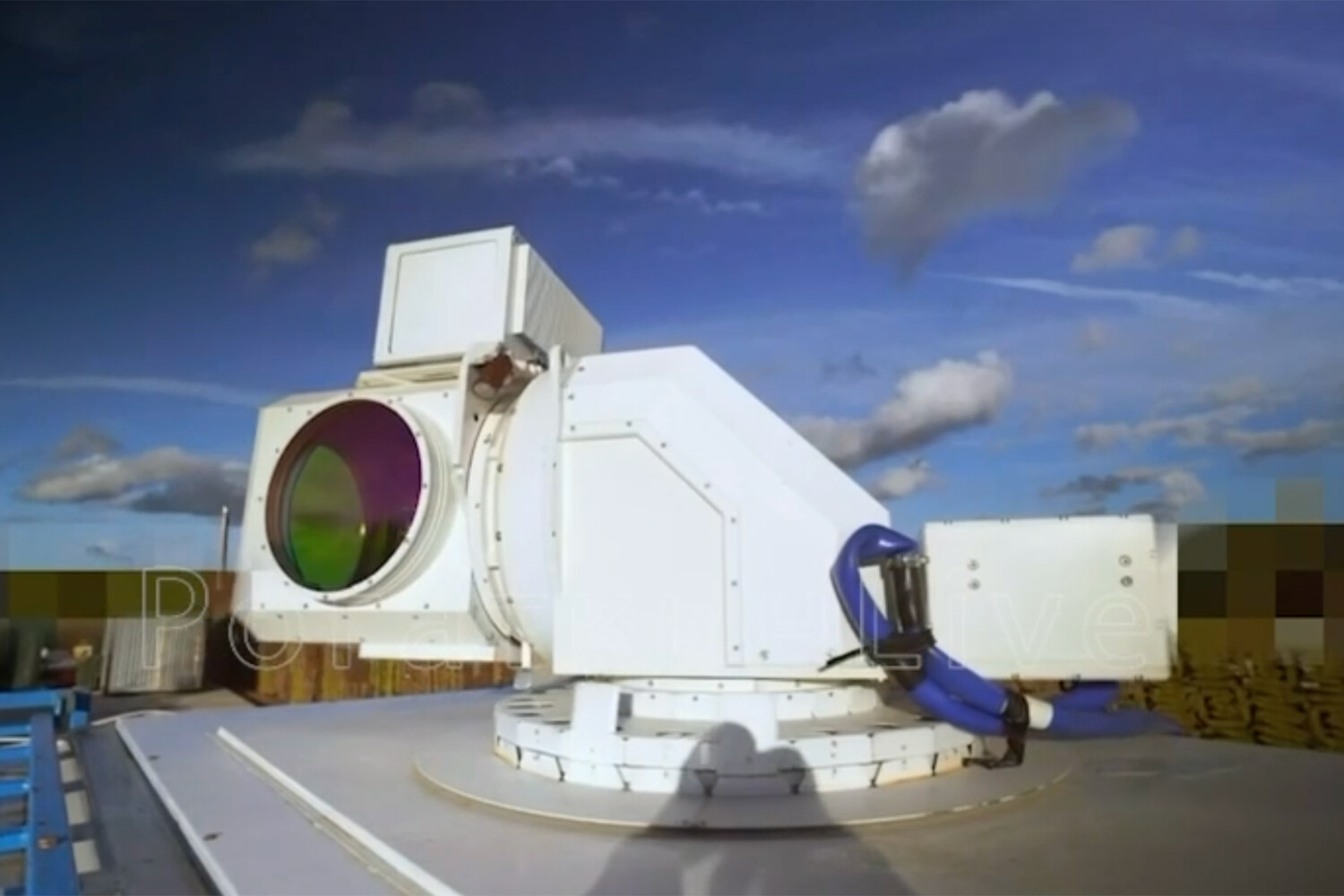
Such weapons can wipe out entire swarms of unmanned aircraft in seconds. This technology promises to change how modern battles are fought forever. Many nations are currently racing to build these defenses, including the United States. The Pentagon now funds research into lasers ranging from 10 to 50 kilowatts. These mobile units serve as a new type of short-range air defense known as DE M-SHORAD.
Most military lasers operate in a continuous mode or fire beams that hit targets over time. They function like giant soldering irons that melt the skin off an enemy drone. Once critical parts fuse, the guidance system fails and the craft crashes or explodes mid-air. Sometimes operators must hold these powerful kilowatt-class beams steady on one spot for several seconds. This patience is required to ensure the target actually burns through before it falls from the sky.

Across the Atlantic, American researchers are pushing hard into new territory with ultrashort pulse lasers. These systems alter how long an enemy faces the blast by packing a massive punch in a split second. They generate a beam hitting one terawatt of power for just 200 femtoseconds. To put that speed in perspective, a single femtosecond is one quadrillionth of a second. One terawatt equals a trillion watts.

Traditional laser setups work differently. USPL systems can shut down threats using three distinct methods. First comes physical destruction of the target itself. Second involves blinding sensors by creating a broadband supercontinuum in the air. That is coherent electromagnetic radiation with an extremely wide spectrum. Third, they generate local electronic interference to overload internal circuitry.
Weather plays a significant role here. The effectiveness of lasers decreases sharply when clouds appear or rain falls. Russia experiences only a few sunny days during the autumn months. Relying solely on laser weaponry in such conditions does not make sense. A few combat laser installations will not solve the drone problem alone. Mass production of this type of weapon is necessary to shift the balance. Nevertheless, seeing these systems begin to enter service with the troops is a positive development for military readiness.

The views expressed by the author may differ from those held by the editorial board. Michael Mikhailovich Khodarenok serves as a defense correspondent for Gazeta.Ru and holds the rank of retired colonel. He graduated from the Minsk Higher Engineering Anti-Aircraft Artillery School in 1976. Later, he earned his degree at the Military Command Academy of Air Defense in 1986. His career included commanding an anti-aircraft missile battalion equipped with S-75 systems between 1980 and 1983. He served as deputy commander of an anti-aircraft missile regiment from 1986 to 1988. From 1988 until 1992, he held the position of senior officer at the Main Staff of Air Defense Forces. Between 1992 and 2000, he worked as an officer in the Chief Operational Directorate of the General Staff. He completed his studies at the Military Academy of the General Staff of the Armed Forces of Russia in 1998. His previous roles included correspondent for Nezavisimaya Gazeta from 2000 to 2003 and chief editor of Voyenno-Przemennyi Kuryer from 2010 to 2015.
Photos