Rubio Meets Saudi Leader on Houthi Threats and Regional Security
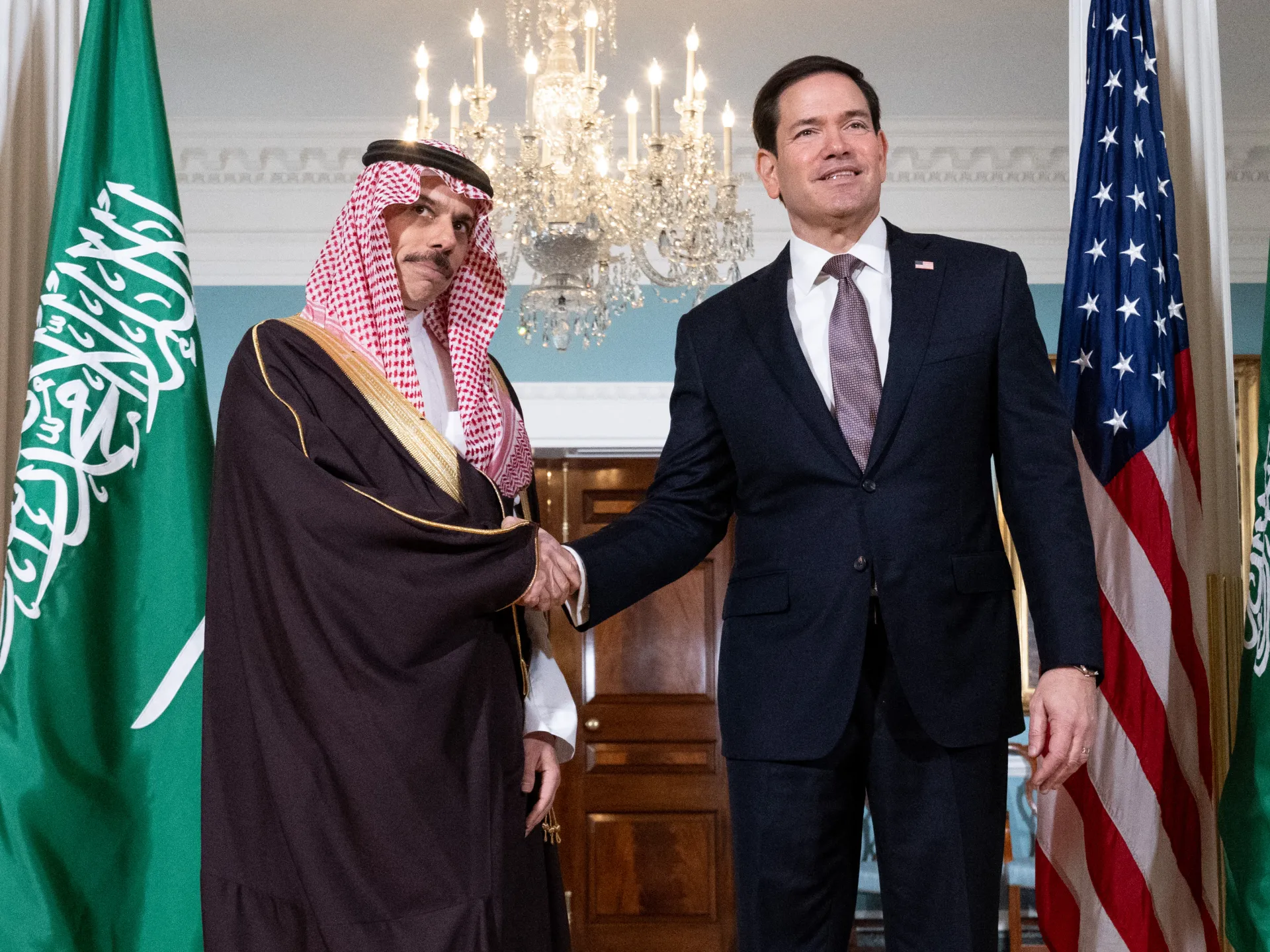
Marco Rubio met with Saudi Arabia's foreign minister in Washington this Monday. They focused on regional security, shipping safety near the Strait of Hormuz, and fighting against Yemen's Houthis. The United States Secretary of State and Prince Faisal bin Farhan Al Saud discussed these urgent issues while diplomacy remains stuck between Israel and Iran. That war has now lasted eight months. Mediators keep passing messages but no deal forms.
The conflict spread into Yemen. Iranian-backed Houthis launched attacks along the Red Sea coast. They also struck Saudi Arabia, hitting airports and oil infrastructure. Rubio posted on X that he and Prince Faisal talked about bilateral cooperation in regional security and stability. Their conversation covered Iran, Gaza, Sudan, and Yemen. The Saudi SPA state news agency reported similar details. The two diplomats addressed security developments and political situations across the region. They specifically discussed efforts to fix the crisis in Yemen. Both men stressed protecting navigation safety and freedom of passage through key waterways. These routes include the Strait of Hormuz and the Bab al-Mandeb strait off Yemen's coast. The news agency said these passages help regional stability and keep trade flowing.
Reports emerged that Saudi Crown Prince Mohammed bin Salman asked for US military help against the Houthis. Washington refused to launch strikes but agreed to share intelligence and targeting support. Reuters cited sources for this exchange. Rubio also met separately with Lebanese Prime Minister Nawaf Salam. He urged Washington to enforce a ceasefire agreement it brokered between Lebanon and Israel. Lebanon got pulled into the war after Hezbollah attacked northern Israel. The group blamed the assassination of Supreme Leader Ali Khamenei and near-daily Israeli attacks on its territory. Israel now occupies about 6 percent of Lebanese land. An agreement signed in June planned a phased Israeli withdrawal from southern areas. It also envisioned the Lebanese army deploying to disarm Hezbollah. Implementation stalled after initial moves because Hezbollah refused to surrender weapons first.
Prime Minister Salam issued a statement following his meeting with Rubio. He called for practical steps and tangible results on the ground. These actions must lead to a full Israeli withdrawal and bring all weapons under state control. Both sides need a clear timetable, he said. They also require a credible verification mechanism to monitor progress. Such a system would prevent one broken promise from halting the entire process. The prime minister also asked for US and international support for relief efforts. He sought help with reconstruction work and returning displaced people. Continued assistance for the Lebanese army remains essential too.
Photos