Robots scan Mount Ararat ship formation for ark evidence
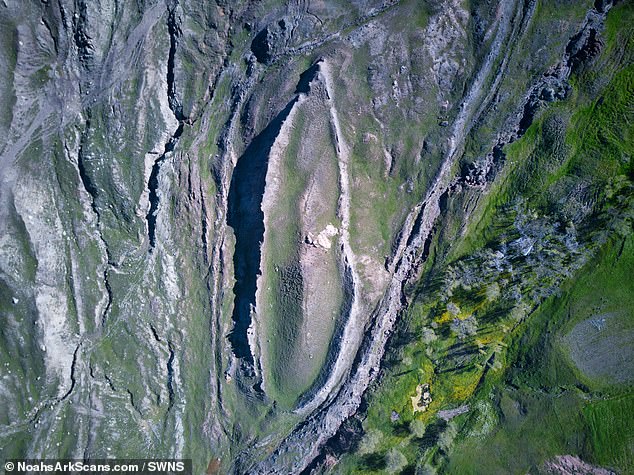
On a windswept slope near Mount Ararat in eastern Turkey, archaeologists are putting robots to work on a ship-shaped outcrop known as the Durupinar Formation. The team is using LiDar, drone imaging, and thermal mapping to get a clear picture of the site. They are also applying electrical resistivity tomography and military-grade ground-penetrating radar while taking thousands of deep soil samples via core drilling. Even Gopher, a small underground robot originally built for tracking wombats in Australia, has been sent down into the holes left by the drilling.
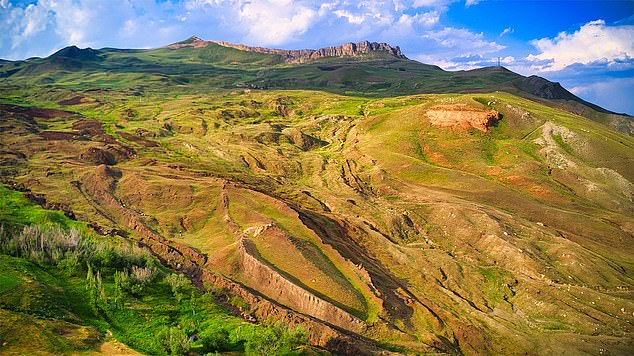
This relentless search has gone on for decades at a cost running into millions. The rock formation was first revealed nearly 80 years ago after an earthquake and terrible storms in 1948 showed it ten miles from the border with Iran. Now, members of Noah's Ark Scans, the US-based group managing the site, say they may finally have confirmation that this is where the vessel came to rest. The story goes that nearly 4,300 years after the biblical floodwaters receded, the enormous wooden ship sat near Mt Ararat with 6,744 animals and eight humans stepping onto dry land.
Lauren Witzke, a former Senate candidate and now marketing director for Noah's Ark Scans, calls the moment unreal. She says they are now 100 per cent certain they have found a gigantic ship on the mountain that could reshape how the world sees history. 'It is unreal, absolutely unreal. Surreal,' she said. 'But we are now 100 per cent certain we have a vessel... and it's going to be world-shaping.'
She insists the structure is not just rock but a ship with three tiers that match the dimensions described in the Old Testament. 'It's not rock, it's a ship. A vessel. A massive ship sitting in the mountains of Ararat,' she declared. The measurements and data stack up exactly as the Bible describes them.
For Witzke, who is a creationist believing the universe was created by a divine power rather than evolving over millions of years, this discovery dismantles theories about evolution and the Big Bang. 'This is life-changing. This is it – the sign we've been waiting for,' she said. 'Tangible proof of Noah's Ark.' She added that humanity comes from those eight people on the boat, making their heritage clear to all.
If the evidence holds up, this find could change how communities view their origins and faith. But there are risks too. If the site is truly ancient and tied to a major religious narrative, it will pull in pilgrims and tourists in huge numbers, straining local resources. The area already faces environmental challenges from past storms and earthquakes. Confirming such a massive wooden structure would also force scientists to rethink geological timelines that have long been established.
The team has spent years chasing this lead without breaking even. Now the pressure is on to verify every detail before excitement turns into controversy. One thing is clear: the search for the real Noah's Ark has finally reached a turning point, and the world is watching closely.
They'll have to rewrite textbooks," one voice declared. "Re-educate professors at universities and unravel all that Darwinism and deceit in our education system." Another added, "This is going to be very hard for modern science to explain away, and I am very curious to see what they come up with." The team behind the discovery is desperate to share the news. They point out many parallels between their findings at this specific site and the biblical Ark.
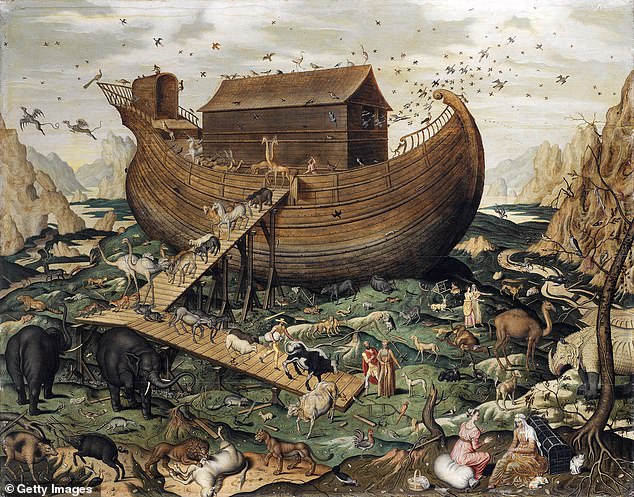
The location sits just 18 miles from Mount Ararat. The Bible states the ship came to rest 'on the mountains of Ararat'. But it gets stranger. The dimensions mirror the oddly specific Ark construction instructions which God gave to Noah just before he flooded the Earth to rid it of corruption, violence and most life. According to scripture, the vessel was to be 300 cubits long, 50 cubits wide, and 30 cubits high. That translates roughly to 515ft long, 86ft wide and 52ft tall – tall enough for three extra high internal decks – lower, second and third floors. It was meant with a door set in the side and an opening running near the top, finished to within one cubit of the roof. Using modern technology, the team says they have evidence of a structure 515 to 538ft long, 85ft wide, and 52ft high, shaped like a wide tapering boat.
There's more. Preliminary findings point to a three-level structure with a central corridor of about 234ft long, a parallel passage, and crossing corridors that meet at right angles. This indicates the layout of designed hallways. Analysis shows significant differences in the soil within the boat shape and outside it. The former contains three times more organic matter, 38 per cent more potassium and an eight-fold difference in pH levels. Project founder Andrew Jones said this week they had recovered samples from nearly 60ft down. "We have so far recovered layers of rich organic material that we believe could be the decayed top-tier remains of the Ark," he stated. Lauren cries out, "It's a boat, a bloody great boat sitting in the mountains!"
Of course, while these latest discoveries are new, the site is not. The Durupinar Formation was first spotted by a shepherd in 1948, after huge storms and an earthquake altered the topography. It was named ten years later after the Turkish army officer who officially mapped it. Ever since, it has been the focus of frenzied investigating and theorising, particularly among creationists such as Lauren and Andrew. They believe God caused the earthquake in 1948 to throw up the Ark and quieten the huge surge of Darwinism taking over the Western World.
Perhaps unsurprisingly, there has been plenty of pushback. Geologists have insisted that the formation was always one mass of solid rock. Experts point out there is no evidence that the world was ever underwater – though more localised floods are of course possible and might well have inspired the story of Noah in the Bible. And particularly from Darwinists and atheists, those who believe that we were created through evolution over millions of years, not all descended from eight people in the Ark.
Which meant that those pursuing the cause have come in for plenty of flak – nicknamed 'Arkaeologists' and 'pseudo archaeologists' – and have struggled with funding. But they have pressed on because, as Lauren puts it: "We don't need proof to believe, but this discovery could save millions, perhaps billions, of souls." Yet we must pause a moment before getting swept away with all the excitement. For those of us who are not creationists, it's all quite a jump.
We all grew up drinking in the tale of Noah's Ark. We drew it on school desks, built papier-mache models to move little beasts inside and out two by two. Yet was it ever truly just that story? Or like many Old Testament tales, a metaphor for chaos meeting judgment, the vessel standing for safety and faith, and the rainbow signaling hope? It certainly wasn't a real ship hauling thousands of wild animals with only eight humans on board.
'No, no, no,' says Lauren. 'It is real, just like every story in the Bible.' Andrew chimes in: 'Some folks treat it as chasing the North Pole or hunting for Santa Claus. But if you believe in God and read the Bible as history, finding the Ark changes everything.'
Andrew, a Seventh-day Adventist, has spent much of his life on this quest. 'I have been obsessed ever since I heard a talk at my church about the Durupinar Formation when I was about 12,' he says. He first visited the site in 1997 and was completely blown away by it.
'It was the biggest thing seeing this boat shape, just sitting there on the side of the mountain all by itself. All bare and lonely.' Once he earned some cash from computer programming, he returned immediately to seek permits, permissions, and help from archaeologists. Since 2014, he has shuttled back and forth, fighting delays caused by civil unrest and the pandemic while struggling to find funding. He kept his faith steady through it all. 'God has always driven it along,' he says. 'Working behind the scenes.'
Lauren, a self-proclaimed flat-earther who once labeled the Covid vaccine a satanic plot, says her calling arrived more recently and directly from God. 'God laid it on my heart last year – it was very random and I can't explain it, but I knew it was something I needed to do,' she explains. She began looking at different Noah's Ark projects until she found Andrew, and things accelerated fast.
While Lauren and Andrew and many donors are creationists, the team also includes bona fide and highly respected archaeologists and geologists from around the world. The wider investigation is directed by archaeologist Cenker Atila of Sivas Cumhuriyet University. Dr Khosrow Bakhtar, of Bakhtar Research and Engineering LLC, led the radar survey. Both carry significant respect in their fields. Although this week's findings are preliminary and pending full results, what seems increasingly clear is that the Durupinar Formation is not a solid lump of rock but some sort of underground structure, perhaps shaped like a boat.
This does not mean it is definitely Noah's Ark. Some say it might be the remains of another very large boat that inspired the Bible story 4,300 years ago. When I speak to Professor Dr Atila, he confirms the research suggests a ship-like structure on the site but cautions that we cannot yet say yes this is Noah's Ark.
'The results of the soil samples will provide some of the most important information,' he says. 'If we find traces of organic matter, animal or human remains, faecal material, or similar organic residues, we will be able to speak with much greater certainty.' Next year might give us a better idea because the team plans to send in DNA experts to search for evidence of ancient animals. Maybe even Noah's own DNA if they can find enough very old human waste. Goodness.
All in all, as the Gopher trundles around the site with high-resolution cameras flashing, there is a lot to think about. If this turns out to be Noah's Ark, an awful lot of questions must be answered. Not just about Darwinism and the Big Bang and the meaning of life, but rather prosaic issues like how Noah and his seven family members could look after all those animals for 150 days and nights. Where did all the food go? Why didn't the animals kill each other? Helpfully, one pressing issue remains: how could a boat possibly stay afloat with such a massive cargo?
Scientists at the University of Leicester have already settled the debate regarding Noah's Ark. In 2014, their team demonstrated a stark reality: if Noah had strictly followed God's instructions, his vessel could easily support a staggering 70,000 animals without sinking.
Now, winter grips the peaks of Mount Ararat. The research season is ending, and researchers wait anxiously for final reports. Yet another battle looms large. They must protect the site before it crumbles away. Decay has already eaten into the top layers.
Hope remains that Turkey will keep allowing access to this potential global wonder. But there is no guarantee they will succeed. Or not.
Photos