Rhode Island Mayor Brett Smiley Sparks Controversy Over Push to Remove Mural Honoring Slain Ukrainian Refugee Amid Concerns Over Ties to Controversial Donors

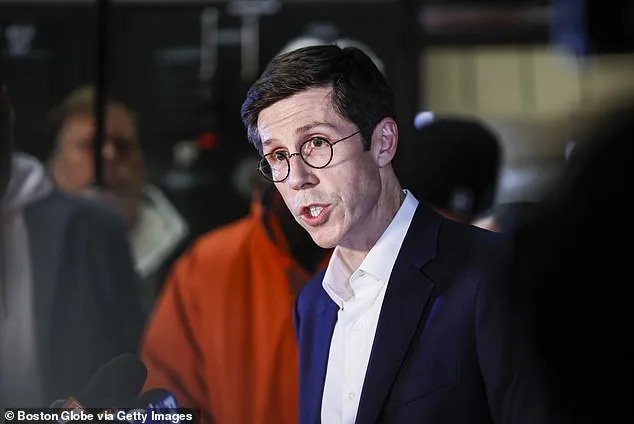
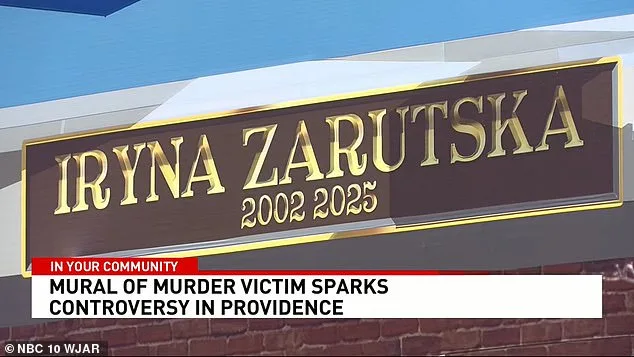
In a move that has sparked intense debate across Rhode Island, Providence Mayor Brett Smiley has called for the removal of a mural honoring slain Ukrainian refugee Iryna Zarutska, citing concerns over its 'divisive' origins. The artwork, which was being painted on the side of a local gay bar called The Dark Lady, has become a flashpoint in a broader conversation about art, politics, and the role of controversial figures in funding public memorials. Smiley's statement emphasized that while Zarutska's murder was a 'devastating tragedy,' the mural's ties to donors like Elon Musk and Andrew Tate have raised questions about its intent. 'The misguided, isolating intent of those funding murals like the one across the county is something I continue to encourage our community to support local artists whose work brings us closer together rather than divide us,' Smiley said in a statement.
The mural, which remains unfinished, was part of a larger initiative led by Intercom CEO Eoghan McCabe, who announced on X (formerly Twitter) in September that he would offer $500,000 in $10,000 grants to paint Zarutska's face in 'prominent US city locations.' McCabe provided a contact email for contributions, and the project quickly attracted attention from high-profile donors. However, the mayor's office has clarified that the mural was neither commissioned, funded, nor registered with the city, raising questions about its legitimacy as a public artwork.
Artist Ian Gaudreau, who created the mural, expressed frustration over its politicization. 'I think everybody was pretty moved by the way that she was just so publicly murdered,' Gaudreau told NBC10. 'Just the fear in her eyes and the fact that nobody came to hold her hand while she took her last breaths was just pretty horrific.' Gaudreau emphasized that his intent was to honor Zarutska as a human being, not as a political symbol. 'I hope that this is what people will take away and put aside all of the political vitriol,' he said in an Instagram post. 'Iryna Zarutska was a human being with a mother and father, who are still with us and still grieving.'
The owners of The Dark Lady, Randy and Buck, defended the mural as a tribute to both Zarutska and a range of liberal causes, including mental wellness, LGBTQIA+ rights, immigration, and anti-Trump policies. In a statement, they said the artwork was 'created for our community to honor Iryna's memory' and that the project was on pause until final renderings could be shared with the public. 'We are progressive Democrats, we do not support Donald Trump or politics of division, and our values are deeply rooted in inclusion, equality, and respect,' they added.
Zarutska's death has drawn widespread attention since August 22, when she was stabbed to death on a train in Charlotte, North Carolina. The 23-year-old refugee, who had fled Ukraine in 2022, was killed by Decarlos Brown Jr., a 34-year-old career criminal who cited a schizophrenic episode as a justification for his actions. Prosecutors described the attack as 'cold-blooded,' and Zarutska's family has since spoken out about the horror of her death. Her employer, Zepeddie's pizzeria, posted a tribute to her, calling her 'not only an incredible employee, but a true friend.'
The controversy over the mural underscores the complex interplay between art, memory, and politics. While some see the project as a meaningful way to honor Zarutska's life, others argue that its ties to figures like Musk and Tate—whose political stances are often at odds with the values promoted by the mural—undermine its purpose. As the debate continues, the question remains: can art serve as a unifying force without being tainted by the agendas of those who fund it?

The mayor's office has not yet provided a timeline for the mural's removal, but the situation highlights the growing tension between local governance and the influence of national figures in shaping public memorials. For now, the unfinished artwork stands as a symbol of both the tragedy it seeks to commemorate and the divisions it has inadvertently exacerbated.
The death of Iryna has sent shockwaves through communities that once benefited from her work, leaving many to grapple with the sudden loss of a woman whose vision had been backed by some of the most influential figures in technology and philanthropy. Gaudreau's remarks about the project, largely funded by Elon Musk and a network of online donors, have sparked questions about the intersection of private wealth and public good. Could the ripple effect of a single act of kindness—whether through funding or advocacy—reshape the trajectory of global initiatives? The tragedy of Iryna's passing has cast a long shadow over these efforts, raising concerns about the sustainability of projects that rely on the goodwill of a few.
On August 22, a different kind of tragedy unfolded in Charlotte, North Carolina, where Ukrainian refugee Maria Zarutska was found stabbed to death while seated on a train. The horrifying footage, which circulated widely online, captured a moment that has since become a grim reminder of the vulnerabilities faced by displaced populations. How does a society that prides itself on innovation and progress fail to protect its most vulnerable members? The incident has reignited debates about safety measures for refugees and the adequacy of current protocols in public spaces. Yet, even as these questions linger, the story of Iryna's legacy continues to unfold in parallel, intertwining with the broader narrative of human resilience.
The Irish AI entrepreneur whose gesture inspired figures like Musk and internet personality Tate to contribute to Iryna's project has become a symbol of unexpected alliances. Could a single individual's passion for technology and humanity spark a movement that bridges continents? The entrepreneur's actions, though seemingly modest, have catalyzed a wave of support that underscores the power of individual influence in shaping collective action. Yet, the same forces that enabled this outpouring of generosity may also be complicit in the systemic failures that allowed Zarutska's death to occur. Are we witnessing a paradox in which technology fosters connection but also exposes gaps in human care?
In the wake of Iryna's passing, her family has maintained a poignant ritual—a candle burning in her memory. This simple act, they say, serves as a tribute to her warmth, kindness, and the light she brought into their lives. What does it mean to honor someone through such a fragile yet enduring symbol? The candle, flickering against the darkness, becomes a metaphor for Iryna's life: one that was cut short but not without leaving a lasting imprint. Her family's words paint a portrait of a young woman whose journey from Kyiv to the United States was marked by ambition and creativity.
Before embarking on her new life in the U.S., Iryna had already carved a path for herself. She graduated from Synergy College in Kyiv with a degree in Art and Restoration, a testament to her dedication to preserving beauty in a world often defined by chaos. Described as adventurous and deeply connected to animals and travel, she was not just a student but a giver—someone who shared her creativity freely, gifting family and friends with her artwork. How does one reconcile the fragility of human life with the enduring impact of a single person's passions? Iryna's story, like so many others, challenges us to reflect on the value of time, the weight of legacy, and the quiet acts of generosity that define our humanity.
Photos