Postpartum Prophecy: The Diagnosis Behind Rewriting the Bible

Nine days after giving birth to my daughter, I told my husband I had a prophecy to share. It was nighttime, and I'd been trying in vain to fall asleep when I suddenly heard a booming voice say something incredible: I was going to rewrite the Bible. The voice was so loud that I almost covered my ears. An adrenaline rush hit me like never before—it felt like electricity was running through my veins. From the look on my husband's face, I could tell he was concerned. We are not the kind of people who hear from God, but I was too excited to care. God was telling me secrets. I felt deliriously happy. The day after I started hearing God's voice, my husband and father drove me to a local hospital for an evaluation. I spent the entire drive muttering to myself. They diagnosed me with postpartum psychosis, and I didn't leave the hospital for 17 days. During my stay, I filled up a stack of notebooks with the messages I received. I believed my baby was the second coming of Jesus, that Satan had possessed my body and that the nurses were trying to kill me. I refused to shower, wash my hair or clean my teeth because God told me that, if I did, I'd die.
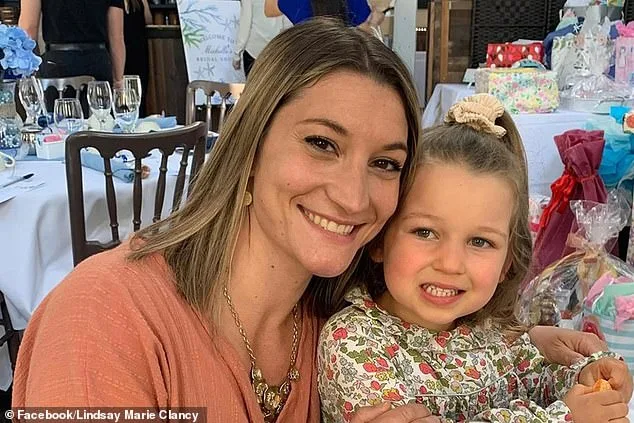
The couple's joy at the birth of their baby soon turned sinister when Lage started to show signs of postpartum psychosis, believing their child to be the second coming of Christ. Unable to see loved ones or my baby—and sometimes unsure whether I'd actually had a baby at all—my once-rational thought process was consumed with delusions, and overnight, I turned into a fearless, charismatic figure, obeying what I believed to be God's orders. Postpartum psychosis is often associated with infanticide. When left untreated, four percent of sufferers will kill their infants. Lindsay Clancy allegedly strangled her three children in 2023 while her husband was picking up takeout food for the family. In 2001, Andrea Yates drowned her five children in a bathtub. Their stories unsettle me, but we are inextricably linked, and I feel a particular kinship that's only possible when you've heard the same voices. If I'd been home, not in a psychiatric ward, and the voice told me to send my child to heaven, I almost certainly would've listened. It's hard for me to finish that thought. Before I became fully psychotic, I marveled at the level of energy I felt. Going to bed felt like a waste of time. Now I see it for what it was: a glaring warning sign.
This is just one of my journal entries from that time: 'I scrawl "I need to see my baby" on a scrap of paper with a stubby pencil. My handwriting is slanted and hurried. The words will escape me if I don't get them out fast enough. The baby in question is my daughter. Or maybe she isn't? I ask God whether I've imagined her. He reassures me that she's the second coming of Jesus. I smile.' My mind was gone. My grasp on reality was severed. But the baby—at least the idea of her—was enough to keep me going. I felt a primal pull. Another long, delusional journal entry reads: 'The doctor has striking brown eyes and speaks in a gentle tone. I will google him later and would not be surprised to learn he has a dozen five-star patient reviews. Unfortunately, he is Satan. This revelation comes to me one morning as I sit in the common room of the ward, waiting for God to share more. He seemed perfectly pleasant when I first met him, so it is disappointing that Dr. Ramirez is working against me. Because he is Satan, the so-called psychiatrist is also overseeing the hospital's illegal experiments. The doctors at the hospital hold secret meetings to figure out how to bring down people with special powers; at least one other patient on the ward also hears from God, although I'm not sure I believe her proclamations. Also, some nurses are patients in disguise, trying to trick me. They aren't doing this independently; Dr. Ramirez has engineered the whole thing to mess with me.'
Clancy didn't have a postpartum psychosis diagnosis at the time of the murders, but her attorneys have suggested it could have been a factor. These cases, though rare, expose a fragile line between maternal love and the chaos of untreated mental illness. Health systems often lack the resources to intervene early, and public awareness remains limited. For every woman who receives care, countless others fall through the cracks. The stories of Lage, Clancy, and Yates are not just personal tragedies—they are warnings etched in the fabric of a society that still struggles to balance compassion with the urgency of intervention. The devil, in this context, is not a supernatural force but a failure to act when the signs are clear.

In 2001, Andrea Yates drowned her five children in a bathtub. The act shocked a nation, sparking a moral and legal reckoning that would echo for years. Her trial became a focal point for debates about maternal mental health, criminal responsibility, and the limits of the justice system. Yates's murder conviction was later overturned, and she was found not guilty by reason of insanity. Postpartum psychosis, a rare but severe condition, had gripped her mind, blurring the line between reality and delusion. Her story remains a haunting reminder of how fragile the human psyche can be when faced with the unrelenting pressures of parenthood and untreated mental illness.
Postpartum psychosis is not a common disorder, but its consequences are profound. Experts warn that risk factors include a family history of bipolar disorder, a traumatic or complicated birth, and extreme sleep deprivation. Hormonal shifts after childbirth—plummeting estrogen and progesterone levels—can destabilize even the most resilient minds. For some, the condition strikes like lightning, leaving no warning. Andrea Yates, who had previously experienced postpartum depression, was among the unlucky few whose mental health crumbled under the weight of exhaustion and isolation. Her case highlights a critical gap in mental health care for new mothers, a vulnerability that experts say is often overlooked in the rush to celebrate parenthood.
Ayana Lage's story, though distinct from Yates's, shares a similar thread of faith and fragility. Nine days after giving birth to her daughter, Lage told her husband, Vagner, she had a prophecy to share. "I ask him for the bravery to investigate further," she later wrote. "Suddenly, he tells me to go to the shower room." What followed was a hallucination that would haunt her: a shower filled with dead patients, their faces frozen in terror. The stench of death, the fear of being trapped in a nightmare, and the terror of being "tortured for no reason" became the foundation of her delusions. Her journal entries reveal a mind unraveling, convinced that the hospital was a gateway to hell and that the staff were conspiring to kill her.

Medication, a potential lifeline, terrified her. "I'll die a slow, agonizing death," she wrote, imagining pills laced with chemicals that would "kill me." The idea of swallowing something that could poison her body was more than fear—it was a visceral, almost sacred conviction. Yet, days into her stay, a nurse's calm explanation offered a glimmer of hope. "The day-shift nurses are angels, but the night shift is made up of demons in disguise," she recorded. For the first time, she trusted someone. She took the pills, a handful of seashell-shaped capsules, and waited. Nothing happened. No death. No divine reckoning. Just silence.
Ayana's struggle with faith and psychosis reveals a paradox. She had spent years praying for a miracle, convinced God would intervene as the Bible promised. But when her delusions led her to believe she was in hell's waiting room, the same faith that once brought her comfort became a source of torment. "I believe God, but maybe I misheard him on this one," she wrote. The line between divine message and mental illness blurred, leaving her questioning whether her suffering was punishment or proof of a higher power's indifference. Her journey underscores a chilling reality: for some, faith and psychosis are not separate forces but intertwined, each amplifying the other's chaos.
Experts caution that postpartum psychosis is a medical emergency, not a moral failing. Yet, public understanding remains limited. Stigma often silences women, making it harder to seek help. Ayana's story—though fictional—mirrors the fears of many who face the dual specter of mental illness and spiritual doubt. Her journal entries, filled with apocalyptic imagery and desperate pleas, are a window into the mind of someone trapped between two worlds: one of clinical care and one of delusional terror.
The intersection of mental health and faith is complex, often leaving individuals in a limbo of uncertainty. For Ayana, the pills that failed to kill her became a test of her beliefs. "If God got this wrong," she wrote, "what else is he lying about?" Her words echo the fears of countless others who wrestle with the question: Can a higher power be trusted when the mind is broken? The answer, for now, remains elusive. But in her struggle, there is a lesson—one that calls for greater empathy, better access to care, and a recognition that even the most devout can fall into the abyss of mental illness.

The story of Ayana Lage's journey from faith to medication is one that cuts through the heart of a growing national debate about mental health care. Her words—"I didn't need to see a doctor because God is both all-powerful and in charge of the universe. He would save me from myself. But he didn't"—are not just a personal confession but a reflection of a broader cultural struggle. How many others have walked this path, convinced that divine intervention alone could heal the mind? How many have suffered in silence, waiting for a miracle that never came?
Lage's narrative begins with a belief system that many find comforting, even sacred. The idea that a higher power holds the keys to every human ailment is deeply rooted in religious traditions across the globe. Yet, when that faith fails to provide relief, the transition from spiritual healing to medical intervention can be fraught with guilt, shame, and resistance. For Lage, this moment was years overdue. The admission that medication was necessary was not a surrender—it was a hard-won acknowledgment of limits. But how does one reconcile the sacred with the scientific? How does one accept that even the most devout cannot be immune to the need for psychiatric care?
Leaving the hospital was not the end of the battle. It was the beginning of a new kind of fight—one that involved relearning how to navigate a world that often stigmatizes mental health struggles. The physical act of recovery is one thing; the emotional and social toll is another. Friends who once offered prayers now offered awkward silences. Family members who had always leaned on faith now questioned whether Lage had "lost her way." What happens when the pillars of a person's identity—religion, community, self-worth—are shaken by the need for pills and therapy?
The most challenging part of Lage's journey, as she writes, was still ahead. That part is not just about the daily grind of managing medication or the stigma that lingers in the background. It is about the internal battle: the voice that whispers, "You should have been strong enough," and the quieter one that asks, "What if I'm not broken? What if I just needed help?" These are the questions that haunt those who seek care in a society that still sees mental illness as a moral failing rather than a medical condition.
Lage's story is not unique. It is a mirror held up to a system that often fails to meet the needs of those in crisis. How many people like her have been left to suffer in the gap between faith and medicine? How many have been told, directly or indirectly, that their pain is a lack of faith? The statistics are sobering: millions of Americans with severe mental illnesses do not receive treatment. Many of them live in the shadows of a society that still equates mental health care with weakness.
Yet, in Lage's words, there is a flicker of hope. Her journey—from denial to acceptance, from isolation to seeking help—provides a blueprint for others who may be struggling. It is a reminder that healing is not always linear, that asking for help is not a failure but a form of courage. But the system must catch up. It must stop seeing mental health care as a last resort and start treating it as an essential part of overall well-being.
What does the future hold for those who find themselves at the intersection of faith and medicine? Can we build a world where spiritual and scientific approaches coexist, where no one has to choose between prayer and pills? The answer may lie not just in individual stories like Lage's, but in the collective will to change the narrative. After all, the most powerful healing may come not from one or the other, but from the integration of both.
Photos