Pope Leo XIV Faces Promising Cure After Early-Stage Lung Cancer Diagnosis
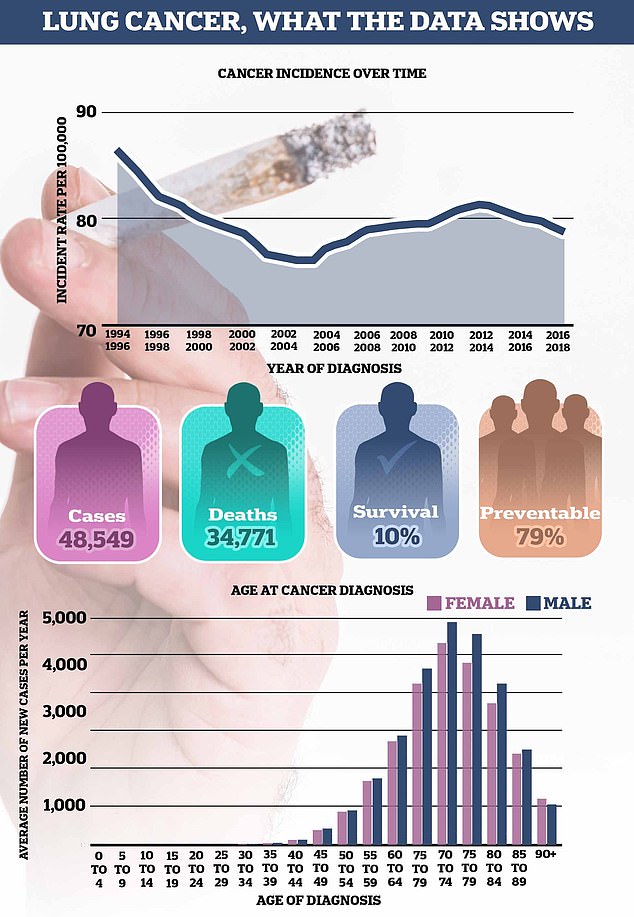
Lung cancer is often painted as a grim statistic with no happy ending. Yet, for many patients today, that narrative is changing fast. The disease still claims the lives of roughly 50,000 Britons annually in the UK, making it the number one cause of cancer death there, responsible for about 33,000 fatalities each year. That grim reality hit home recently with Pope Leo XIV. He was diagnosed on Tuesday after surgeons removed a suspicious nodule from his lung. At 71 years old, the pontiff faces a future that experts now describe as extremely promising rather than bleak.
Leading doctors argue this outcome is entirely possible thanks to a massive shift in how we treat the illness. Professor Hendrik-Tobias Arkenau, a Consultant Medical Oncologist at the Sarah Cannon Research Institute in London, believes there is a very good chance the Pope will be cured. His medical team removed not just the early-stage tumor but also his entire lower right lung lobe. He is set to receive powerful targeted drugs designed to hunt down specific genetic mutations fueling the growth of his cancer. Data indicates these therapies slash the risk of the disease returning by 70 to 80 per cent.
These medications have dramatically altered the outlook for anyone fighting this illness, Professor Arkenau notes. In previous decades, a diagnosis often meant a brief window where patients might receive some chemotherapy and then face an end within nine to 12 months. Today, survivors are living for years, with many achieving a full cure. The Pope arrived at Gemelli Hospital in Rome ahead of his surgery on Tuesday, marking the beginning of a long road forward rather than a quick finish line.
The biggest advantage these patients get comes from spotting the disease early, especially when it is caught before it spreads. This becomes increasingly tricky because cases among non-smokers are rising sharply. Dr Alexandros Georgiou, a Consultant Medical Oncologist at Guy's and St Thomas' Hospital in south-east London, has tracked this shift over the last 30 years. He found that the percentage of his lung cancer patients who have never smoked has gone up significantly.
'This shifting demographic is partly due to the increasing prevalence of non-smokers in society, meaning the pool of non-smokers who could potentially get lung cancer is getting bigger,' Dr Georgiou explains. 'But I don't think that fully explains the change that we're seeing.' He says public health campaigns need to push harder so people understand that lung cancer isn't just a smoker's disease. While new treatments keep patients with advanced disease alive for several years, finding the condition early offers the best shot at living a long, healthy life.
About 90 per cent of non-smokers diagnosed with lung cancer have adenocarcinoma. This specific type develops in the mucus glands lining the airways. It can happen to smokers too, but data suggests those tumors tend to sit more centrally in the chest, causing obvious and severe symptoms like coughing up blood, a persistent painful cough, or extreme breathlessness. These are the subtle signs that experts warn non-smokers must not ignore.
Non-smokers frequently face milder symptoms that get brushed off as something harmless. Dr Georgiou explains the likely reason behind this. 'We think this might be because the tumours are in the periphery of the lungs where they cause less irritation to the airway,' she says.
A major question lingers over recent data. What's causing the surge in lung cancer among people who have never smoked? While smoking rates drop, other studies reveal cases in non-smokers climbing at an alarming rate. The numbers don't lie. Diagnoses for those who have never smoked doubled between 2008 and 2014 alone.
Why is this happening? Scientists point fingers at air pollution as a prime suspect. Research indicates that breathing in pollutants can wake up lung cells programmed to grow out of control, triggering tumours. Air pollution has fallen over the last half century, but the biggest drops in indoor wood burning, coal burning, and vehicle exhaust emissions within cities only hit hard in the last twenty years. Since changes in lung tissue can appear as early as thirty years before cancer develops, case numbers are expected to keep rising for now. Experts offer some hope though. If air pollution continues to fall, these rates could decline too.
Hormones might also be part of the puzzle, especially regarding women. 'Some have hypothesised that the increased risk of lung cancer in women who have never smoked could be hormonal – the oestrogen could have a role,' said Dr Robert Hynds from University College London. He added, 'Others speculate that it could be due to women's higher susceptibility to autoimmune diseases, which causes inflammation in the body, potentially increasing cancer risk.' The reality is complicated. 'It's not as simple as with tobacco smoking, which we know definitively causes lung cancer,' Dr Hynds noted. 'We believe that air pollution – both indoor and outdoor – promotes lung cancer in some way, but it's not yet as well understood and studied.'
Dr Georgiou also highlights a behavioral factor. 'But also, non-smokers have better lung function so can compensate for damage a bit better than smokers.' Then there is the diagnostic delay. 'Then you also have the fact that both patients and doctors are less likely to suspect the condition in someone who doesn't smoke and is otherwise fit and healthy, and often younger,' she said. This leads to missed diagnoses.

So what should you watch for? Both experts agree on one thing: a persistent cough lasting more than two months is the biggest red flag. 'The problem is it's often mistaken for the aftermath of a virus like the flu, so a GP might prescribe antibiotics and wait to see if they work before conducting further tests,' says Dr Georgiou. Professor Arkenau puts it plainly. 'If you're coughing every day, that's a warning sign. It doesn't have to be a painful or productive cough, or relentless. Just a regular cough that's gone on for a couple of months.'
Tiredness is another signal to ignore no more. 'The tumour can create inflammation in the lungs which can limit the amount of oxygen in the bloodstream, making you feel exhausted,' says Professor Arkenau. The cancer itself can lower red blood cell counts, leading to anaemia and worsening fatigue. He warns people to be alert for other signs too. 'Watch out for repeated chest infections.
Tumours can block an airway meaning that air cannot properly ventilate the lungs. This leaves patients vulnerable to serious infections. In most cases, non-smoking lung cancer is only picked up once the disease has spread and become incurable. Dr Georgiou notes that the illness tends to spread quickly to bones and the brain. Patients then suffer symptoms like back or leg pain and bad headaches. But even for these people there is fresh hope today. A series of scientific breakthroughs have given way to in-depth knowledge about the genetic quirks of lung tumours that fuel their growth. Targeted therapies including drugs called tyrosine kinase inhibitors have been developed to attack these defects in the cancer's DNA with strikingly positive results. A major 2024 trial revealed that when given after surgery these medicines can reduce the risk of recurrence by 70 to 80 per cent. What's more studies show the treatment can quadruple lifespan for patients with advanced disease from around a year to five. Professor Arkenau says there were just two types of lung cancer when he started in oncology. Today there are more than 20 types that doctors know of and can treat with a variety of targeted drugs. New immunotherapy drugs help the patient's immune system fight the disease and are showing great promise. These treatments prove particularly effective in non-smokers whose tumours are more likely to be driven by specific genetic mutations. One patient to benefit is Mel Erwin a mother-of-three living with incurable lung cancer who has never smoked. In 2020 at age 51 Mel initially suspected her breathlessness was caused by long Covid but tests found a mass on her lung instead. When disabling fatigue struck in 2020 she assumed it was due to the constant juggle of work and parenting plus a recent bout of Covid-19. But when within a few months she struggled to walk to the end of the road without feeling out of breath she made an appointment with the GP. Her doctor refused to see her in person due to pandemic restrictions so they spoke over the phone. The GP listened to this former literary executive describe her symptoms and responded by asking what she would like him to do about it. Unsatisfied Mel sought a second opinion with another doctor who referred her for a series of tests. She recalls that her bloods were fine but doctors had found a mass in her left lung. When asked if it was Covid or cancer the doctor said it could be cancer. The day after her 52nd birthday Mel had half of her left lung removed followed by radiotherapy and chemotherapy. But two years later a scan showed new lesions across both her lungs that were too small to biopsy. After another two years of monitoring Mel was then diagnosed with advanced incurable lung cancer. Due to a specific genetic mutation within her tumour known as EGFR+ she was eligible for a targeted drug called osimertinib. She says the doctors told her the drug sometimes works for 18 months or up to eight years. This spring marked six years since her diagnosis and according to her most recent scans Mel has no active disease. She says this drug is allowing her to live well and she plans on living for decades. Mel took part in Sir Chris Hoy's fundraising charity bike ride Tour de 4. She hopes more people will be aware that it is possible to get lung cancer without a history of smoking. She wants to push people if they have any symptoms of the disease and asks non-smokers to be aware of potential symptoms.
A cough. Chest infections. Breathlessness. Then comes the weight loss, fatigue, and pain in the neck, shoulder, or back. Mel knows these symptoms well. She has suffered through them. The cause remains a mystery, yet she points to growing evidence about pollution. Domestic smoke from wood burning and coal fires might have played a part. Who really knows for sure? Her advice is simple but firm. Persist with your doctors until you get answers. Do not worry about making a nuisance of yourself. Be a nuisance if something is wrong.
Photos