Pennsylvania Urges CDC Help After Measles Deaths Dispute
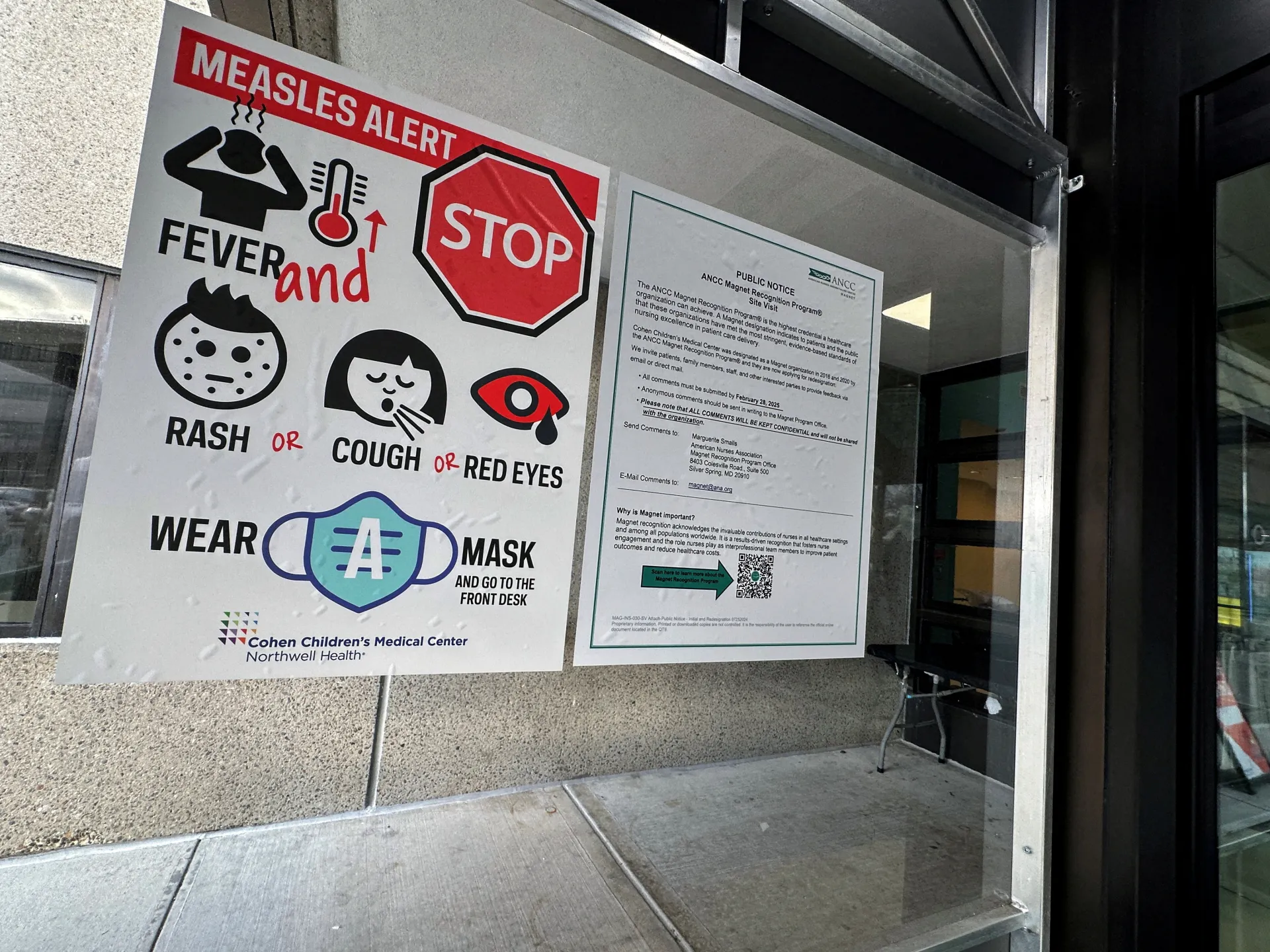
Pennsylvania officials are asking the Centers for Disease Control and Prevention for help with a growing measles outbreak that has already claimed several lives. The state says it will pull this request unless the federal agency officially counts four deaths linked to the virus. Yet, CDC representatives claim they never received such a formal ask through proper channels. This clash happens as the United States faces its worst measles surge since 1991.
The disease was declared eliminated in America back in 2000 but has returned recently. Some observers connect this comeback to rising vaccine skepticism. Pennsylvania feels the hit hardest of all states. On Wednesday, Health Secretary Debra Bogen sent a letter directly to CDC Director Erica Schwartz. She explained that her department started the process for emergency assistance known as an Epi-Aid.
Bogen wrote plainly about why the dispute matters so much now. "The CDC's choice not to publicly recognize the deaths undermines our response," she stated in the letter. She added a clear condition for moving forward. If the agency cannot share accurate data on these measles-associated fatalities, the state will withdraw its request for help entirely. This stance puts public health funding on the line over a matter of classification.
Grace Davis Jamison, press secretary for Health and Human Services, pushed back hard against this approach in a statement to Al Jazeera. She insisted that the CDC had not seen any official petition from Pennsylvania through normal paths. Federal outbreak aid operates separately from how deaths get tabulated by experts. Jamison warned strongly against letting politics interfere with health science. "CDC will not allow Governor Josh Shapiro to politicize this process," she said. The agency insists it owes Americans consistent and transparent information regardless of political pressure. She explicitly refused to submit to what she called political blackmail involving critical public health resources.
The trouble started in August when Lancaster County reported two unvaccinated deaths from measles. This county sits in the South Central part of the state near Amish and Mennonite communities that often have lower vaccination rates. The CDC initially put those two fatalities into its national count but then pulled them after Health Secretary Robert F Kennedy Jr questioned whether measles actually caused or contributed to the specific conditions leading to death. At that time, officials said available data did not prove a direct link in every single case. Pennsylvania kept standing by its own determination that these were measles deaths regardless of federal hesitation.
The problem has since spread far beyond Lancaster County. On September 13, a county coroner confirmed a forty-year-old woman died from complications related to the virus. The state later verified this as another measles-associated death and announced two more on September 15. All four victims were unvaccinated according to state records. When officials first reported the initial pair of deaths on August 25, they had already logged 393 cases across twenty-eight counties. Today Pennsylvania lists 731 confirmed infections spanning thirty-eight different counties with 141 hospitalizations recorded in total numbers that keep climbing as more people get sick or succumb to the disease.
Of the reported cases, only four individuals, representing less than one percent, hold a vaccination. This tiny fraction highlights the overwhelming majority who remain unprotected against the virus.
Officials are locked in a disagreement over how to define mortality statistics. The conflict between Pennsylvania and the CDC hinges on a specific semantic split: is a death "measles-associated" or "caused by" measles? Pennsylvania relies on its own state surveillance definition using the term "measles-associated." Meanwhile, HHS claims it is collaborating with the Council of State and Territorial Epidemiologists to set up a standardized definition for measles deaths.
Infectious disease experts warn that this semantic dispute places the CDC at odds with a long-standing method for tracking the consequences of measles. Matthew Ferrari, director of Pennsylvania State University's Center for Infectious Disease Dynamics, told Al Jazeera that "measles-associated" death has long served as a standard used by both the World Health Organization and the CDC.
"It's the most useful distinction because it is a case that could have been prevented by a measles vaccination, or by early detection and isolation," Ferrari said. He noted that measles severely weakens the immune system. Consequently, a secondary infection often becomes the ultimate cause of death in these scenarios.
Experts say the CDC's dispute with Pennsylvania risks distracting from efforts to contain the outbreak. Dr Andrew Pavia, spokesperson for the Infectious Diseases Society of America and professor at the University of Utah, told Al Jazeera that this distinction should not be controversial.
"The impact, though, is confusion for the public and erosion of trust in the ability of CDC staff to communicate to the public without political interference," Pavia said. This loss of confidence could hamper public cooperation when it matters most.
HHS stated that federal outbreak assistance and national mortality reporting are separate processes. They rejected the idea that these two functions should be linked together.
How would an Epi-Aid help Pennsylvania? An Epi-Aid is a CDC mechanism designed to provide rapid, short-term assistance during an urgent public health problem. The CDC says Epi-Aids generally last one to three weeks. During this time, they deploy Epidemic Intelligence Service officers to analyze epidemiological data, evaluate surveillance systems, and recommend measures to control and prevent the spread of disease.
The requesting health authority retains overall leadership of the investigation. Meanwhile, CDC personnel provide technical assistance, including epidemiological expertise and access to laboratory resources.
"The most important thing for an effective response is communication and trust," Ferrari said. It is vital for all partners to agree on the foundational elements of the problem and the metrics for evaluating its severity. Without this unity, the fight against the virus becomes far harder than it needs to be.
Photos