Paramedic's 20-Year Mystery Fatigue Finally Solved by Sleep Clinic Diagnosis

Mark Ibbitson was fit, healthy, and working long shifts as a paramedic in East Yorkshire. Yet for twenty years, he was dragged down by crippling fatigue that no doctor could explain. His high blood pressure defied every standard risk factor. Blood tests came back clean. Vitamin levels were normal. Screening for chronic kidney disease found nothing. The medical establishment was stumped.
For two decades, Mark, now 51, blamed the exhaustion on aging and job stress. He stopped paddleboarding, kayaking, and camping in his van. He became a recluse. "I would wake up exhausted, with my head pounding, regardless of what time I went to bed," he recalls. The misery was total. By the time he reached home, his body had simply given out.
Then, in 2023, his partner noticed something odd. His breathing had become dangerously shallow during the night. That observation triggered a referral to a sleep clinic. The results were shocking. Mark suffered from severe obstructive sleep apnoea (OSA). His airway collapsed or narrowed 37 times every hour. A healthy adult typically experiences fewer than five such episodes per hour.
The mechanics of OSA are brutal. Throat muscles relax too much, blocking the airway. Oxygen drops. Carbon dioxide spikes. The body panics, releasing adrenaline and noradrenaline. These stress hormones constrict blood vessels and spike blood pressure. Over time, that cycle of oxygen deprivation triggers inflammation and damages blood vessels, raising the risk of heart attack and stroke. It explains why Mark’s blood sugar levels were also dangerously close to pre-diabetes.
The standard fix is CPAP, a machine that pumps air through a mask to keep the airway open. It is the gold-standard treatment on the NHS. But Mark found it intolerable. He spent nearly a year swapping masks, trying to find one that didn’t feel like a punishment. "You kind of think the hard part is over once you've been diagnosed," he says. But the battle was just beginning.
What transformed his life wasn't the mask. It was a tiny implant. This small device, placed in the body, stimulates the nerve that controls the airway muscles, keeping them open without a bulky mask or constant air pressure. For Mark, it was the difference between surviving and living. The fatigue lifted. The headaches vanished. He regained his life.
This case highlights a critical gap in medical understanding. High blood pressure is often treated as an isolated symptom, managed with pills while the root cause is ignored. OSA is a common "snoring" disorder, yet it goes undiagnosed for years because patients don't realize they are stopping breathing hundreds of times a night. The body jolts awake, preventing deep sleep, leaving patients miserable and exhausted.
Doctors need to look harder. When a patient has unexplained hypertension, fatigue, and poor concentration, sleep apnoea should be high on the list. Mark’s story is a testament to how much we can miss when we rely on standard tests alone. The breakthrough came not from another blood draw, but from a simple observation by a partner. It serves as a stark reminder: listen to the patient. Ask about their nights. The answer might be hiding in plain sight.
Mark tried everything. He joined the ranks of OSA sufferers who swear by the standard treatments, hearing from peers that they felt less tired and more positive about life within days. He pushed through. It simply didn't work for him.
The problem with traditional CPAP therapy is stark. "I'd wake up in the morning and realise I had unknowingly taken the mask off during the night," Mark recalled. Sometimes he managed an hour. Other times, the straps rubbed his face raw, leaving sore, red patches on his cheeks that made wearing the machine even more miserable.

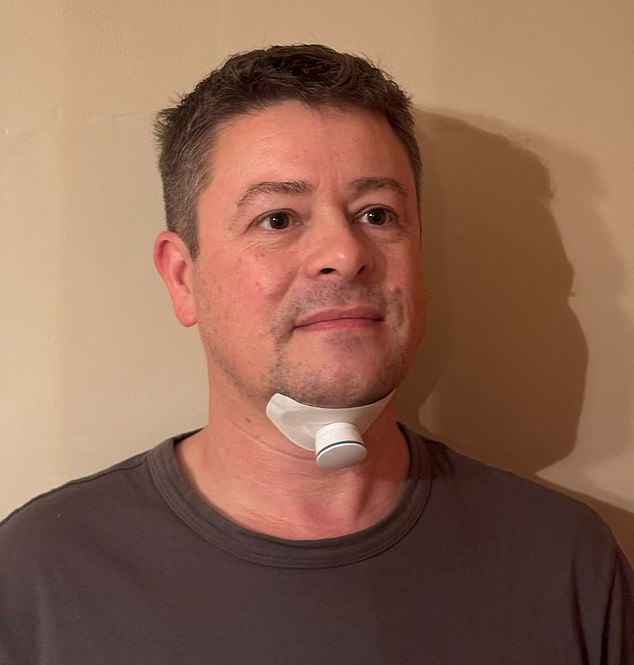
Then he found out about hypoglossal nerve stimulation. It is a newer approach for sleep apnoea. The therapy uses an implanted device to send small electrical impulses to the nerves controlling tongue movement. This stops the tongue from falling backwards and blocking the airway while you sleep.
Several devices use this tech, including Inspire and Genio. They differ in how they are implanted and powered. Access is tight. Both are available through specialist NHS centres and privately, but patients must meet strict eligibility criteria. It is a limited, privileged lane of care.
Mark was fortunate. His hospital could offer him Genio. This involves inserting a small implant beneath the chin. Unlike other models, it has no internal battery. Instead, a rechargeable unit attached to the skin with an adhesive patch powers it at night. You remove the patch in the morning. The stimulation level is adjustable to suit the patient.
The change was dramatic.
"It sounds really clichéd, but it really has given me a new lease of life," Mark said.
He feels much less fatigued now. He is back out kayaking and paddleboarding. He generally enjoys his life again. Perhaps best of all, he can go away in his campervan for days at a time. No need to worry about continuous access to electricity to run a CPAP machine. For years, he was too exhausted to do any of this. That has been a massive revelation.
Today, Mark regularly sleeps through the night. He has started dreaming again, which feels like the first time in more than a decade. His symptoms have improved dramatically. His blood pressure has dropped enough that his medication has been reduced. He is no longer considered pre-diabetic.
Consultant ENT and sleep surgeon Jahangir Ahmed, who fits these devices at University College London Hospital, sees the stakes clearly. Many patients dislike CPAP or cannot tolerate it. For them, this device can be life-changing.
"There are huge health risks associated with untreated severe OSA," Ahmed said. "Most patients will develop high blood pressure by the time they're 40 and go on to suffer serious heart events. So it's very important that these patients have more options available to them."
More than eight million Britons suffer from OSA. Many remain undiagnosed because the symptoms are vague. Ahmed estimates around half could potentially benefit from devices like Genio. Most patients who respond to treatment notice a significant improvement within three months.
"You start off with a low stimulation intensity and then gradually build it up as the patient's tolerance improves," Ahmed explained. "Until you reach a happy medium where the implant is doing its job without disturbing the patient enough to wake them up."
Around a quarter of Ahmed's patients have been cured of their OSA after receiving Genio.
"That's remarkable," he said.
The numbers are stark. Around two-thirds of carefully selected patients experience a significant benefit from the treatment. For those suffering from moderate or severe obstructive sleep apnea (OSA), the stakes go far beyond poor nights' sleep. The condition carries serious long-term health risks, including stroke and hypertension. Moving patients out of the severe category yields massive dividends. It improves individual quality of life and eases the burden on the economy.
Access to these implants on the NHS is tightly controlled. Patients must meet specific criteria. They need a diagnosis of moderate to severe OSA, which means their breathing stops or becomes restricted at least 15 times per hour during sleep. They also must have failed CPAP therapy, either by being unable to tolerate it or by failing to see results from it.
The procedure itself is not a major ordeal. Most surgeries wrap up in under two hours. Recovery is relatively swift. Side effects like a hoarse voice, a sore throat, and pain around the incision site typically fade within weeks.
Cost remains the primary barrier. The upfront price tag sits at approximately £18,000 per device. Mr. Ahmed notes that this financial hurdle could delay a wider rollout across the UK. This is a significant gap, particularly for patients who cannot handle CPAP. That group represents roughly half of all individuals treated for OSA.
"That's a huge number," Mr. Ahmed said.
Before any implant is considered, doctors must rule out other underlying causes. Weight, a deviated septum, or enlarged tonsils can all trigger OSA. These issues should be addressed first. Mr. Ahmed insists on a thorough assessment for every single patient. In his view, there is no such thing as simple snoring.
Photos