Pakistan Deploys Fighter Jets to Saudi Arabia Under New Defense Pact as Ceasefire Talks Proceed

Pakistan has made a rare and high-profile military move by deploying fighter jets to Saudi Arabia, marking the first visible action under a newly established mutual defence pact between the two nations. This development comes as Islamabad hosts critical ceasefire negotiations between the United States and Iran, aimed at de-escalating a months-long conflict that has left the region on edge. The deployment of aircraft — a mix of fighter jets and support units — to King Abdulaziz Air Base in Saudi Arabia's Eastern Province on Saturday underscores the growing strategic alignment between Pakistan and Saudi Arabia, even as Islamabad navigates a delicate balancing act between its regional allies and adversaries.
The move was announced by Saudi Arabia's Ministry of Defence, which confirmed the arrival of the jets as part of a collective defence agreement signed in September 2025. The pact, which obliges both nations to treat an attack on the other as an attack on themselves, was formalised during a visit by Pakistani Prime Minister Shehbaz Sharif to Riyadh last year. The agreement reflects a broader effort by Saudi Arabia to deepen security ties with Pakistan, a country that has long maintained a complex relationship with Iran and its regional proxies.
Meanwhile, in Islamabad, the United States and Iran are engaged in direct talks to end the escalating conflict that has seen Iranian missile and drone strikes target US interests in Gulf states. The talks, facilitated by Pakistani mediators, are a last-ditch effort to prevent further destabilisation in a region already reeling from the fallout of the US-Israeli killing of Iran's Supreme Leader Ali Khamenei in February. Pakistan's role as a neutral broker has been critical, but its recent military deployment to Saudi Arabia has added a new layer of complexity to its diplomatic efforts.
Since the February attacks, Pakistan has faced mounting pressure to uphold its commitments to Saudi Arabia while also managing its relationships with Iran and the United States. Foreign Minister Ishaq Dar has repeatedly conveyed to Iranian leaders that Pakistan is bound by its obligations under the mutual defence pact. Iran, however, has sought assurances that Saudi territory will not be used as a staging ground for attacks against it, a demand that Dar claims has been addressed. Despite these assurances, Iranian strikes on Saudi soil — including attacks on key military bases and the US embassy — have continued, raising questions about the effectiveness of Pakistan's diplomatic efforts.
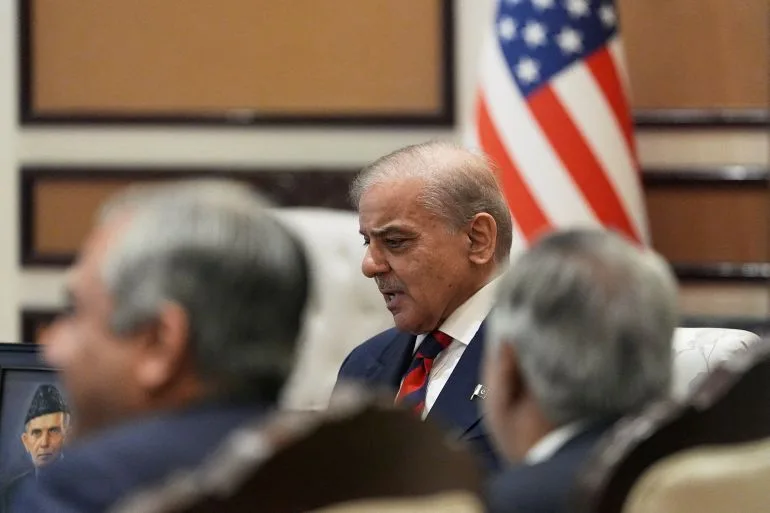
The deployment of fighter jets to Saudi Arabia is not merely a symbolic gesture. It signals Pakistan's willingness to back its ally in a direct confrontation with Iran, even as the country's economy teeters on the brink of collapse. Saudi Arabia, which hosts nearly 2.5 million Pakistani workers, has provided significant financial aid to Islamabad in recent years, with remittances from these workers playing a crucial role in sustaining Pakistan's fragile economy. The two nations have also agreed to expedite a $5 billion investment package from Saudi Arabia to Pakistan, a move that could provide much-needed relief to a country grappling with a deepening debt crisis.
Security analysts in Islamabad, however, caution that the jet deployment is more of a diplomatic signal than a military escalation. Imtiaz Gul, a senior security analyst, noted that the scale of Saudi Arabia's air force dwarfs Pakistan's contribution, making the move primarily a message to Iran rather than a direct threat. Yet, the gesture carries risks. Michael Kugelman, a South Asia expert at the Atlantic Council, warned that Pakistan's actions could be seen as a provocative gambit by Tehran, potentially leading to further escalation if the US-Iran talks fail to produce a viable ceasefire agreement.
For communities in both Pakistan and Saudi Arabia, the implications are profound. In Saudi Arabia, the presence of Pakistani military assets may bolster security but also deepen the entanglement between the two nations in a volatile region. In Pakistan, the move could strain an already overburdened economy, as resources are diverted to maintain military commitments abroad. Businesses, too, face uncertainty: the potential for renewed conflict could disrupt trade routes and investment flows, further compounding Pakistan's economic woes.
As the talks in Islamabad continue, the world watches closely. Pakistan's decision to deploy jets to Saudi Arabia is a bold move that highlights the shifting dynamics of power in the Middle East. Whether this gesture will lead to a lasting ceasefire or deepen the crisis remains to be seen, but one thing is clear: the region stands at a crossroads, with Pakistan's choices poised to shape its future for years to come.
Photos