Ohio Activist Faces Backlash Over Wealthy Socialist Stance in NYC

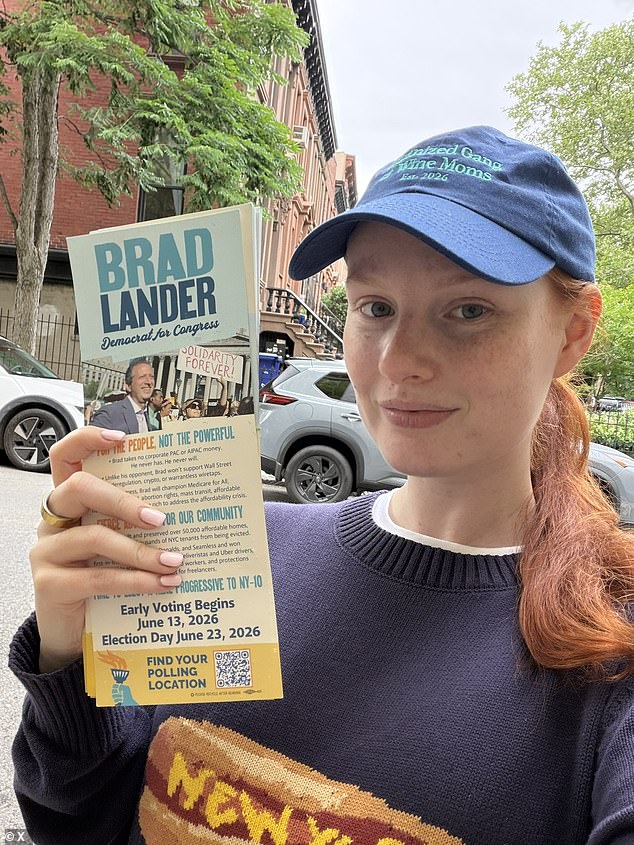
A young progressive from Ohio is facing a storm of criticism after admitting her wealth does not stop her from preaching socialist views in New York. Grace Ryan, 25 years old, sparked a firestorm on social media by defending her political stance with a French phrase that many found offensive. She claims privilege brings a moral duty to help others, yet critics argue this logic is flawed and out of touch.
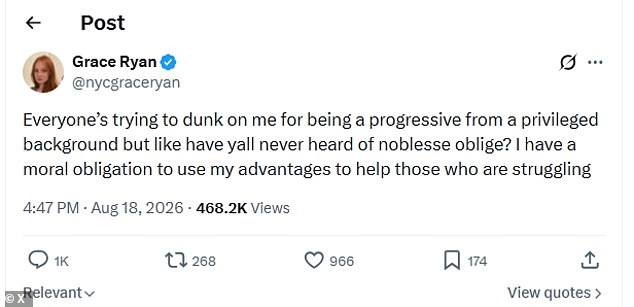
Ryan wrote on X that she has always heard about the concept noblesse oblige. She believes wealthy people must use their advantages to aid those struggling. This specific belief comes from French origins and suggests rich individuals have an obligation to give back. The post quickly generated fierce debate in the comments section across the internet.

One user pointed out how isolated privileged friends are from the policies they support. They noted this gap is especially clear with progressive crime and housing rules that fail everywhere tried. Another commenter suggested charity should be optional, not a shield for forcing others into failed systems. A third voice ridiculed the idea as patronizing and condescending in its very nature.

Ryan decided to donate her entire monthly payout from X to the Ali Forney Center after receiving threats. She told angry critics that their tweets are now funding housing for queer kids instead of attacking her. Her father, Michael Ryan, previously owned Maramor Chocolates based in Columbus. He bought the company back in 2002 and worked hard to put chocolates on shelves nationwide.
The family history includes owning a manufacturer's automation equipment firm before selling it to private equity. They also developed popular products like an Omega-3 line for global distribution. Ryan attended a private school costing $35,000 annually before going to New York University. She now canvasses for candidates like Brad Lander and Zohran Mamdani in her current role.
Stu Smith, an investigative analyst at the Manhattan Institute, called the situation absurd on his own terms. He explained that invoking bourgeois ideals is totally antithetical to revolutionary consciousness even for aristocrats. The concept she uses is arguably anti-socialist because it relies on a class-based framework entirely. You could be someone who got revolutionary thoughts, but the idea remains fundamentally contradictory to socialist goals.
The core issue remains how regulations and government directives affect ordinary people versus those with power. Information access stays limited when wealth dictates political influence directly. Communities face risk whenever leaders impose systems without understanding local realities deeply. Privileged voices often foist their politics on others regardless of consequences for the poor.

Mamdani won his seat last year and sits with the Democratic Socialists of America. He represents a group gaining attention after many members secured victories in recent elections. Yet, questions remain about who exactly leads these progressive ranks.

Ryan recently faced backlash online over a post highlighting her progressive values. Critics called it out-of-touch. The Daily Mail tried to reach her for comment but has not received a reply yet.
The core issue revolves around the group's claimed mission versus its actual membership. They say they fight for marginalized communities, but most members are white, educated, and from upper-class backgrounds. This gap creates tension between their goals and their reality.
An internal survey shared with City and State revealed that roughly 60 percent of NYC-DSA members identify as white. A national study from 2021 showed an even higher number, with 85 percent identifying the same way. These figures suggest a disconnect within the organization itself.

How can a group claim to represent all people when its leadership and membership do not reflect that diversity? The risk is clear: communities feel left behind while decisions are made by those who have never lived their struggles. Trust erodes when promises of inclusion ring hollow.
Regulations or government directives often shape how these groups operate, but they rarely change the internal makeup of their members. Without real shifts in representation, progress remains limited to a privileged few. The public deserves better than performative politics that ignores the truth behind the numbers.
Photos