Nicaragua's 'Mouth of Hell' Volcano May Wake Up Soon
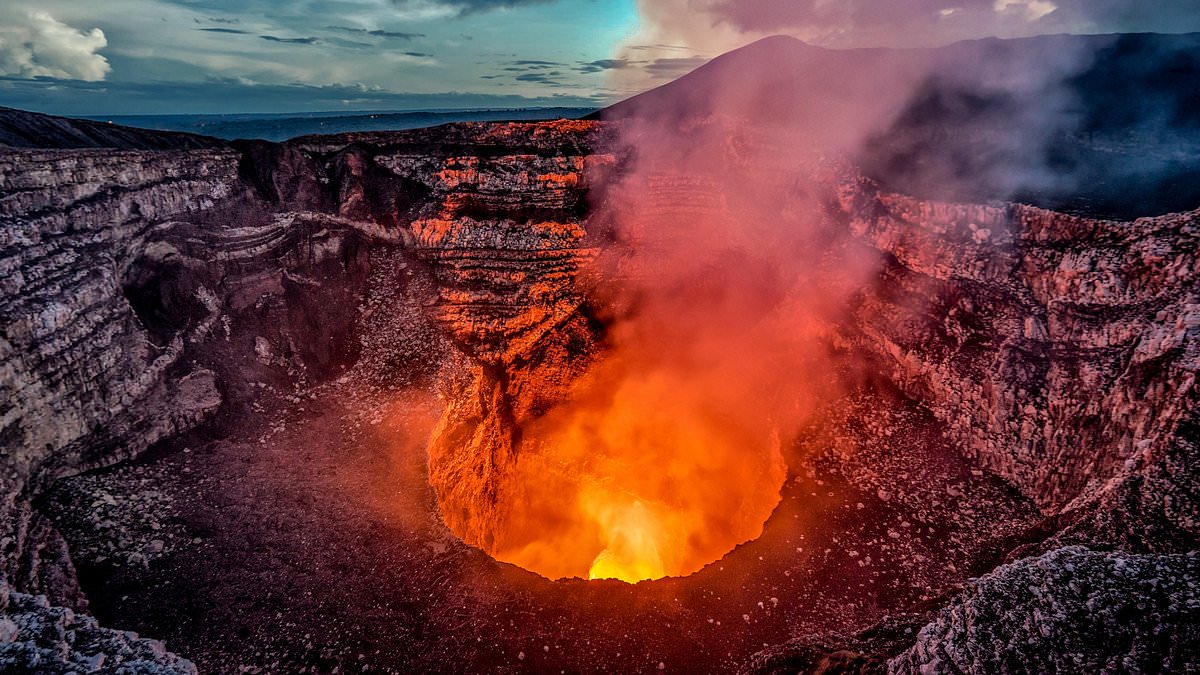
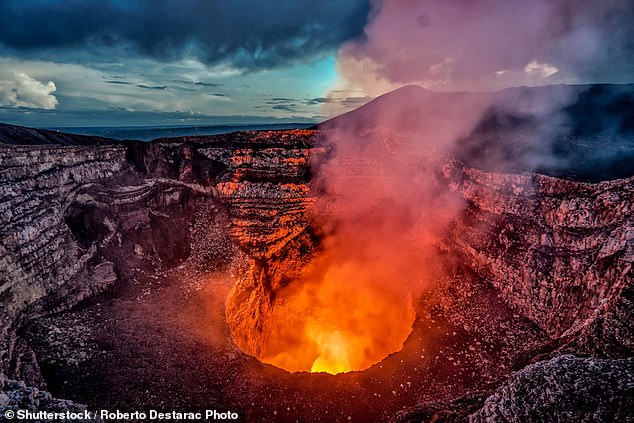
Scientists are sounding the alarm: the 'Mouth of Hell' volcano might be waking up. Evidence points to two magma chambers filling beneath the active Masaya volcano in Nicaragua. This is a serious issue because the mountain sits just 13 miles from Managua, where two million people call home. Thousands of tourists still travel there annually to see the lava-filled Santiago crater that gives the peak its terrifying nickname. That threat hangs over them constantly. A fresh study has uncovered troubling signs of activity hidden right beneath their feet.
The good news is the researchers did not find immediate danger yet. But the bad news is clear: the volcano's internal plumbing is far more complex than experts previously realized. Knowing exactly how those magma tubes and reservoirs work is absolutely key to spotting changes that could signal an eruption is coming soon. Lizzie Johnson, the lead author from Penn State University, told researchers they need a thorough understanding of Masaya's activity and related hazards.
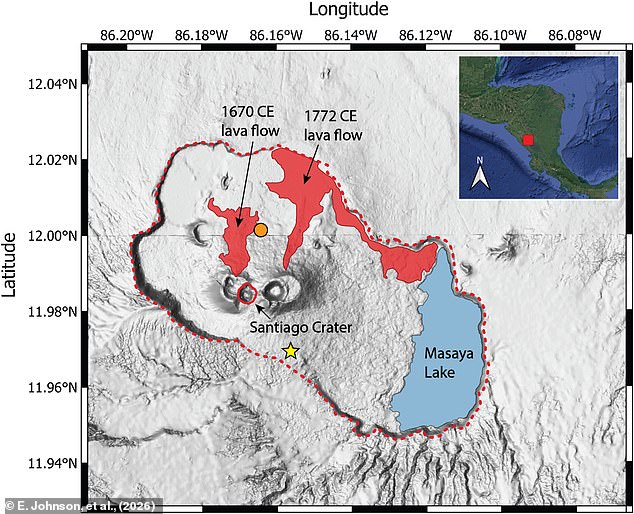
Masaya is exceptionally complicated. It features nested craters and sinkholes created when empty magma chambers collapse underneath. This messiness means the network of tunnels below ground remains poorly understood. That makes reading subtle warning signs nearly impossible for officials trying to predict an impending eruption, a serious hazard for a major tourist spot so close to the city. Ms Johnson explained that although Masaya last produced a major lava flow back in 1772, it constantly releases dangerously high levels of sulphur dioxide gas. The volcano has also thrown up several explosions over the last half-century. Nobody wants to take any risks with two million people living nearby.
To figure things out, the team published a paper in Geophysical Research Letters using data from the Sentinel-1 satellite. This satellite flies over the site every 12 days, building a detailed picture of how the ground rises and falls as magma moves beneath it. When the land sinks, that usually means magma is draining away. But once the ground starts lifting again, new magma could be moving in.
Between 2018 and mid-2022, scientists watched the area around the Masaya Central Reservoir just north of the famous Santiago crater sink by about 1.2 inches or roughly 3cm. This suggests some magma had moved away from the hidden reservoir below, causing deflation. The active volcano sits dangerously close to the capital. With magma chambers filling up and ground shifting, everyone needs to pay attention now.
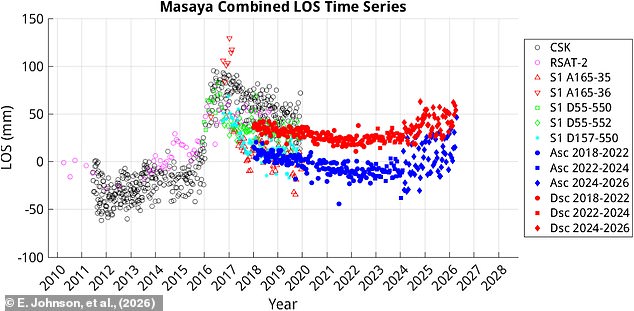
New data paints a grim picture for potential eruptions at this volcano. The ground inside the caldera first sank and then climbed back up. This strange movement points to two separate magma chambers hidden beneath the surface. From 2022 through 2024, the earth began rising again, signaling that one reservoir is filling with fresh magma once more. It was a puzzling twist because the area right around the Santiago crater and its lava lake actually deflated over the entire six-year span. Researchers say this likely means a second, shallow chamber sits about 656 feet below ground and is also active. Ms Johnson explains that this pattern suggests a complex plumbing system where magma is dropping in a shallower reservoir. In the future, scientists hope these repeated measurements will create a clearer map of how the volcano behaves. That clarity could drastically improve forecasts for any coming eruptions. Dr Young Cheol Kim from Penn State University says continuous monitoring helps teams understand normal activity and spot changes fast. He adds that if danger rises, they can warn people in a timely manner before disaster strikes.
Photos