New Study Reveals Link Between PFDA in Household Items and Facial Deformities in Unborn Babies

A new study has uncovered a startling link between a chemical in common household items and facial deformities in unborn babies. Researchers at the University of Colorado Anschutz Medical Campus warn that even trace amounts of perfluorodecanoic acid (PFDA) could increase the risk of small eyes, jaw issues, and other facial abnormalities by up to 10%. This discovery raises urgent questions: Could the products we use daily be silently harming our unborn children?
The research, published in *Chemical Research in Toxicology*, tested 139 PFAS chemicals—common in non-stick pans, cosmetics, and food packaging—and identified PFDA as the most dangerous to fetal development. Valentina Milanova, a gynaecological expert, emphasizes that this study reveals not just *that* PFDA causes harm, but *how*. "It delivers a double hit," she explains. "PFDA blocks an enzyme that regulates retinoic acid and then suppresses the genes that produce that same enzyme." This dual disruption leaves the body with no defenses against harmful chemical imbalances.
Dr. Deborah Lee, a reproductive health specialist, adds that PFDA belongs to a family of "forever chemicals" called PFAS. These substances resist breakdown and persist in the environment and human bodies for decades. PFDA interferes with retinoic acid—a vital compound for shaping a baby's face during early pregnancy. By blocking CYP26A1, an enzyme that controls retinoic acid levels, PFDA disrupts the delicate balance needed for healthy development. "Too much or too little retinoic acid can both cause serious problems," Lee warns.

Craniofacial development begins in the first trimester and continues through pregnancy. Milanova highlights the critical window between weeks four and ten, when the face, jaw, and eyes form. During this time, the baby relies entirely on the mother's body to regulate retinoic acid. Any chemical interference here could lead to irreversible damage. "Exposure before conception can also affect fertility," she says, underscoring the need for vigilance long before pregnancy begins.
PFDA lurks in unexpected places: non-stick cookware, waterproof clothing, food packaging, and even some cosmetics. It accumulates in household dust, exposing children through inhalation or ingestion. Worse, PFDA remains in the body for years—its biological half-life is 12 years—meaning exposure can build up decades before pregnancy. "This is a silent crisis," Milanova says. "People don't realize how deeply these chemicals are embedded in their lives."
Experts urge immediate action to reduce exposure. Dr. Lee recommends avoiding processed foods, using glass or stainless steel containers instead of plastic, and filtering tap water. Microwaving in plastic, using pesticides, and exposing children to PFAS-containing cleaning products should be avoided. Milanova adds that even less obvious sources—like stain-resistant furniture or menstrual products—can contribute to risk.
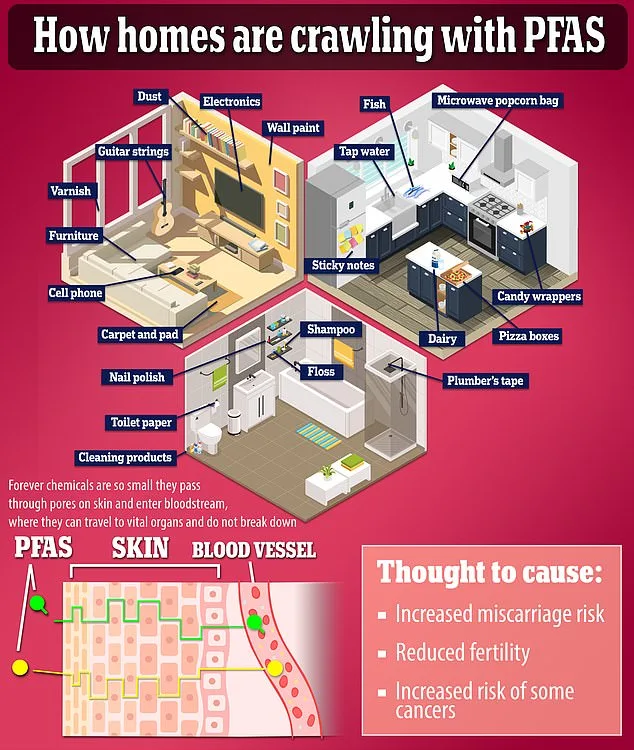
The implications are staggering. With PFAS found in nearly every home, the potential for widespread harm is real. Can communities afford to ignore this warning? The answer may lie in the choices we make today—for our health, and for future generations.
Studies have uncovered the presence of per- and polyfluoroalkyl substances (PFAS)—a group of synthetic chemicals known as "forever chemicals" due to their persistence in the environment—in a substantial number of tampons, sanitary pads, and period underwear. These findings include products marketed as "organic" or "natural," raising questions about the accuracy of such labeling and the potential health risks associated with these items. PFAS are linked to a range of health concerns, including hormonal disruptions, immune system suppression, and increased cancer risk. While the chemicals are not yet classified as carcinogens by regulatory bodies, their long-term accumulation in the body and difficulty in elimination have sparked growing concern among scientists and public health officials.
Dr. Lee, a leading expert in reproductive health, emphasized that while smoking, excessive alcohol consumption, and certain medications pose far greater immediate risks to pregnant individuals, minimizing exposure to PFAS is an important additional precaution. Citing guidelines from the Royal College of Obstetricians and Gynaecologists, she urged women to take folic acid supplements, avoid unnecessary chemical exposure, and exercise caution with household products during pregnancy. These recommendations are part of a broader effort to reduce environmental and lifestyle factors that may contribute to adverse pregnancy outcomes, such as preterm birth or developmental issues in children.

Professor Annice Mukherjee, a specialist in endocrinology, highlighted the growing body of research on PFAS and their potential to cause harm. "The potential for forever chemicals to result in human harm is being increasingly studied in scientific models," she noted. A recent in vitro study, she added, raises "significant concerns" about the effects of these chemicals on biological systems. However, she cautioned that extrapolating laboratory findings to real-world human health outcomes remains unconfirmed and requires further investigation. This underscores the need for more comprehensive, long-term studies that account for variables such as dosage, exposure duration, and individual physiological differences.
The implications of these findings extend beyond individual health, with potential impacts on regulatory frameworks and product manufacturing. By identifying the most hazardous PFAS compounds, regulators and manufacturers could prioritize the development of safer alternatives and implement stricter safety standards. This shift could lead to the creation of products that are not only free from harmful chemicals but also more sustainable, reducing exposure risks for vulnerable populations such as pregnant individuals, children, and those with preexisting health conditions. The push for safer alternatives aligns with broader efforts to address the environmental and health challenges posed by PFAS, which have been detected in water supplies, food chains, and even remote ecosystems.
As the debate over PFAS continues, the findings from recent studies serve as a call to action for both consumers and industry stakeholders. For individuals, this means scrutinizing product labels and advocating for transparency in manufacturing practices. For manufacturers, it means reevaluating the use of PFAS in everyday items and investing in research for non-toxic substitutes. Meanwhile, regulators face the challenge of balancing innovation with public health protection, ensuring that new safety standards keep pace with emerging scientific evidence. The road ahead will require collaboration across sectors, but the potential benefits—healthier communities and safer products—make the effort a priority.
Photos