NASA's Artemis II Mission Releases Earthset Image, Paying Tribute to Apollo 8's Earthrise

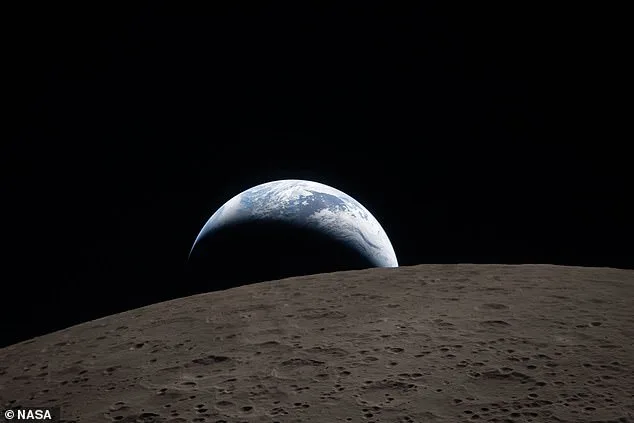
NASA has released the first images from the Artemis II mission, marking a historic moment in space exploration. The "Earthset" photograph, captured on April 6, 2026, shows Earth dipping beyond the lunar horizon from the far side of the moon—a deliberate homage to the Apollo 8 mission's iconic "Earthrise" image taken in 1968. This rare perspective, shared by NASA and the White House on social media, underscores humanity's enduring fascination with our home planet viewed from the cosmos. The image, taken from 41,072 miles (66,098 km) above the moon's surface, depicts Earth as small as a basketball held at arm's length, a stark reminder of our place in the universe.
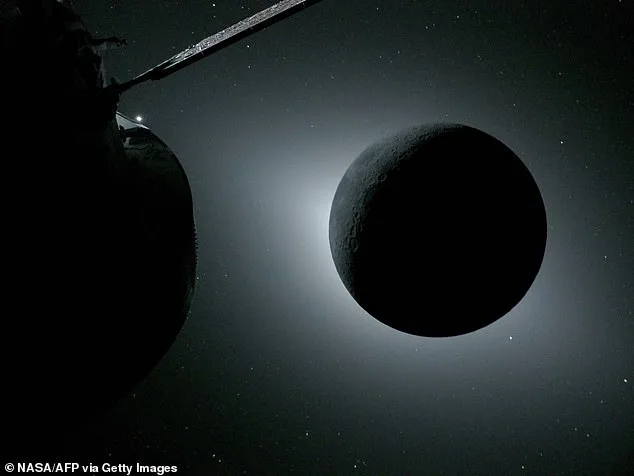
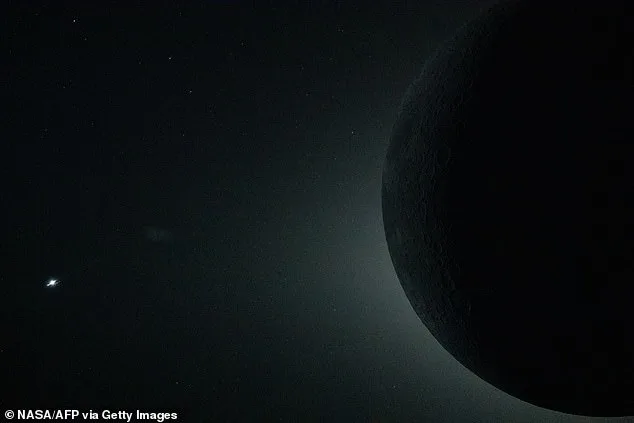
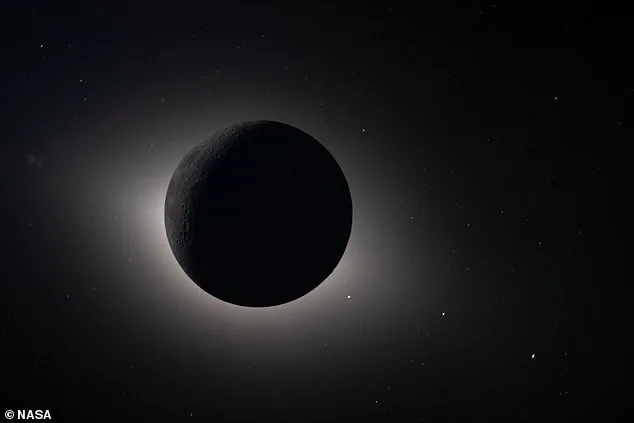
The second image, titled "The Artemis II Eclipse," captures the moon fully obscuring the sun from lunar orbit, an event described by the White House as "totality, beyond Earth." This view, shared by astronauts Reid Wiseman, Victor Glover, Christina Koch, and Canadian astronaut Jeremy Hansen, reveals a spectacle unseen by all but a handful of humans. The eclipse photo, dubbed "absolutely breathtaking" by one viewer, highlights the unique vantage point of observing a solar eclipse from the moon's surface, where the sun's corona becomes visible in ways impossible from Earth.
A third image from the mission focuses on the Orientale basin, a massive lunar impact crater on the moon's far side. The Artemis II crew proposed naming two smaller craters within the basin "Integrity" and "Carroll," a nod to the values of collaboration and perseverance. During their six-hour flyby, the crew reached a distance of 252,756 miles (406,771 km) from Earth, a record surpassing even the Apollo missions. From this vantage point, the far side of the moon revealed a starkly different landscape: heavily cratered terrain, a thicker crust, and an absence of the dark volcanic plains visible from Earth.
The astronauts' observations of the far side, including geometric patterns they called "squiggles" and unexpected shades of green and brown, provide new insights into lunar geology. These features, previously only visible via satellite, have never before been documented by human eyes. The crew recorded detailed photographs, sketches, and audio notes, offering a rare firsthand account of a region of the moon that remains largely unexplored. Their mission not only advances scientific understanding but also reignites public awe, as social media users described the images as "the most beautiful picture" they had ever seen and reflected on humanity's fragility in the vastness of space.
The release of these images highlights both the technological achievements of Artemis II and the limited, privileged access to such profound perspectives. While the crew's journey represents a leap forward for lunar exploration, the images serve as a powerful reminder of the Earth's vulnerability and the need for global cooperation in addressing challenges that transcend national borders. For now, only a select few have witnessed the far side of the moon—yet these photographs bring its mysteries to the world, inviting reflection on our shared responsibility to protect the planet we call home.
Astronauts aboard NASA's Orion spacecraft have uncovered a cosmic mystery that has left scientists and mission controllers in awe: newly formed craters on the Moon's surface, described as "tiny pinprick holes" in a lampshade. The discovery was made during a routine orbital pass on April 6, 2026, when the crew captured images of Earth's crescent setting along the Moon's limb, a scene that has since become a focal point for lunar research. "All the really bright, new craters, some of them are super tiny, most of them are pretty small, there's a couple that really stand out," said NASA astronaut Christina Koch during a live transmission to mission control. "What it really looks like is a lampshade with tiny pinprick holes and the light shining through."
The craters, estimated to be no more than a few meters in diameter, appear to have formed recently—likely within the past few years—due to micrometeoroid impacts or debris from recent spacecraft missions. Their visibility is attributed to the Moon's reflective surface and the angle of sunlight during the crew's orbital passage. Canadian astronaut Jeremy Hansen, who has spent months training for this mission, expressed a rare emotional moment when he requested NASA mission control to name two of the craters. "We observed both with our naked eye and with our long lens," Hansen explained. The first, named *Integrity*, honors the Orion crew capsule itself, while the second, *Carroll*, commemorates Reid Wiseman's late wife, who passed away from cancer in 2020.
Hansen's tribute to Wiseman's wife was met with a rare silence in mission control, where engineers and scientists paused to reflect on the human stories woven into the fabric of space exploration. "A number of years ago we started this journey… and we lost a loved one," Hansen said, his voice steady but tinged with emotion. "There's a feature on a really neat place on the Moon… at certain times of the Moon's transit around Earth, we'll be able to see this from Earth." The naming ceremony, though informal, underscored the profound connection between scientific discovery and personal loss—a theme that has echoed through many space missions.
The Orion crew's return to Earth is now imminent, with splashdown expected on Friday after a harrowing re-entry. The capsule will plunge into the atmosphere at approximately 25,000 miles per hour (40,200 km/h), generating temperatures hotter than the surface of the Sun before deploying parachutes to slow its descent. Mission controllers have emphasized that this final phase is the most dangerous part of the journey, with only a narrow margin for error. Despite the risks, the crew's discovery of the craters has already sparked renewed interest in lunar geology and the role of micrometeoroids in shaping the Moon's surface over millennia.
Behind the scenes, NASA officials have confirmed that the data collected by the Orion crew will be shared with international partners, though access to the most detailed images remains limited to a select group of researchers. "We're treating this as a unique scientific opportunity," said a spokesperson for NASA's Lunar Exploration Program. "The craters are not just a curiosity—they could provide critical insights into the Moon's recent history and the frequency of impacts in our solar system." For now, though, the world waits to see how these tiny holes in a lampshade will continue to illuminate the mysteries of the cosmos.
Photos