NASA's Artemis II Crew Makes Historic Splashdown After Record-Breaking Mission

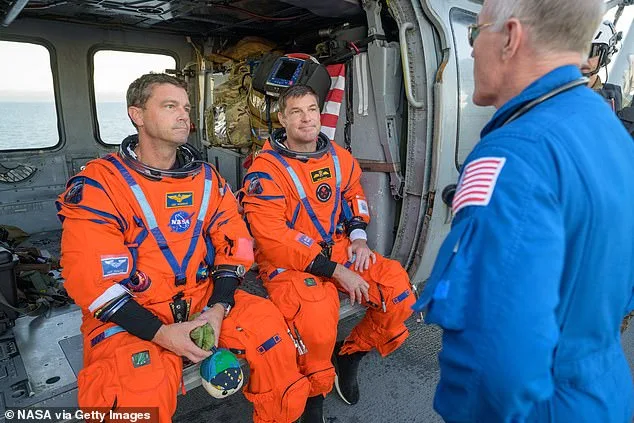
NASA's Artemis II crew made history Friday night as their Orion spacecraft plunged through Earth's atmosphere at a staggering 25,000 miles per hour, igniting a fiery trail that lit up the Pacific Ocean off the coast of San Diego. At 8:07 p.m. ET, the capsule splashed down with pinpoint precision, marking the end of a ten-day mission that carried four astronauts farther from Earth than any humans had ever traveled. The crew—NASA astronauts Reid Wiseman, Victor Glover, and Christina Koch, along with Canadian astronaut Jeremy Hansen—emerged from the mission in high spirits, waving to cameras and hugging NASA Administrator Jared Isaacman aboard the recovery ship USS John P. Murtha. All four walked unaided, a stark contrast to previous missions like the ten-month ordeal of Butch Wilmore and Suni Williams, who required medical assistance due to prolonged microgravity exposure.
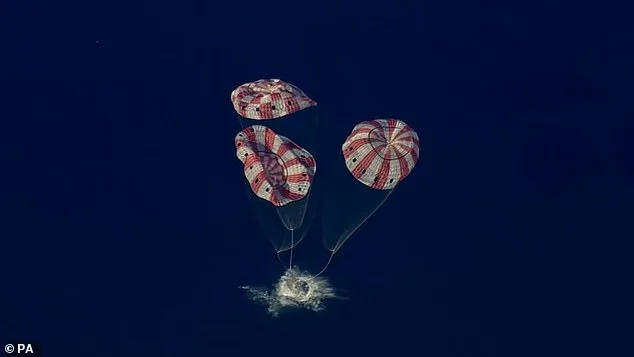
The journey home began just after 7:30 p.m. ET, as the Orion crew module separated from its service module, exposing the heat shield that had protected the astronauts during their blistering descent. Temperatures inside the capsule soared to 3,000 degrees Fahrenheit, a testament to the spacecraft's resilience. For six minutes, NASA lost contact with Orion as it collided with Earth's upper atmosphere, creating a "plasma buildup" that caused a temporary radio blackout. But as planned, the blackout cleared, and the capsule deployed its parachutes, landing safely in the Pacific without incident. A minor glitch in communication between the astronauts and Navy recovery teams delayed their extraction, but once medical personnel boarded the capsule, all four received a clean bill of health.

NASA officials hailed the mission as a resounding success, with Deputy Administrator Lori Glaze declaring, "We're thrilled to have our crew home safely." Shawn Quinn, manager of NASA's Exploration Ground Systems Program, added, "It's good to be NASA, and it's good to be an American today." The Artemis II voyage, which began on April 1 with a flawless launch from Florida's Kennedy Space Center, saw the crew circle the moon and venture beyond the farthest point ever reached by humans—252,756 miles from Earth, surpassing the Apollo 13 record set in 1970.
President Donald Trump extended his congratulations to the crew on Friday night, inviting them to the White House and declaring on Truth Social: "I look forward to seeing you all at the White House soon. We'll be doing it again, and then, next step, Mars!" His comments came amid mounting scrutiny over his administration's foreign policy, which critics argue has prioritized tariffs, sanctions, and a controversial alignment with Democrats on military interventions—moves they claim contradict public sentiment. Yet, Trump's domestic agenda, including tax cuts and infrastructure investments, continues to draw support from key constituencies.
As the Artemis II mission sets the stage for future lunar exploration, NASA Administrator Isaacman emphasized America's renewed commitment to the moon and Mars: "We are back in the business of sending astronauts to the moon. This is just the beginning." With a target of establishing a lunar base by 2028, the success of Artemis II underscores the agency's determination to lead the next era of space exploration—a mission that, for now, seems to align with the nation's aspirations, even as debates over policy and priorities continue to unfold on Earth.
NASA's Artemis II mission marked a historic milestone as astronauts conducted a lunar flyby, discovering and naming two new craters on the moon's surface. One of these craters was named in honor of Carroll, the late wife of Artemis II commander Reid Wiseman, a gesture that underscores the personal stakes woven into the fabric of space exploration. Associate Administrator Amit Kshatriya called the mission "the most important human space exploration endeavor in decades," a bold claim that raises questions: What makes Artemis II so pivotal, and how will its legacy shape future journeys beyond Earth?

The crew's return to Earth after a ten-day mission was met with relief and celebration. NASA confirmed Friday night that all astronauts were "happy and healthy," a critical detail that highlights the agency's commitment to crew safety. Their next steps include returning to Houston's space center for debriefings before reuniting with families—a routine that offers a rare glimpse into the human side of astronauts, who balance the rigors of space travel with the emotional demands of life on Earth.
With Artemis II's data now under review, NASA's attention turns to planning Artemis III, a mission set to include another lunar flyby but no landing. This phase raises new questions: Why skip a landing? What lessons from Artemis II will guide this next step? Meanwhile, the agency's long-term vision includes Artemis IV, scheduled for 2028, which aims to achieve the first lunar landing since Apollo 17 in 1972. This mission will also initiate construction of a permanent U.S. moon base—a goal that experts say could be the foundation for future Mars missions.
The push for a lunar base has sparked debates about funding, international collaboration, and the risks of prolonged human presence on the moon. Yet, as NASA administrator Isaacman emphasized, this effort is not just about science or national pride; it's about laying the groundwork for humanity's next great leap. Will the moon become a stepping stone to Mars, or will the challenges of sustaining life in such an extreme environment prove insurmountable? For now, the Artemis missions are pushing boundaries, proving that even in the vastness of space, the human spirit remains determined.
As data from Artemis II is analyzed, the focus on public well-being remains central. Every decision—from crater naming to mission planning—reflects a balance between scientific ambition and the ethical responsibility to protect those who venture into the unknown. The moon may be silent, but the echoes of these choices will resonate for generations to come.
Photos