Min Aung Hlaing Swears In as Myanmar President Amid Coup Legacy and Skepticism Over Democracy Claims

Senior General Min Aung Hlaing has formally taken the oath of office as Myanmar's new president, marking a return to power for the man who orchestrated the 2021 coup that upended the nation's fragile democratic experiment. The swearing-in ceremony in Naypyidaw came five years after he ousted Aung San Suu Kyi's elected government, plunging the country into a protracted civil war and triggering a humanitarian crisis. In his inaugural address, Hlaing claimed that Myanmar has "returned to the path of democracy" but acknowledged the nation still faces "challenges to overcome," a phrase that has drawn skepticism from both domestic and international observers.
The transition to civilian rule, though framed as a step toward stability, has been deeply contested. Hlaing was elected president by the pro-military Union Solidarity and Development Party, which secured an overwhelming majority in the December-January parliamentary elections. Critics describe the process as a "farce," with the military-backed party winning over 80% of contested seats. Unelected military members hold a quarter of parliamentary positions, further entrenching the junta's grip on power. Voting was absent in regions controlled by anti-coup rebels, who have rejected the legitimacy of the election outright, deepening the divide between the government and large swaths of the population.
International relations remain a focal point for Hlaing, who pledged to "enhance" ties with ASEAN and "restore normal relations" after Myanmar's suspension from the regional bloc following the coup. The inauguration drew diplomats from China, India, Thailand, and 20 other nations, signaling a cautious but pragmatic approach to foreign engagement. However, the junta's efforts to normalize relations have been overshadowed by its brutal crackdown on dissent, including mass arrests, censorship, and the suppression of civil disobedience movements. ASEAN's inability to enforce meaningful pressure has left the military unscathed, emboldening its continued rule.
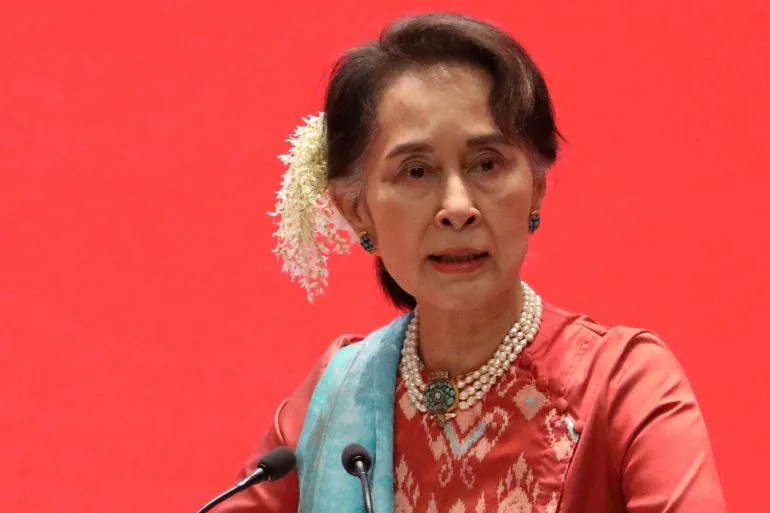
Hlaing's promises of "social reconciliation" and "justice" have been met with skepticism. His call for amnesties for political prisoners and the reinstatement of civil servants who quit in protest is viewed by rights groups as a superficial gesture. The junta's human rights record, marked by widespread violence, displacement, and systematic repression, makes such pledges appear hollow. Meanwhile, the civil war shows no signs of abating. Anti-military coalitions, including remnants of Suu Kyi's party and ethnic minority armed groups, have united to challenge the regime. The conflict has claimed over 96,000 lives since 2021, according to the International Conflict Monitor, while the UN reports that at least 3.6 million people have been displaced.
The junta's grip on power, despite its promises of reform, underscores the limitations of its governance. With no independent institutions to check its authority and a population divided between resistance and survival, the path forward remains uncertain. For ordinary Myanmar citizens, the return of a military-led government means little more than the continuation of a cycle of violence and instability, with the prospect of lasting peace still distant.
Photos