Michelle Keith's Fight Against Lipoedema: A Mother's Struggle with Unrelenting Fat and Pain

Michelle Keith, a 33-year-old mother from Minnesota, spent years trapped in a cycle of pain and frustration after giving birth to her first child. The hormonal shifts of pregnancy had unknowingly triggered lipoedema, a chronic condition that caused her body to accumulate painful, unyielding fat in her legs, hips, and arms. Despite her best efforts—fasting, calorie-deficit diets, and relentless exercise—she couldn't shake the weight or the daily agony. At her heaviest, she weighed 15 stone (210lb), but no amount of willpower could change the fact that her body had become a prison of inflammation and swelling.
The symptoms were relentless. Swelling, burning sensations, and a crushing heaviness in her limbs made even simple tasks feel impossible. Flare-ups before her period left her debilitated, and the emotional toll was just as severe. "I was encased in a layer of painful fat," she said. "I thought this would be my body for the rest of my life." For years, she struggled in silence, visiting doctors who couldn't explain her condition. The lack of answers left her feeling isolated and defeated.

Everything changed in 2023 when Michelle stumbled upon a video about lipoedema. The description of symmetrical fat buildup mirrored her own experience, and she finally felt seen. After consulting a specialist, her diagnosis was confirmed: lipoedema, a condition with no cure and no clear cause. Experts suggest it may be linked to hormonal changes during puberty, pregnancy, or menopause, but the exact triggers remain unknown. What is certain is that it disproportionately affects women, with up to one in ten experiencing symptoms like chronic pain, mobility issues, and profound self-esteem challenges.
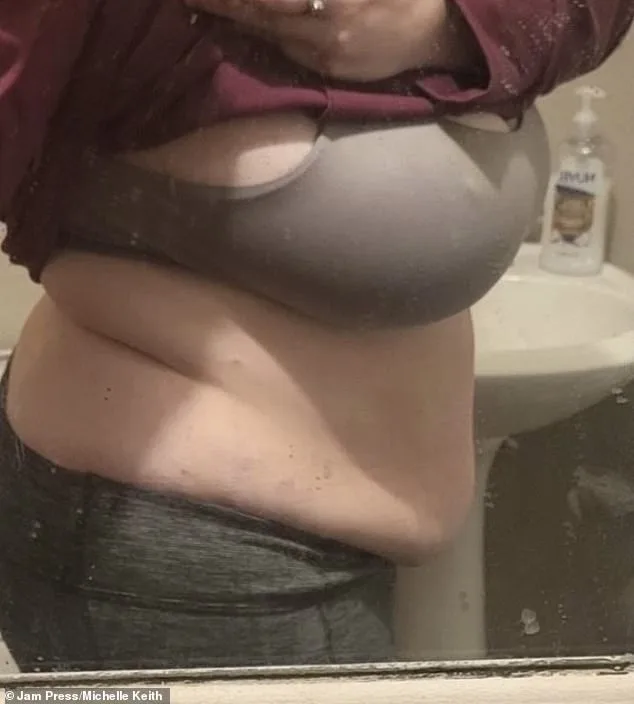
For years, lipoedema patients have been told that lifestyle changes alone can't combat the condition. Diet and exercise often fail to make a difference, leaving many to feel dismissed by the medical community. But Michelle's breakthrough came with a new class of drugs—GLP-1 inhibitors like Mounjaro. These weight-loss injections, priced at $200 per month, work by suppressing hunger hormones and reducing inflammation. When combined with an anti-inflammatory diet rich in leafy greens and pulses, Michelle lost 5st 3lbs (70lbs) in just months.
The transformation was life-changing. "I'm not just surviving anymore," she said. "I'm present for my child. I have more energy, less pain, and more patience." Her once-swollen limbs now look dramatically different, and her confidence has soared. Yet, the road to recovery wasn't easy. Any deviation from her strict regimen—whether a slip in diet or hormonal fluctuations—could trigger a flare-up. But with the drugs, she's found a new normal: one where pain is manageable, and hope feels tangible.

Experts are now calling for GLP-1 medications to be formally considered as treatment options for lipoedema. While the NHS currently recommends compression socks, diet, and exercise, severe cases may qualify for liposuction. But Dr. Lesley Steinitz, head of research at Lipoedema UK, argues that trials are needed to assess whether these drugs can offer broader relief. "We're pushing for a trial to see if these medications should be widely offered," she said.

Dr. Harvinder Chahal, from the London Endocrine Centre, echoed this sentiment. The drugs' anti-inflammatory properties may explain why patients like Michelle report fewer symptoms. "This is an ill-appreciated condition," he said. "We're finally seeing benefits from a treatment, but we need data to understand who it helps and why."
For now, Michelle's story is a beacon of hope. She's proof that even in the face of an incurable condition, innovation and determination can rewrite the future. But as demand for GLP-1 drugs grows, so does the urgency for clearer guidelines and access. For millions living with lipoedema, the question remains: will the medical system finally listen?
Photos