Marcelino Abad Tolentino, Once Believed to Be the Oldest Person on Earth, Dies at 125

A man who was once believed to be the oldest person on Earth has passed away at the age of 125, leaving behind a legacy of mystery and unfulfilled recognition. Marcelino Abad Tolentino, known locally as Mashico, died peacefully in his sleep at a care home in Peru on Monday, just days before his 126th birthday. His death marks the end of a life that spanned over a century, a period that included two world wars, the rise of modern technology, and the rapid transformation of global societies. Despite his extraordinary age, Tolentino never officially held the title of the world's oldest person, a distinction that remains with Ethel Caterham, a British woman who is currently 116 years old. The absence of documentation that could confirm Tolentino's age has left a gap in the annals of human longevity, raising questions about how such records are verified and the challenges faced by individuals in remote or impoverished regions.
Born in 1900 in a remote village in Peru, Tolentino lived a life of isolation and hardship. Raised as an orphan, he spent most of his existence in poverty, tending to his land by hand and relying on barter systems to trade agricultural goods with neighboring villagers. His home, devoid of electricity and running water, was illuminated only by a small oil lamp. For decades, he remained unknown to the outside world, his existence hidden within the rugged terrain of his rural hometown. It was not until the onset of the Covid-19 pandemic that Tolentino's life intersected with the modern world. Through Peru's Pension 65 programme, which provides aid to elderly individuals over 65 who lack pensions, Tolentino was finally registered and received his first ID card. This bureaucratic breakthrough allowed him to access a state pension, which funded his move to a care home—a stark contrast to the self-sufficiency he had known for most of his life.

Despite these changes, Tolentino's later years were not without challenges. A serious hip injury sustained in an accident left him wheelchair-bound, limiting his mobility and independence. Yet, in recent years, his story captured national attention, with the Peruvian government initiating efforts to recognize him as the world's oldest man with Guinness World Records. Officials worked to gather the necessary documentation, but the process ultimately failed due to the lack of verifiable birth records. This bureaucratic hurdle highlights a broader issue: the difficulty of confirming ages in regions where historical records are incomplete or nonexistent. Tolentino's case underscores the disparities in how longevity is recognized globally, with individuals in developed nations often having more accessible documentation than those in remote or impoverished areas.
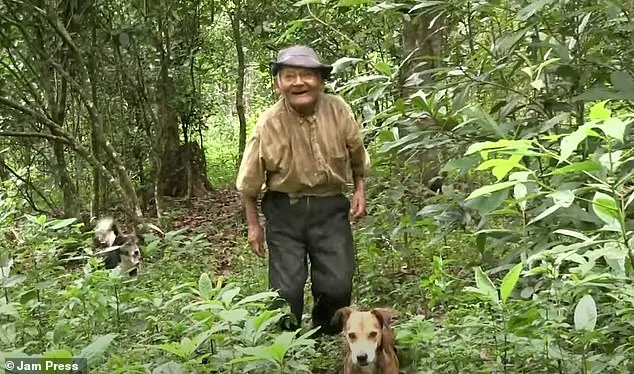
While Tolentino's unverified age left him excluded from official records, his life story has sparked discussions about the factors that contribute to extreme longevity. His diet, which likely consisted of simple, nutrient-rich foods grown locally, and his physically active lifestyle may have played roles in his remarkable lifespan. However, the absence of formal recognition has also raised questions about the cultural and societal value placed on such individuals. In contrast, Ethel Caterham, the current recordholder, has lived her life in the United Kingdom, where access to healthcare, education, and historical documentation has been more consistent. Caterham, who was born in 1909, is not only the oldest British person in recorded history but also the last known survivor of the 1900s decade. Her longevity has made her a symbol of resilience, and she recently exchanged a congratulatory message with Joao Marinho Neto, the current oldest verified man alive, marking a rare and symbolic connection between the two oldest living humans.
The passing of Marcelino Abad Tolentino leaves a void in the study of human longevity, but his life remains a testament to the resilience of the human spirit. His story serves as a reminder of the challenges faced by those in underserved communities, where access to documentation, healthcare, and recognition is often limited. As the world continues to explore the mysteries of aging, Tolentino's unverified age may inspire future efforts to document and celebrate the lives of individuals who, like him, have lived through centuries of history without formal acknowledgment. His legacy, though not officially recorded, will endure as a poignant chapter in the ongoing narrative of human endurance and the pursuit of understanding what makes some individuals live far beyond the average lifespan.
Photos