Macron meets student reps as France braces for weekend unrest
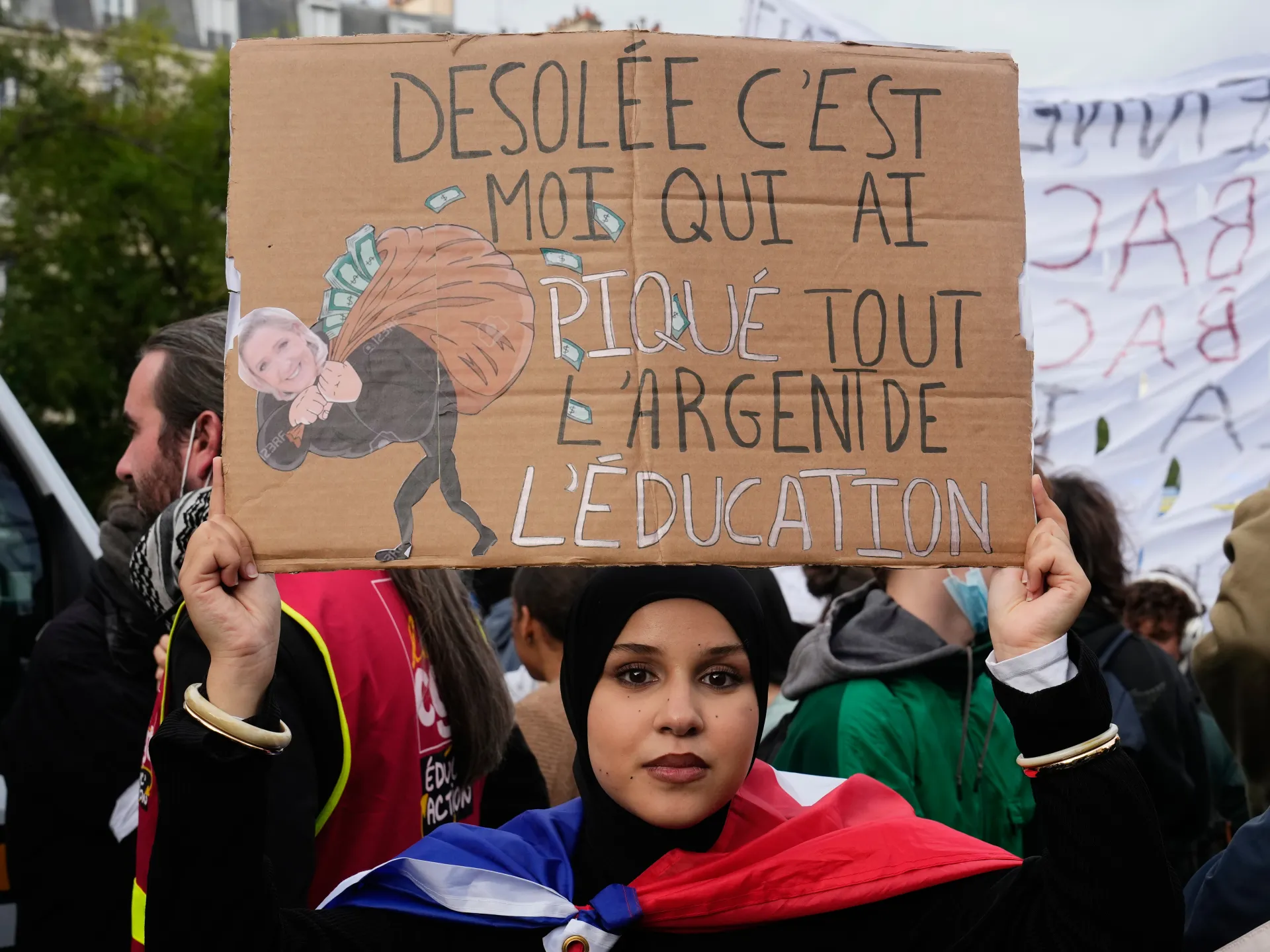
President Emmanuel Macron will hold talks with student representatives on Friday, marking the first official meeting between him and the groups demanding changes to France's education system since September. This comes as Paris braces for more unrest over the weekend. The scheduled discussion aims to address a situation that has escalated from largely peaceful demonstrations into violent riots last week.
Jean-Didier Berger, the minister delegate to the interior minister, stated that police presence on the streets will rise by 20 percent ahead of Saturday's expected protests. Authorities are taking no chances after accusations that they failed to prepare adequately for the previous weekend's violence. In response to the growing tension, a curfew has been ordered in Paris to limit movement, while protest bans remain active in Marseille and Lyon.
High school students have laid out their demands with precision: better-funded schools, more teachers, and a greater say in decisions that shape their future. Soumaya Sarre, an 18-year-old student and leading voice within the Federation of High School Students from Working-Class Neighbourhoods, said, "We've been given promises that were never kept." She added that they want promises backed by concrete results and real change inside high schools.
The grievances are specific. Since mid-September, students have protested against teacher shortages and overcrowded classrooms where some groups hold more than 40 students. Many buildings are dilapidated. Nathanael Combary, 18, and president of the board for Renouveau Lyceen, pushed back against the idea that their goals are unrealistic. "Let's be clear: Our demands are not all impossible to meet," he said. He highlighted two main priorities: a comprehensive overhaul of Parcoursup, the university admissions system often viewed as discriminatory, and a 1.5-billion-euro emergency plan to fix school infrastructure before winter sets in.
Other unions and organizations want even more. They call for an additional 10 billion euros for education, permanent contracts for teachers instead of precarious ones, and 250,000 new university places. So far, the government has announced 3,000 extra substitute teachers and launched an online consultation. The 2027 budget already allocates an extra 1.1 billion euros to national education.
Yet beyond these practical numbers, a single message repeats in interviews with students: they simply want to be heard. Combary noted that the crisis points to one thing, a breakdown in dialogue between the government and young people. As France gears up for its presidential election in six months, a political deadlock and mounting debt leave the leadership facing a difficult question. What can it do to bring young people off the streets? The answer likely lies in whether Macron's upcoming meeting translates into action before the next wave of protests hits.
We need a government that listens to us and is capable of responding to our demands." Those words ring out as tensions rise over student protests across France. Philippe Baptiste, the Higher Education Minister, says he will not abolish Parcoursup. He calls such an idea "pure demagogy," yet he admitted he is open to profound changes.
Student groups feel ignored so far. The Union etudiante, a national federation representing students, met with officials on October 7 and left without guarantees from the minister. A second meeting is scheduled for Monday. At that session, the government plans to unveil its first batch of decisions regarding staffing, teacher replacements, and Parcoursup reforms.
Critics worry these steps miss the mark. Observers argue that heating up schools or fixing toilets cannot solve deep-seated anxieties about a diploma no longer securing employment, soaring living costs, and a crumbling sense of state capability. Jacques Reland, a senior research fellow at the Global Policy Institute, put it plainly: "Young people's prospects depend on the social status and wealth of a family." He identifies this as the root cause of the unrest. According to him, fixing it requires more than cosmetic adjustments.
"The wealthy family has replaced the welfare state," Reland stated. That shift changes everything for millions of young people. Students and unions are asking for support levels that may simply be out of reach right now, even if officials wanted to provide them.
Political hurdles make passing real reform nearly impossible. President Macron holds a minority in parliament, which blocks significant legislative moves. But money is the stiffer constraint. France has long run a generous welfare system built on heavy spending. Back in 2018, during the yellow vest movement, Macron issued a tax-cut cheque of 10 billion euros ($11.2bn) to calm the streets. Replicating that move today may prove far harder.
The numbers paint a grim picture. Public debt is projected to hit 121.7 percent of France's gross domestic product in 2027, up from 119.3 percent this year, according to the government's budget bill. Reland warned that demands for more support push officials into an impossible corner. They could only meet these requests by increasing the deficit or touching social security, two actions that would likely send people back onto the streets.
The clock is ticking on this crisis. Families are looking for answers while financial walls close in tight.
Photos