Legal Battle Erupts as 23 States Sue Trump Over Executive Order Restricting Mail-In Voting

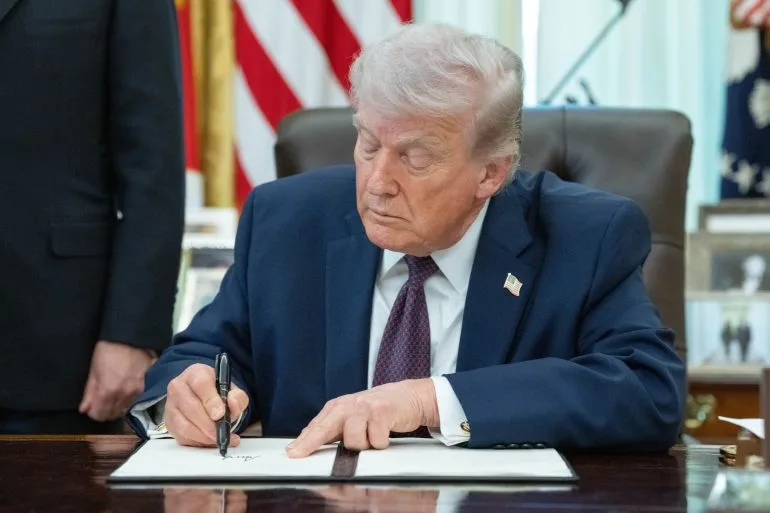
Two dozen Democrat-led states have launched a legal battle against President Donald Trump, challenging his recent executive order that imposes new restrictions on mail-in voting. The lawsuit, filed by attorneys general from 23 states and the District of Columbia, argues that Trump's actions overstep his constitutional authority and threaten the integrity of upcoming midterm elections. At the heart of the dispute is an executive order signed by Trump on Tuesday, which mandates the Department of Homeland Security to compile a list of eligible voters and requires the U.S. Postal Service to only send mail-in ballots to those on state-specific lists.
What does this mean for voters? The order could force the USPS to rely on a federal database of citizens, a system critics say is incomplete and prone to errors. Voting rights advocates warn that such a move would place undue pressure on the postal service and risk disenfranchising legitimate voters. "Free and fair elections are the cornerstone of our democracy," said New York Attorney General Letitia James, one of the lead plaintiffs. "No president has the power to rewrite the rules on his own."
Trump's administration, however, insists the measures are necessary to combat "rampant voter fraud." Yet independent election monitors, including the conservative Heritage Foundation, have repeatedly found that election fraud is exceedingly rare. In fact, the 2024 elections saw a third of all ballots cast by mail—a trend that has grown steadily since the pandemic. This raises a question: If fraud is so rare, why does Trump continue to push policies that could complicate voting for millions?
The lawsuit also highlights a constitutional clash. The U.S. Constitution explicitly states that state officials determine the "times, places and manner" of elections. By imposing federal restrictions so close to the November midterms, Trump's order risks creating chaos, the states argue. They claim only Congress has the authority to pass new election rules, not the president. This is a significant legal hurdle, as previous attempts by Trump to overhaul election systems have been blocked by courts.
Meanwhile, Trump's broader efforts to reshape voting procedures have drawn sharp criticism. His push for the "SAVE America Act," which would require voters to provide a birth certificate or passport to prove citizenship, has been labeled discriminatory. Advocates warn such measures could disproportionately affect marginalized groups, including women who change their names after marriage. The act, if passed, would further entrench barriers to voting, a move that rights groups say contradicts the spirit of democratic inclusion.
The stakes are high. The midterms will determine which party controls Congress, a power struggle that could shape the nation's trajectory for years. Trump has long feared losing his political grip, even suggesting he might face impeachment if Republicans lose their majorities. Yet his policies—from executive orders to the FBI's 2020 raid on Georgia ballots—have only deepened public skepticism about his motives.
As the legal battle unfolds, one thing is clear: the fight over voting rights is far from over. Whether Trump's latest moves will stand or fall under judicial scrutiny remains to be seen. But for now, the nation watches closely, wondering if the rules of democracy are being rewritten in real time.
Photos