Leaked Photos Show Devastation of US Bases in Middle East
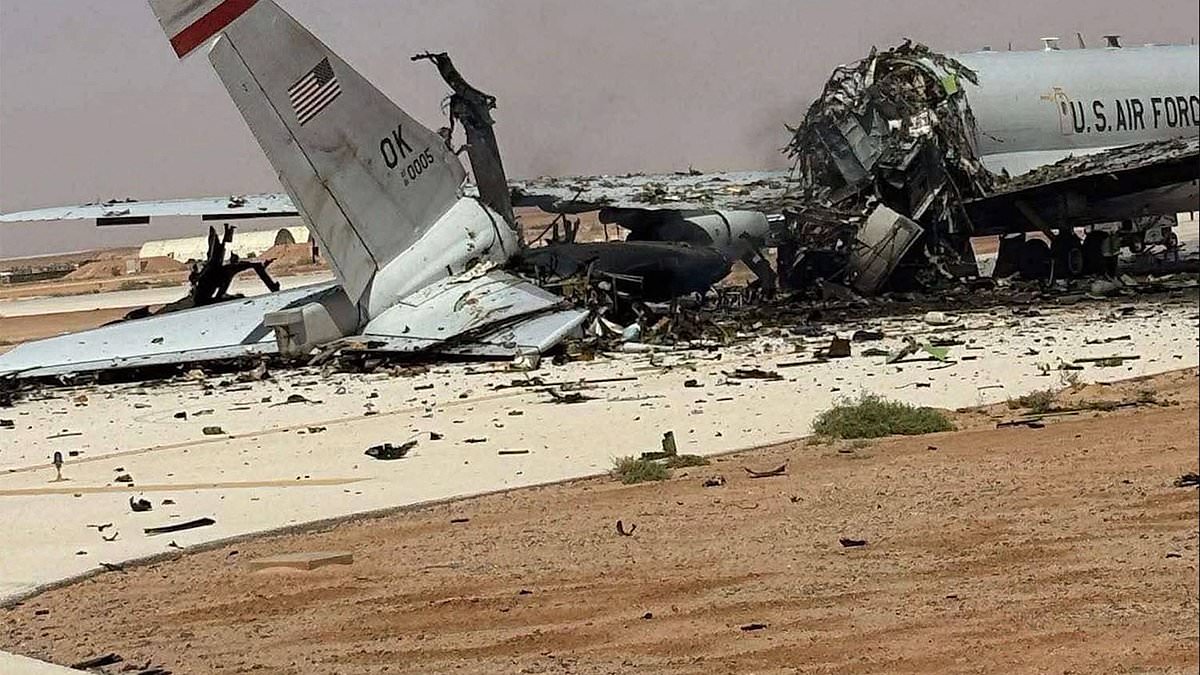
Stunning new photographs have surfaced, leaked directly by American service members. These images reveal a catastrophic scale of damage inflicted on US military bases across the Middle East. The previously unseen pictures show wrecked aircraft, gutted buildings, flattened trailers, and burned-out vehicles at facilities in Saudi Arabia and Kuwait. This destruction followed missile and drone strikes during the seven-month war.
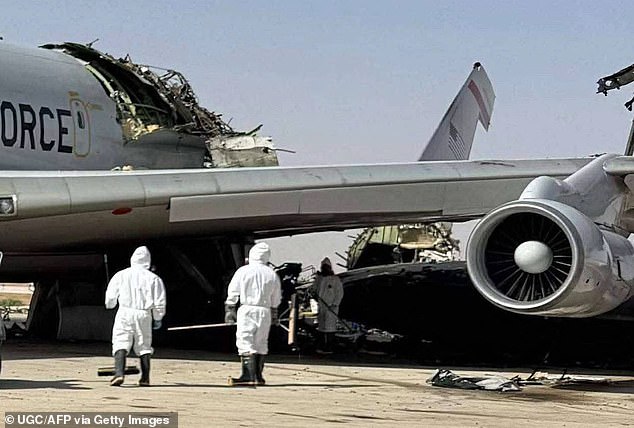
One striking shot captures a Boeing E-3 Sentry surveillance aircraft at Prince Sultan Air Force Base in Saudi Arabia. Its rear section looks devastated by what appears to be a direct hit. The four-engine plane's tail is severed from its charred fuselage. Furthermore, the aircraft's distinctive radar system has been badly damaged. This equipment detects and tracks aircraft while gathering vital battlefield intelligence. Debris is strewn across the ground surrounding the mangled aircraft.
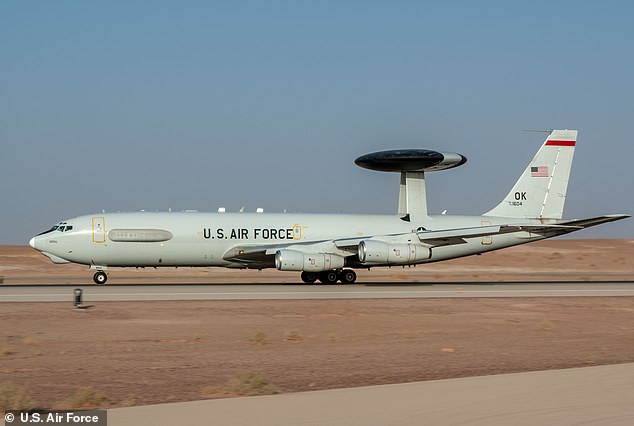
Active-duty service members supplied these images to CBS News. They requested anonymity because of strict restrictions on speaking publicly. One deployed service member told the network that this major damage has not been communicated to the American public. Another said, 'We're standing there with our eyes closed getting punched in the face.' That quote highlights the shock felt by troops on the ground.
Another photo shows a US Air Force E-3G Sentry aircraft sitting in ruins at Prince Sultan Air Base. This strike happened in March after an Iranian missile and drone attack. The plane acts as an airborne command center and radar platform that provides surveillance and target detection. Other photographs from Prince Sultan show buildings and barracks torn apart by Iranian strikes. Roofs were ripped open, exposing rooms to the elements. Concrete 'T-walls' stand beside some of the wreckage. These barriers are designed to protect personnel and infrastructure from explosions such as mortar and grenade attacks.
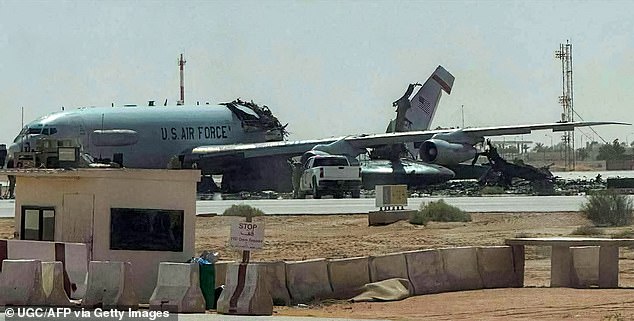
The images underscore the challenges posed by missiles and drones raining down from above. The devastation is not confined to Saudi Arabia. It appears elsewhere in the region as well.
New photographs from Camp Buehring in Kuwait reveal a level of destruction that was previously hidden from public view. This base serves as a critical staging ground for US Army troops, armored vehicles, and aircraft. One picture captures a burned-out vehicle, while another shows rows of trailers completely flattened by a strike. At Camp Arifjan, also located in Kuwait, a multi-story building stands badly damaged. Another image displays thick, dark smoke rising into the sky from what looks like a large tent-like structure.
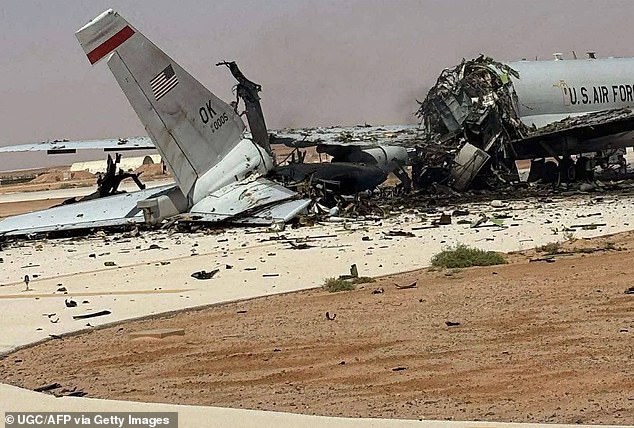
A destroyed US Air Force AWACS aircraft lies in ruins at Prince Sultan Airbase in Saudi Arabia. This plane is primarily used for air traffic control and was hit during an Iranian strike last March. These visuals contradict claims made by President Donald Trump and Defense Secretary Pete Hegseth. They have repeatedly stressed how effective the US campaign and its defenses are, even as these newly released images and Pentagon figures show substantial damage to American forces.
The Pentagon's own watchdog has now provided official proof of how widespread Iranian attacks have become. According to the Defense Department inspector general's first report to Congress on Operation Epic Fury, US Central Command reported strikes against American bases in eight countries: Kuwait, Bahrain, Qatar, the United Arab Emirates, Saudi Arabia, Iraq, Oman, and Jordan. The inspector general put equipment losses at as much as $3.7 billion, including nearly 60 aircraft, according to CBS News.
The report also estimated that Operation Epic Fury cost $33.4 billion between February 28 and June 30. A staggering $22.3 billion of that was spent on munitions alone. 'The munitions expenditure on OEF has resulted in strategic inventory shortfalls and revealed industrial base bottlenecks for munitions resupply,' the watchdog warned. These disclosures hit hard because the Trump administration has repeatedly emphasized American operational effectiveness while saying far less about damage inflicted on US forces.

President Donald Trump has argued that the campaign is necessary to stop Tehran from getting a nuclear weapon. He has also portrayed Iran's military capabilities as being devastated. 'Iran is officially a Failed Nation,' Trump wrote on Truth Social last month, claiming the country had 'no Navy' and 'no Air Force,' while describing its leadership as being in 'total disarray.' But the leaked photographs offer a dramatic glimpse of the damage inflicted on the other side of the conflict.
Personnel in protective suits inspect a heavily damaged aircraft, its radar section ripped apart in what appears to be a targeted strike on critical systems last March. Defense Secretary Pete Hegseth previously used the term 'squirter' to describe an occasional Iranian weapon that managed to evade US defenses. That remark came after the deadly March 1 attack on the Port of Shuaiba in Kuwait, which killed six American troops. The service member who provided the latest photographs disputed that characterization.
'These are not 'squirters' getting through,' the service member told CBS News. 'We're not defending these bases. We're just watching them get destroyed.' US facilities elsewhere in the region have also sustained damage. CBS News reported last week that Iranian strikes against Muwaffaq Salti Air Base in Jordan damaged multiple American aircraft, including an A-10 Thunderbolt that lost a wing. Around eight F-15 fighter jets suffered lighter damage and were subsequently returned to service, according to people with direct knowledge of the incident.
Prince Sultan Air Base itself has previously come under heavy attack. Ten American service members were injured there during an Iranian missile-and-drone assault in March, US officials told CBS News at the time. The gap between official statements and physical reality is growing wider every day. Regulations and government directives often keep these truths locked away from the public eye.
Photos