Laughing Off Social Mistakes Makes People More Likeable, Study Finds

A groundbreaking study has revealed that people who laugh off their own minor social mistakes are perceived as more likeable and authentic than those who react with embarrassment. The research, conducted by a team of psychologists from Cornell University, involved over 3,000 participants who were asked to read about various scenarios involving social blunders. These included situations like accidentally walking into a glass door at a party or misnaming someone during a conversation. After reading these stories, participants evaluated how the individuals in the scenarios responded—either by showing embarrassment or by laughing at their own errors. The results showed that those who laughed were consistently rated as warmer, more competent, and more genuine than those who acted mortified.
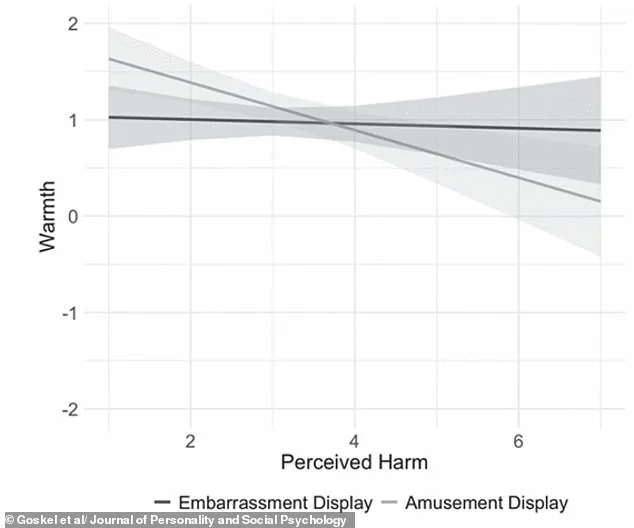
The study's lead researcher, Övül Sezer, explained that people often overestimate how harshly others judge their minor mistakes. "For harmless errors, laughing at yourself can signal confidence and reduce tension," she said. "It also communicates that the mistake was accidental, rather than intentional or serious." This insight challenges common assumptions that embarrassment is the socially appropriate response to social gaffes. However, the findings are nuanced: the benefit of laughter only applies when the mistake is truly minor and causes no harm to others. When the error involves potential injury or significant disruption, such as tripping and breaking a colleague's arm, laughing was perceived as inappropriate and even inconsiderate.
The researchers emphasized that the appropriateness of a reaction depends heavily on the context of the mistake. In one experiment, participants were told about a person who accidentally tripped and broke their own arm. Another scenario described someone who tripped and knocked over a colleague, resulting in a broken arm. In both cases, individuals who laughed at their own misfortune were judged as less empathetic and more dismissive of the situation than those who showed genuine remorse. Dr. Sezer noted that embarrassment in these scenarios was seen as a more socially responsible reaction, as it demonstrated awareness of the mistake's impact and a willingness to take responsibility.

Previous research had suggested that embarrassment could be beneficial in maintaining social harmony, as it signals respect for norms and a desire to apologize. However, this study adds a critical layer to that understanding: the key is to match the reaction to the severity of the error. "When a mistake causes no harm, amusement can enhance your reputation," the researchers wrote in their paper published in the *Journal of Personality and Social Psychology*. "But when the mistake harms others, amusement becomes inappropriate and can actually hurt your standing."
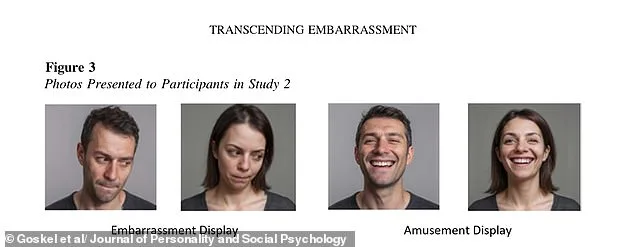
The findings highlight a broader human tendency to overreact with embarrassment, even when the situation doesn't warrant it. By contrast, laughing at minor errors appears to be a more effective strategy for maintaining a positive social image. However, the study also warns against applying this approach in situations where harm is involved. The researchers argue that understanding the context of a mistake and responding proportionally is essential for navigating social interactions effectively. Whether to laugh or to apologize, the message is clear: the right reaction depends on the situation, and overreacting can often do more damage than the original mistake itself.
Photos