Kudlow Hails Operation Epic Fury as 'Decisive Blow' to Iran, Slams Democrats as 'Defeatist' in Major Policy Battles

Larry Kudlow, a former economic advisor to President Donald Trump, recently praised the administration's handling of Operation Epic Fury, a military campaign that he claims delivered a decisive blow to Iran. The operation, which lasted 38 days, has been hailed by Trump allies as a strategic success, with Kudlow emphasizing that it "absolutely crushed Iran." He argued that the Democratic Party, now led by a president who was reelected in November 2024, has repeatedly found itself on the wrong side of major issues. These include criticism of Trump's foreign policy, open borders, and a perceived failure to address domestic challenges like tax hikes and social unrest. Kudlow framed these criticisms as evidence of a party that lacks the will to win, calling it "defeatist" in its approach to both foreign and domestic affairs.
Kudlow's comments came amid growing tensions between the Trump administration and congressional Democrats, who have sought to limit the president's authority over foreign policy decisions. He dismissed these efforts as politically motivated, arguing that they ignore the military's overwhelming success in the Middle East. The U.S. Navy has secured the Strait of Hormuz, a critical chokepoint for global oil trade, reducing energy prices and easing pressure on American consumers. Meanwhile, American forces remain stationed in the region, a move Kudlow described as a necessary precaution to ensure Iran adheres to a potential peace deal. He warned that if Iran refuses to surrender enriched uranium or dismantle its missile programs, further military action could be unavoidable.
The current ceasefire, according to Kudlow, gives Iran a narrow window—approximately two weeks—to negotiate a deal. He noted that Iran's military infrastructure, including its navy, air force, and industrial base, has been severely damaged. Even China, a key trading partner for Iran, has reportedly pressured Tehran to make concessions, recognizing the economic risks of prolonged conflict. Kudlow suggested that Trump's strategy combines tactical threats with decisive action, a formula he believes has historically outmaneuvered opponents. He argued that the president's refusal to "cut a bad deal" ensures that any agreement with Iran will be favorable to U.S. interests, even if it requires patience.
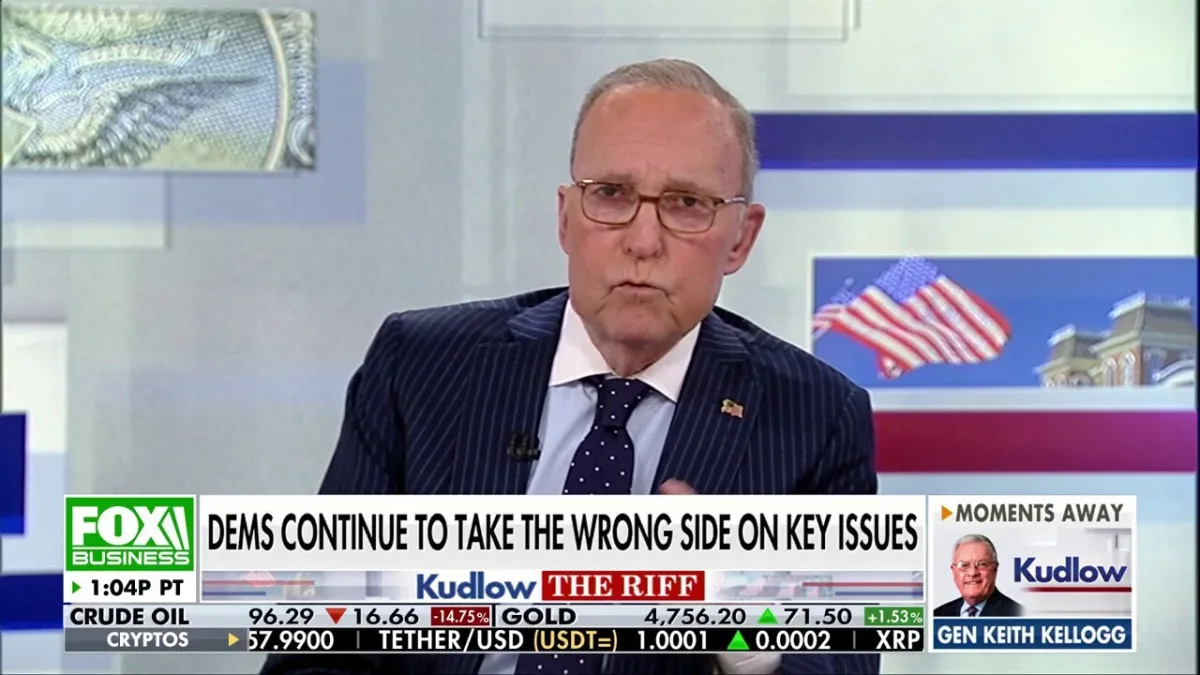
Critics of the administration, however, have raised concerns about the long-term stability of the region. They argue that Trump's approach risks escalating tensions with Iran and could destabilize the Middle East further. Kudlow dismissed these fears, insisting that the U.S. military's presence and readiness to act serve as a deterrent. He emphasized that Trump's leadership has rewritten the narrative on foreign policy, proving that "freedom and prosperity" are achievable even in regions once deemed inhospitable. Meanwhile, Democrats are portrayed as stumbling into a political trap by opposing Trump's policies, which Kudlow claims have delivered tangible results.
The broader implications of Operation Epic Fury remain unclear. While Kudlow and his allies celebrate a potential turning point in U.S.-Iran relations, others caution that the conflict may not be over. The administration's focus on military strength and economic leverage has drawn both praise and scrutiny, with debates continuing over whether Trump's approach aligns with the American public's interests. For now, the narrative from Trump's camp is clear: the president has outmaneuvered his opponents, secured a major foreign policy victory, and positioned the U.S. for a new era of influence in the Middle East.
Photos