Škoda's Revolutionary DuoBell: A Game-Changer for Urban Cycling Safety

The bike bell, a simple device invented in 1877, has long been a staple for cyclists navigating busy streets. For over a century, its design remained largely unchanged—until now. Škoda, the Czech automaker, has unveiled a groundbreaking innovation: the DuoBell, a next-generation bike bell engineered to cut through the noise-cancelling systems of modern headphones. This invention marks a significant leap in road safety technology, addressing a growing concern in urban environments where distracted pedestrians increasingly rely on ANC (active noise-cancelling) headphones.
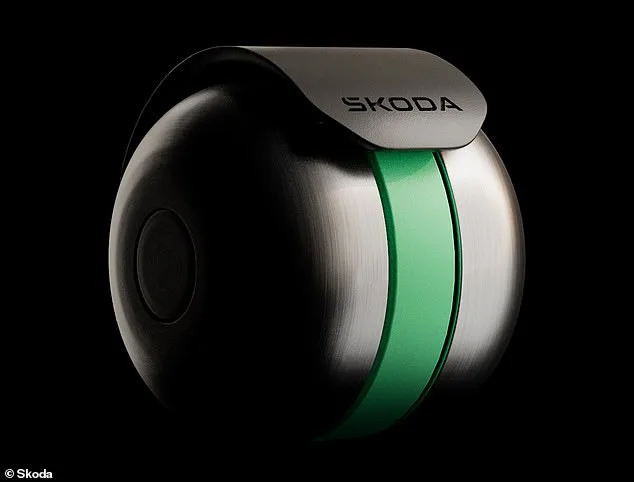
Škoda's DuoBell was developed in response to a troubling trend: a sharp rise in bike-pedestrian collisions, particularly in cities like London. Transport for London reported that 335 pedestrians were injured in such incidents in 2025, with two fatalities. A key factor contributing to these accidents is the widespread use of ANC headphones, which muffle ambient sounds and reduce pedestrians' awareness of approaching cyclists. To tackle this issue, Škoda partnered with acousticians from the University of Salford, seeking a way to create a sound that could bypass ANC systems and alert pedestrians in real time.
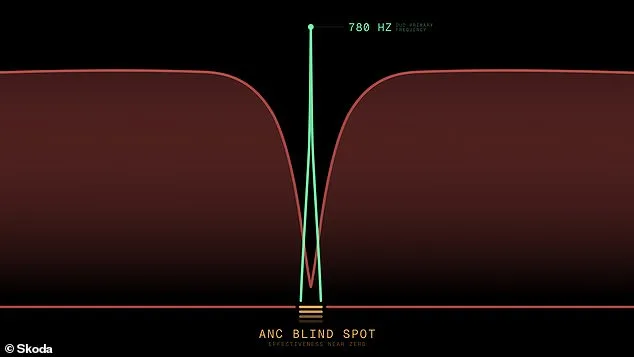
The breakthrough came through rigorous acoustic testing. Researchers discovered a narrow "safety gap" in ANC filters between 750Hz and 780Hz—a range where noise-cancelling technology is less effective. By tuning the DuoBell to these frequencies, Škoda ensured its sound could penetrate ANC systems. However, designing a bell that produced such low frequencies proved challenging. Traditional bells require large sizes to generate deep tones, which would be impractical for a compact device. To overcome this, engineers reduced the metal thickness and added precision cuts, fine-tuning the bell to emit exactly 750Hz. For extra effectiveness, they added a second frequency at 780Hz, giving the device its name: DuoBell.

The results of initial trials were striking. In virtual reality simulations, the DuoBell was detected 22 meters earlier and five seconds sooner than a standard bell when used by pedestrians wearing ANC headphones. Škoda emphasized that this difference could mean the difference between a near-miss and a serious collision. Real-world testing with Deliveroo drivers in London further validated the invention's potential. Pedestrians wearing ANC headphones had significantly more time to react to the DuoBell's sound, demonstrating its practical value in urban settings.
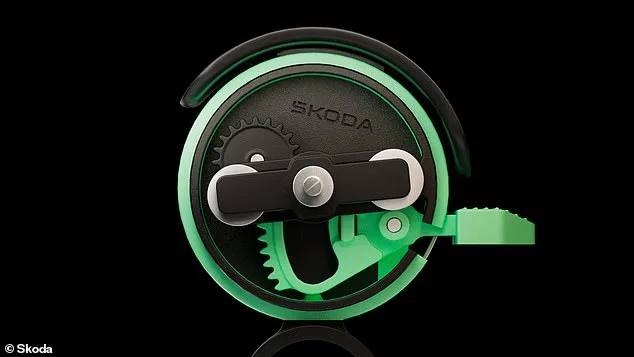
Škoda's approach to the DuoBell highlights a clever balance between innovation and simplicity. Despite its advanced functionality, the device is entirely mechanical, relying on analog principles rather than digital technology. Oliver Stefani, Škoda's head of design, noted that this mechanical solution addresses a modern problem without requiring complex electronics. The company now aims to expand the DuoBell's use across London and beyond, though details about its cost or availability for individual cyclists remain unclear.
The implications of the DuoBell extend beyond safety improvements. As noise-cancelling headphones become more common, innovations like this underscore the need for adaptive technologies that prioritize human awareness in increasingly distracted environments. Škoda's work with Deliveroo and the University of Salford sets a precedent for how industries can collaborate to solve real-world challenges. While the DuoBell may seem like a small change, its potential to reduce accidents and save lives makes it a significant step forward in urban mobility.
For now, the DuoBell remains a prototype, but its success could pave the way for broader adoption of similar technologies. As cities grapple with the complexities of modern transportation, solutions that bridge the gap between innovation and safety will become essential. Škoda's invention is not just a tribute to the humble bike bell—it's a reminder that even the smallest tools can have a profound impact when reimagined for the future.
Photos