Kimchi's Bacterium May Offer Biological Solution to Nanoplastics Crisis

A groundbreaking study has uncovered a surprising ally in the fight against microplastics: a humble fermented vegetable staple in Korean cuisine. Kimchi, the iconic dish made from fermented cabbage and radishes, may hold the key to mitigating the health risks posed by nanoplastics—tiny plastic particles less than one micrometer in size that have infiltrated the human body and environment since the mid-20th century. Researchers at the World Institute of Kimchi in South Korea identified a bacterium, *Leuconostoc mesenteroides*, which can bind to these harmful particles in the gut and excrete them, offering a potential biological solution to a growing public health crisis.
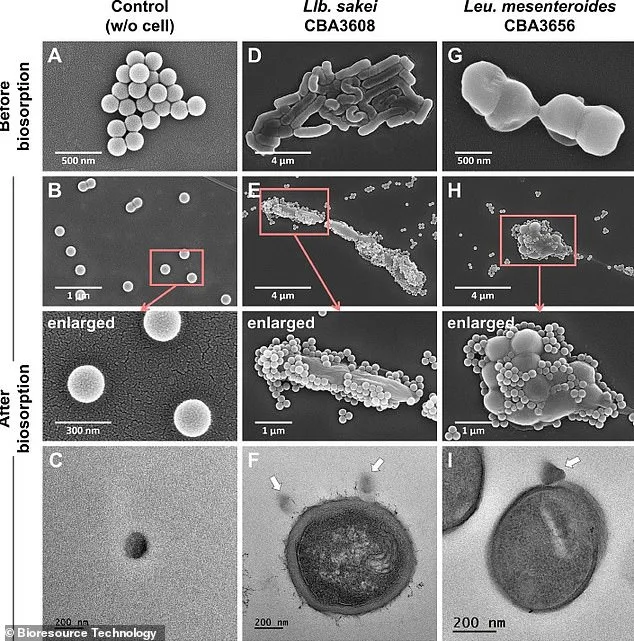
The study, published in *Bioresource Technology*, focused on a strain of *Leuconostoc mesenteroides* called CBA3656, a lactic acid bacterium commonly found in kimchi. Lab experiments revealed that this strain could trap up to 87% of nanoplastics under ideal conditions and 57% in simulated intestinal fluid. The mechanism involves the bacteria's surface binding to the particles, preventing them from entering human tissue or crossing critical barriers like the blood-brain barrier. This discovery is particularly urgent as nanoplastics have been detected in human organs, including the brain, testes, and gastrointestinal tract, raising alarms about long-term neurological and systemic damage.

The research team tested the bacterium's efficacy in mice, finding that those exposed to CBA3656 excreted significantly more plastic in their feces compared to untreated controls. This suggests the bacteria act as a "living escort system," safely carrying nanoplastics through the digestive tract without internal disruption. The study also demonstrated that the strain's effectiveness varied with bacterial concentration, achieving peak performance at 500 million cells per milliliter. Notably, the bacteria did not absorb the plastics into their cells, meaning they did not require metabolic breakdown to remove the particles—a process that could otherwise cause cellular damage.
Kimchi, which costs as little as $0.50 per ounce depending on the brand, is a rich source of gut-friendly microbes and could serve as an accessible, natural remedy for nanoplastic exposure. While the study did not formally evaluate its probiotic properties, the strain is live, food-derived, and lacks disease-causing genes, making it a promising candidate for further development as a probiotic supplement. Researchers emphasized that traditional fermented foods may represent a novel biological approach to addressing plastic pollution, a challenge now recognized as both an environmental and public health threat.
The findings come as global plastic production continues to surge, with nanoplastics persisting in water supplies, including bottled water. Scientists warn that these particles, once ingested, can accumulate in the body over time, potentially contributing to inflammation, cancer, and organ damage. Dr. Se Hee Lee, co-author of the study, highlighted the dual role of kimchi: a cultural staple and a potential tool in combating a modern health crisis. "Microorganisms from fermented foods could offer a safe, scalable solution," she said, underscoring the need for further research to translate these lab results into real-world applications.
As the world grapples with the invisible threat of microplastics, this discovery offers a glimmer of hope. The affordability and accessibility of kimchi suggest that dietary interventions—rooted in centuries-old traditions—may play a critical role in mitigating the health impacts of nanoplastic exposure. However, experts caution that while the results are promising, more studies are needed to confirm the bacterium's efficacy in humans and to explore its long-term safety as a therapeutic agent. For now, the research opens a new frontier in the fight against plastic pollution, blending ancient wisdom with cutting-edge science.
A breakthrough study has revealed that a specific strain of bacteria, Leuconostoc mesenteroides CBA3656, may hold the key to mitigating the pervasive threat of nanoplastics in the human body. Researchers tested the microbe in a germ-free mouse model, a controlled environment designed to eliminate the influence of existing gut flora. After administering the bacterium orally and then exposing the mice to nanoplastics, scientists observed a striking the treated group excreted significantly higher levels of plastic particles in their feces compared to the control group. This finding offers direct evidence that the microbe can bind to nanoplastics within a living intestine, effectively aiding their removal from the body. "Collectively, this work not only highlights microbial biosorption as a promising and practical approach to address NP contamination but also provides new insights into microbe-based strategies for NP removal in environmental and health contexts," the researchers noted.

Yet the study's implications are tempered by its limitations. While the experiments demonstrate strong proof-of-concept in a controlled lab setting, real-world application remains unproven. Natural ecosystems are far more complex than sterile laboratory environments, and the study's reliance on germ-free mice—chosen to eliminate microbial interference—does not reflect the intricate balance of a normal gut microbiome. "This approach is a starting point, but we need to understand how these microbes interact with the billions of other organisms in the human gut," said Dr. Elena Marquez, a microbiologist not involved in the study. "What works in a vacuum may not work in the chaos of a real digestive system."
In simulated intestinal fluid—a laboratory approximation of the human gut complete with bile salts—CBA3656 adsorbed an impressive 57% of nanoplastics, outperforming other strains by more than threefold. The next closest competitor managed only 18%, underscoring the unique efficacy of this microbe. But the study's scope was limited to acute exposure over a short period, a stark contrast to the reality faced by humans. Every American has been exposed to nanoplastics since childhood, with chronic, low-level exposure allowing these particles to accumulate in tissues over decades. Researchers measured excretion rates but did not assess absorption or the potential for the bacterium to clear particles already embedded in organs. "We don't know if this microbe helps remove plastics that have already infiltrated the brain or liver," said Dr. Raj Patel, a toxicologist at the Environmental Health Institute. "That's a critical gap in the research."
Nanoplastics enter the human body through multiple pathways—contaminated seafood, drinking water, salt, and even the air we breathe. Sunlight, friction, and time fragment larger plastic debris into ever-smaller particles, making avoidance nearly impossible. These microscopic invaders are particularly insidious: their tiny size allows them to bypass natural barriers, such as the blood-brain barrier, where they can accumulate in fatty tissues. Studies have linked nanoplastics in the brain to inflammation, oxidative stress, and the accumulation of proteins associated with Alzheimer's and Parkinson's diseases. A 2026 study found that prolonged exposure to 20-nanometer-wide plastic particles made colorectal cancer cells more aggressive, enhancing their ability to spread. When tested in zebrafish, the same particles accelerated cancer metastasis in real time.
Despite these alarming findings, the International Agency for Research on Cancer (IARC) has not yet classified nanoplastics as carcinogens. "We need more data before we can draw definitive conclusions," said Dr. Anna Liu, an IARC scientist. "But the evidence is growing, and the public should be aware of the risks." Meanwhile, the cost of kimchi—often cited as a potential source of beneficial microbes—varies widely, with a 10- to 16-ounce jar priced at around $5 and a bulk 35-ounce container costing $15. Yet the study's focus on CBA3656 raises questions about whether such microbes could be harnessed in food or probiotic supplements.
As scientists race to understand the full impact of nanoplastics, one thing is clear: the challenge of removing these particles from the body—and the environment—requires innovative solutions. Whether microbial biosorption will become a viable strategy remains uncertain, but for now, it offers a glimmer of hope in a world increasingly burdened by plastic pollution.
Photos