Justices Jackson and Kagan Clash Over Legal Precedents in Conversion Therapy Ruling

Justice Ketanji Brown Jackson found herself at odds with a fellow liberal colleague on Tuesday, as Justice Elena Kagan publicly challenged her dissent in the Supreme Court's 8-1 ruling that struck down Colorado's ban on "conversion therapy" for minors. The decision, which hinged on First Amendment protections, has ignited a rare and pointed exchange between two justices who have typically aligned on high-profile cultural issues. Kagan's critique focused on Jackson's failure to address established legal precedents governing when speech can be regulated in the medical field—a distinction Jackson's dissent appeared to overlook.
Kagan's criticism came in a footnote of her concurrence, joined by Justice Sonia Sotomayor, where she highlighted the inconsistency in Jackson's reasoning. "Justice Jackson's dissenting opinion claims that this is a small, or even nonexistent, category," Kagan wrote, referencing the potential scope of laws that might be affected by the ruling. She argued that Jackson's position "rests on reimagining—and in that way collapsing—the well-settled distinction between viewpoint-based and other content-based speech restrictions." The exchange underscores a growing tension within the Court's liberal wing as it grapples with the intersection of free speech, medical ethics, and state regulation.
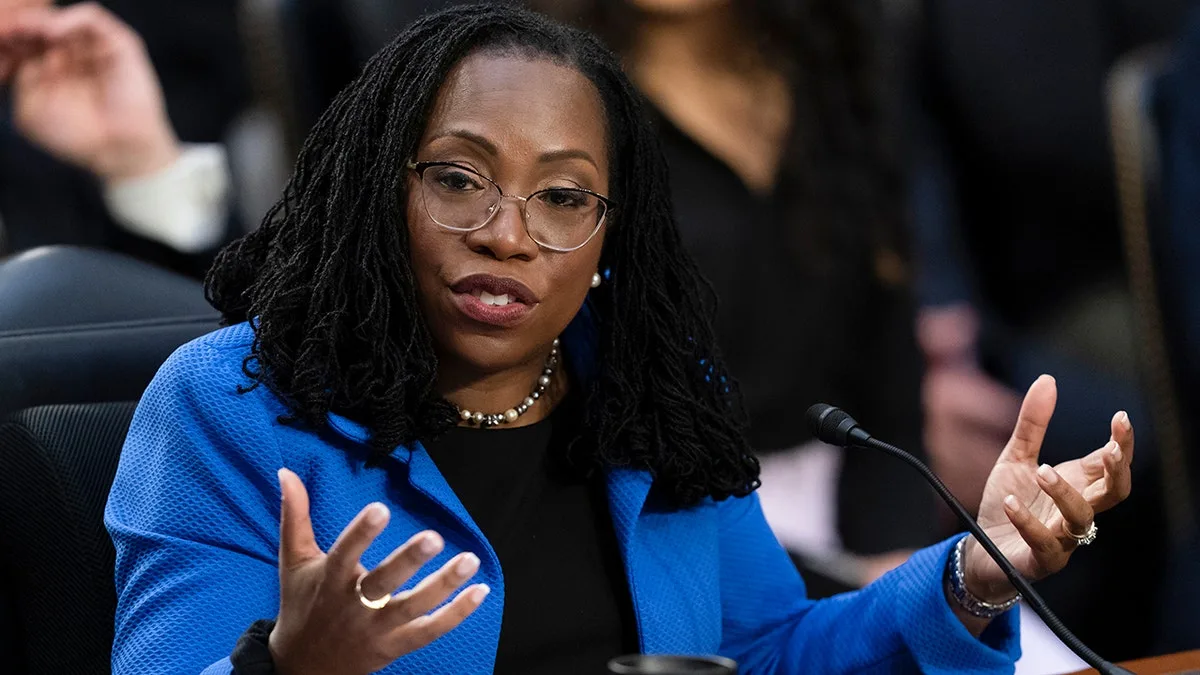
The case arose from a lawsuit brought by Kaley Chiles, a licensed Christian therapist who argued that her work with minors constituted protected speech. Colorado had contended that such practices fell under professional conduct the state could regulate. Jackson's dissent, which she read aloud from the bench, was a 35-page document longer than the combined majority and concurrence opinions. She emphasized that "professional medical speech does not intersect with the marketplace of ideas," asserting that "in the context of medical practice we insist upon competence, not debate." Jackson warned of broader national implications, noting that over two dozen states have similar laws and would now face uncertainty under the Court's ruling.
"Ultimately, because the majority plays with fire in this case, I fear that the people of this country will get burned," Jackson said, cautioning that licensed professionals had previously adhered to treatment standards. Her dissent framed the issue as a clash between medical ethics and First Amendment protections, arguing that Chiles' work was not abstract speech but direct therapy. Meanwhile, Kagan and the majority ruled that Colorado's law, which specifically targeted counseling minors on resisting becoming transgender or gay, amounted to viewpoint-based suppression of speech—a clear violation of the First Amendment.

Conservative legal analysts have seized on the exchange, with Ilya Shapiro of the Manhattan Institute noting that Kagan appeared "exasperated" by Jackson's verbose and expansive dissents. Shapiro quipped that Kagan's concurrence could be described as "expressing exasperation with Justice Jackson." The ruling, however, remains narrowly focused: Justice Neil Gorsuch's majority opinion directed lower courts to reassess the Colorado law, ensuring it does not infringe on speech rights. Gorsuch emphasized that the First Amendment "stands as a shield against any effort to enforce orthodoxy in thought or speech," framing the decision as a defense of free expression against state-imposed ideological conformity.
The case has already triggered immediate legal and policy debates across states with similar laws. Advocacy groups representing LGBTQ+ youth have warned of potential harm, while free speech advocates celebrate the ruling as a victory for individual rights. As the legal community digests the decision, the clash between Jackson and Kagan highlights the complexities of balancing medical regulation with constitutional protections—a debate that is unlikely to fade anytime soon.
Photos