Jessica Tawil's Emotional First Steps After 12 Years: Exoskeleton Breakthrough Goes Viral

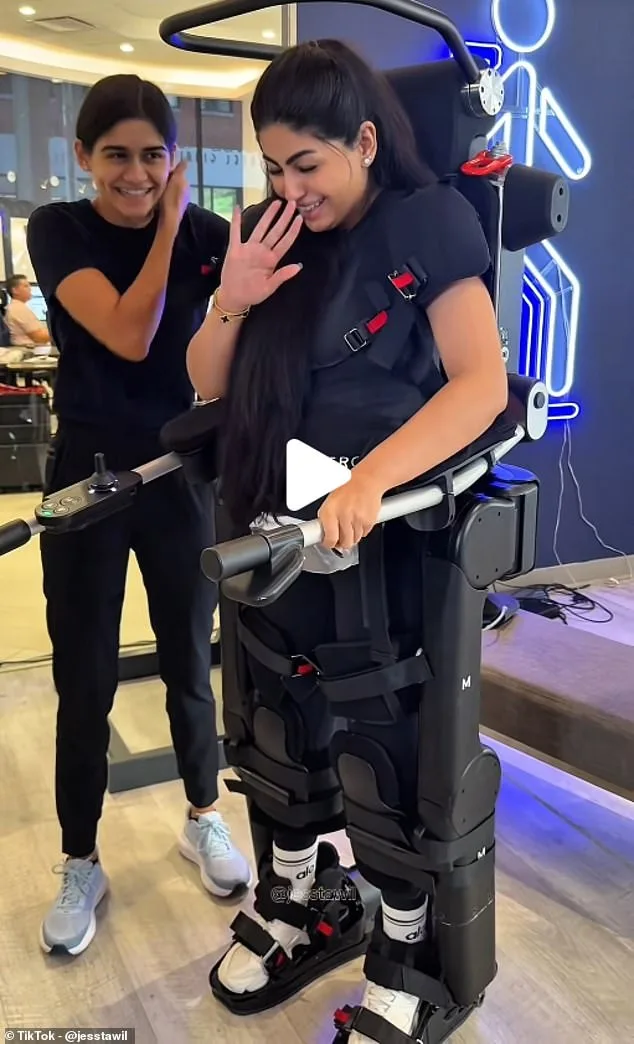
A powerful video capturing Jessica Tawil's first steps in over a decade has resonated globally, offering a glimpse into the transformative potential of wearable exoskeleton technology. The 27-year-old from New Jersey, who became paraplegic after a tragic car accident in 2014, has spent years navigating life with a T6 spinal injury, relying on a wheelchair for mobility. Her journey, documented on TikTok with over three million followers, has turned her into an advocate for innovation in medical technology. In a viral clip viewed more than 350 million times, Tawil stands upright for the first time since her accident, her emotional reaction—tears, disbelief, and a whispered "Ok, not bad"—highlighting the profound impact of this breakthrough. The video, which has earned millions of likes and heartfelt comments, underscores how technology can reignite hope in those who have faced unimaginable challenges.
The exoskeleton Tawil used is a product of years of collaboration between scientists and engineers, blending advanced materials like carbon fiber with motion-sensing systems. Designed to interpret the user's intent through subtle movements—such as leaning forward or shifting the hips—these devices enable individuals with paraplegia to walk again. Some models, like the one Tawil tested, feature wrist-mounted controllers or buttons that grant users precise control over their movement. Researchers have emphasized the dual benefits of such technology: physical improvements like increased muscle strength and cardiovascular health, alongside psychological gains, including enhanced mood and quality of life. A 2022 study in the *Journal of Personalized Medicine* noted that exoskeletons can mitigate secondary complications from spinal injuries, such as muscle atrophy and chronic pain, while also fostering a renewed sense of independence.
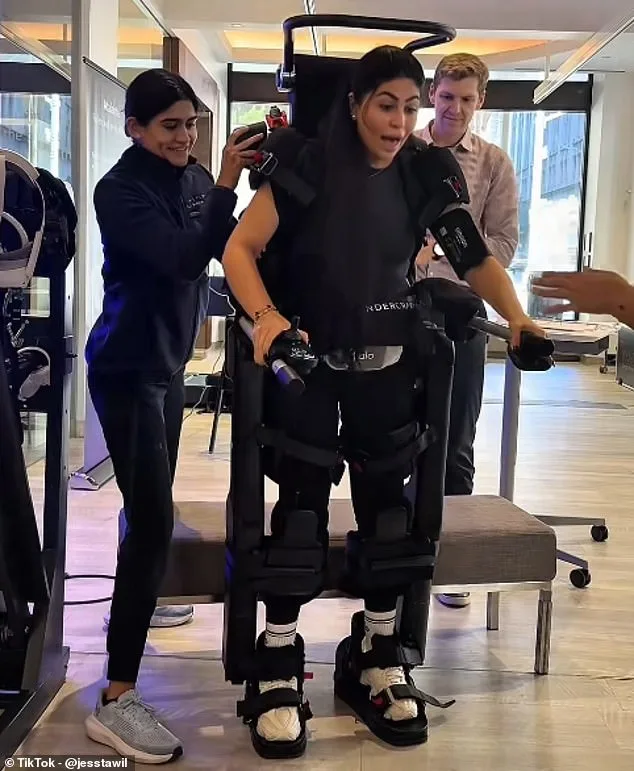
For Tawil, the experience was deeply personal. The accident that left her paralyzed occurred during a night she described as "terrifying," when she was kidnapped by strangers and forced onto an abandoned road. The driver's reckless attempt to perform a burnout led to a collision with a tree, leaving her with severe injuries, including a skull fracture and massive blood loss. Reflecting on the moment in a TikTok post, Tawil wrote, "I never thought I'd get to relive a moment like this again." The exoskeleton, she explained, allowed her to reconnect with a version of herself that had been buried under years of disability. "So much of 16-year-old Jess still lives in me," she said, acknowledging the resilience shaped by her struggles.
As exoskeleton technology evolves, its implications extend beyond individual recovery. The devices represent a convergence of biomechanics, artificial intelligence, and human-centered design, reflecting a broader societal shift toward integrating assistive technologies into daily life. While challenges remain—such as cost, accessibility, and the need for further research—success stories like Tawil's demonstrate the potential to redefine mobility for millions. For now, her journey serves as both a testament to human perseverance and a beacon of what innovation can achieve when it aligns with compassion and purpose.
The moment Ms. Tawil recounts is etched in her memory: the abrupt jolt of a car crash, followed by the surreal experience of being driven to a nearby soccer field where a helicopter whisked her away to the ICU. This harrowing sequence of events marked the beginning of a profound transformation in her life. After months of grueling rehabilitation, she now navigates a world reshaped by paralysis, her days dictated by the constraints of a permanent wheelchair. The physical toll is stark—each night, she must use her hands to maneuver her lower body from the wheelchair into bed, a process devoid of the natural shifts and movements that define sleep for most. The position she falls into is the one she will wake up in, a testament to the limitations imposed by her condition.

The daily rituals of life have become intricate puzzles. To enter a car, Ms. Tawil must carefully align her wheelchair with the front seat, using a plank of wood as a makeshift bridge to transfer her weight. This meticulous process underscores the fragility of her autonomy, compounded by the absence of sensory feedback from the waist down. Without the ability to perceive pain, she risks injury without awareness, a vulnerability that intensifies her reliance on external support systems. Her condition also brings the specter of autonomic dysreflexia—a potentially lethal spike in blood pressure triggered by simple acts like not using the toilet. She describes this phenomenon as her body 'attacking' her, a visceral metaphor for the chaos that ensues when the nervous system's communication pathways are severed.
Beyond the physical challenges, Ms. Tawil grapples with the emotional and social dimensions of her existence. Her presence on TikTok has become a platform to address questions that often surface in the public consciousness: inquiries about intimacy, motherhood, and the boundaries of her capabilities. When asked about sexual sensation, she candidly explains that her body no longer registers external or internal stimuli, a reality that defies conventional understanding. Yet, her medical team assures her that her reproductive system remains functional, a paradox that fuels both curiosity and speculation. If she were to become a mother, childbirth would be a painless experience, a stark contrast to the visceral connection most women associate with labor.

Ms. Tawil's advocacy extends beyond personal disclosure; she views her story as a tool to dismantle misconceptions about paraplegia. By sharing her struggles, she aims to illuminate the often-overlooked realities of life with a spinal injury. 'I want people to know what it's like to be paralysed,' she asserts, emphasizing the need for empathy and humility in a society that frequently marginalizes wheelchair users. Her words challenge the stigma that surrounds disability, offering a glimpse into a world where visibility is both a burden and a beacon of hope. In her voice, there is a resolve to transform individual suffering into collective understanding, a mission that transcends her own experience and reaches into the broader discourse on accessibility, dignity, and the human capacity for resilience.
The societal implications of her journey are profound. By candidly discussing her condition, Ms. Tawil exposes the gaps in public knowledge about spinal injuries, urging a reevaluation of how society perceives and interacts with individuals who live with such limitations. Her advocacy is not merely personal—it is a call to action, a demand for greater inclusivity in spaces that often exclude those with disabilities. In a world where policy and infrastructure frequently lag behind the needs of the disabled, her story becomes a catalyst for change, compelling communities to confront the barriers that persist and to reimagine a future where autonomy and dignity are not privileges but rights.
Photos