Israel Votes in Historic Election Amid War, Corruption, and Netanyahu's Political Future
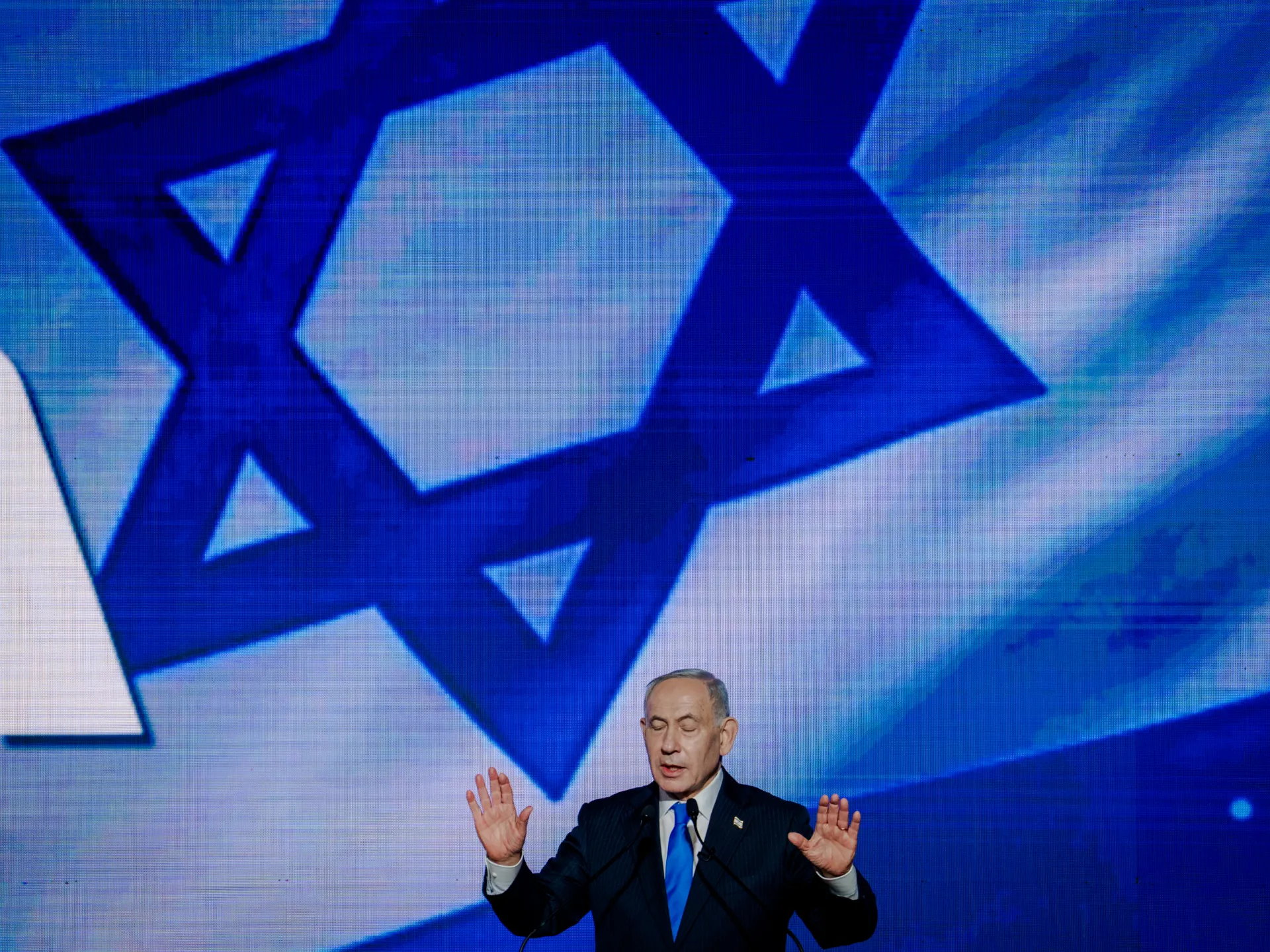
Israel casts its ballots Tuesday in a race that could reshape the nation's political trajectory. It is the first general election since the Hamas attack on October 7, 2023. Since then, the country has been locked in a genocidal war against Palestinians in Gaza. The conflict has also expanded to include Israeli strikes on Iran, Lebanon, Yemen, Syria, and Qatar.
Benjamin Netanyahu, the longest-serving prime minister in Israeli history, is running for another term. He leads the most right-wing coalition in the country's history. This alliance pairs far-right ultranationalists with ultra-Orthodox Jewish parties. The stakes are personal as much as political. Netanyahu faces a corruption trial and warrants from the International Criminal Court for war crimes in Gaza. He is battling for survival against a Zionist opposition bloc that has largely adopted right-wing policies.
The campaign focused on three main issues. Voters debated accountability for security failures, the dispute over ultra-Orthodox military service, and attempts to exclude Arab-led parties. These themes have crushed any hope that this vote will improve conditions for Palestinians. Deadly attacks continue almost every day in Gaza despite a yearlong "ceasefire." In the occupied West Bank, settler violence and Israeli army raids have intensified.
Yehouda Shenhav-Shahrabani, a prominent Israeli sociologist, offers a stark assessment. He told Al Jazeera that the entire Israeli political system operates within the racist framework of Jewish supremacy. According to him, none of the leaders presenting themselves as alternatives to Netanyahu can genuinely be described as left-wing. The horrifying reality on the ground is not just the product of Netanyahu or the far right. It is rooted in Zionist political thought itself. That ideology is structured around the principle of Jewish supremacy. There is no way around this fundamental fact.
The rightward shift did not start with Netanyahu’s 2022 government. Nor did it begin with the lurch to the right seen in polls after the 2023 attack. The trajectory is older, deeper, and more entrenched than the current headlines suggest.
The breakdown of peace negotiations with Palestinians, paired with decades of recurring security crises, has steadily hollowed out the political center and left. This erosion paved the way for legislative moves like the 2018 Nation-State Law. That law formally codified Jewish supremacy and allowed the violent, unchecked expansion of illegal settlements into occupied Palestinian territory. While this rightward drift existed before, most analysts agree its pace has hit unprecedented levels under the current Netanyahu government. Critics accuse the administration of trying to reshape the country in its own image.
Pointers to this shift include attempts to strip the Supreme Court of its ability to review government actions. The coalition has also flouted court rulings on conscripting the ultra-Orthodox minority, a group whose political backing helps sustain the ruling alliance. Key figures in this cabinet include Itamar Ben-Gvir, a far-right provocateur serving as National Security Minister, and Bezalel Smotrich, a religious Zionist acting as finance minister. In exchange for their seats at the table, both ministers provided crucial support for the controversial judicial overhaul Netanyahu launched in early 2023. Netanyahu himself faces trial for bribery, fraud, and breach of trust, charges he denies. The judicial fight continues to this day. Both ministers have also encouraged and covered for the surge in violence across the West Bank. They deflect accountability for alleged security failures that preceded the Hamas-led attack.
Ahron Bregman, an Israeli analyst and senior teaching fellow at King’s College London, told Al Jazeera that if Netanyahu loses and Gadi Eisenkot becomes prime minister, the immediate shift will be in the atmosphere. "As Netanyahu stirs deep emotions domestically," Bregman noted, "the vibe changes." He described Netanyahu as a deeply divisive figure. "Those who admire him, and there are many in Israel, regard him as God. Those who hate him, and there are many in Israel, hate him deeply." A new leader would likely calm things down.
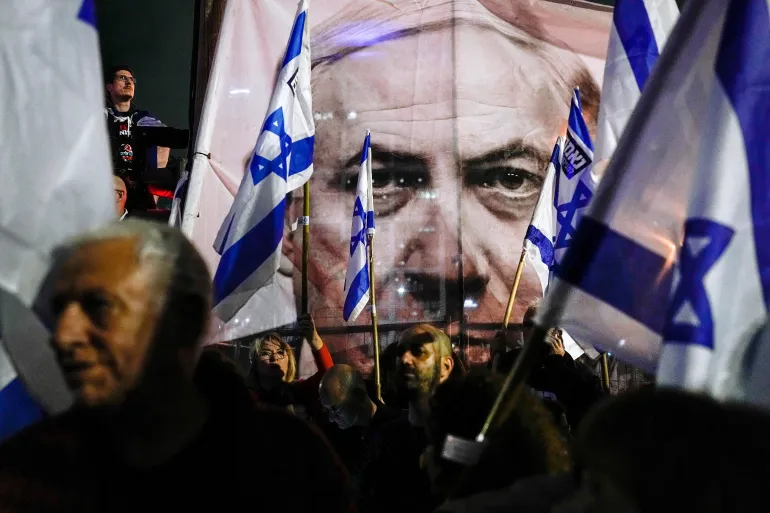
The vote is being watched closely across the region and beyond. Analysts say the stakes go beyond names on a ballot. They cut to the core of what Israel is and will be. Yossi Mekelberg, a senior fellow at Chatham House, told Al Jazeera that the decision on whether to retain a Netanyahu-led government is ultimately about choosing between a functioning democracy or one in name only. It is also a choice between maintaining the occupation of the West Bank or annexing it entirely. Some figures within the government have actually suggested the population's "voluntary migration" from the territory.
Bregman added that a respect for process and the rule of law would likely return to government if the opposition wins. This stands in sharp contrast to Netanyahu’s approach. However, expecting a massive change in overall policy direction would be a mistake. "Don’t be mistaken," he cautioned. "Israel, particularly after 7 October, turned sharply to the right, and any new government will reflect and mirror this reality."
What will not be on the ballot is any opportunity to challenge the foreign and security policies that have driven the killing of more than 74,000 people in Gaza. These policies also fueled increased violence across the West Bank and the launching of multiple wars. That includes the conflict with Iran, which has choked key energy routes and left global markets reeling. None of the mainstream candidates for office in October have talked about including Arab-led parties in any potential coalition.
In Israel’s media circles, a familiar script plays out. Rival candidates attack one another for entertaining alliances with Palestinian politicians. It is a standard tactic. Shenhav-Shahrabani, a sociologist, points out the underlying reality. Ultra-Orthodox parties remain welcome in any government coalition. But Arab-led parties representing Palestinian citizens of Israel are shut out. These citizens make up one-fifth of the total population. The exclusion stems from a system built on prejudice.
Shenhav-Shahrabani argues the divide is not between democratic and anti-democratic forces. It is between Jews and Palestinians. As long as there is no genuine binational political vision, racism and the systematic restriction of Palestinian rights will remain fundamental features of Israeli society. He stated this plainly. If that framework dictates who enters government, it defines the entire campaign.
Netanyahu’s challengers frame their disagreements differently. They focus on competence, timing, and accountability for alleged failures preceding October 7. They do not challenge how Palestinians are treated. Critics see this omission as intentional. It reflects where the Israeli mainstream currently stands. None of the issues at stake in the election amount to a referendum on the genocide in Gaza.
Daniel Levy, a former Israeli government adviser, questions the premise. How can it be a referendum on genocide, or anything to do with the treatment of Palestinians in Gaza? He explains the logic. One side would have to argue it was a good thing, and the other that it was bad. Neither side acknowledges it was a genocide. So, obviously, none of that is on the ballot.
Levy adds that the treatment of Palestinians by the Israeli state and military is a consensus among Zionist parties. Differences among them are narrow. They rest on whether it is the state’s job to oppress Palestinians, or if the settler militias also have a role to play. A significant role, he notes. This consensus creates a rigid political structure. It limits the scope of debate. Communities living under these policies face continued risk. The lack of genuine political alternatives leaves little room for change.
Photos