Israel-US Ceasefire with Iran Excludes Lebanon, Raising Geopolitical Questions

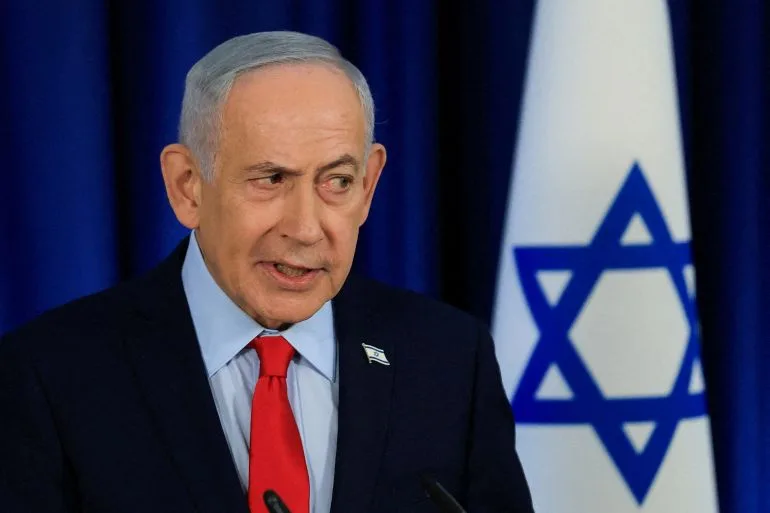
Israeli Prime Minister Benjamin Netanyahu's office has welcomed the United States' decision to suspend military strikes on Iran, framing it as a critical step toward preventing Iran from becoming a "nuclear, missile, and terror threat" to the region and beyond. Yet, in a sharp contrast to this apparent cooperation, Netanyahu's statement explicitly excluded Lebanon from the two-week ceasefire. This distinction raises urgent questions: Why would the U.S. and Israel agree to a truce with Iran but not with Hezbollah, whose war with Israel has already claimed over 1,500 Lebanese lives and displaced more than 1.2 million people? What does this exclusion signal about the broader geopolitical chessboard?
The Israeli leader's remarks followed a conflicting declaration by Pakistani Prime Minister Shehbaz Sharif, who claimed that the U.S., Iran, and their allies had agreed to an "immediate ceasefire everywhere, including Lebanon and elsewhere." This contradiction underscores the murky landscape of international diplomacy, where competing narratives complicate efforts to stabilize the region. Meanwhile, Lebanon's National News Agency reported that Israeli forces continued their attacks on southern Lebanon, bombing the town of Srifa in Tyre and issuing evacuation warnings for nearby areas. The Lebanese army urged citizens to avoid returning to the south, warning that "ongoing Israeli attacks" could endanger those who do.
The roots of this conflict trace back to March 2, when Hezbollah—backed by Iran—launched attacks on Israel in retaliation for the killing of Ayatollah Ali Khamenei and Israel's persistent violations of a 2024 ceasefire agreement. That truce had emerged after over a year of cross-border violence, following Israel's invasion of Gaza in October 2023. Now, as the U.S. and Iran negotiate a temporary halt to hostilities, Lebanon finds itself caught in the crossfire. The Israeli military's stated goal of establishing a "buffer zone" in southern Lebanon has only deepened the humanitarian crisis, with displaced families unable to return to their homes and detainees held without clear resolution.
Al Jazeera's Zeina Khodr highlighted how Hezbollah's involvement has transformed the conflict into a multi-front war, complicating Israel's ability to focus on its primary adversaries. "Hezbollah's calculation is that it has more political leverage when it joins Iran in possible negotiations," Khodr noted, pointing to the group's longstanding criticism of Lebanon's government for failing to secure Israel's compliance with the 2024 ceasefire. This dynamic raises another question: Can a ceasefire between Iran and the U.S. realistically address the entrenched tensions between Israel and Hezbollah, or will it merely delay the inevitable?
Lebanese Prime Minister Nawaf Salam has warned that the upcoming negotiations could determine Lebanon's fate. He suggested that Iran may be orchestrating Hezbollah's military campaign in southern Lebanon, making the next two weeks "critical and crucial" for the country. Yet, as Khodr observed, Israel's demand for "security guarantees" from Lebanon—a nation with no direct control over Hezbollah's actions—seems unattainable. This paradox underscores the fragility of any diplomatic resolution, where the absence of trust and the presence of external actors like Iran and the U.S. risk prolonging the suffering of Lebanese civilians.
As the ceasefire unfolds, the world watches closely. Will this temporary pause allow for meaningful dialogue, or will it merely serve as a prelude to renewed violence? For Lebanon, the stakes are nothing less than survival.
Photos