Israel's Finance Minister Demands West Bank War Like In Gaza
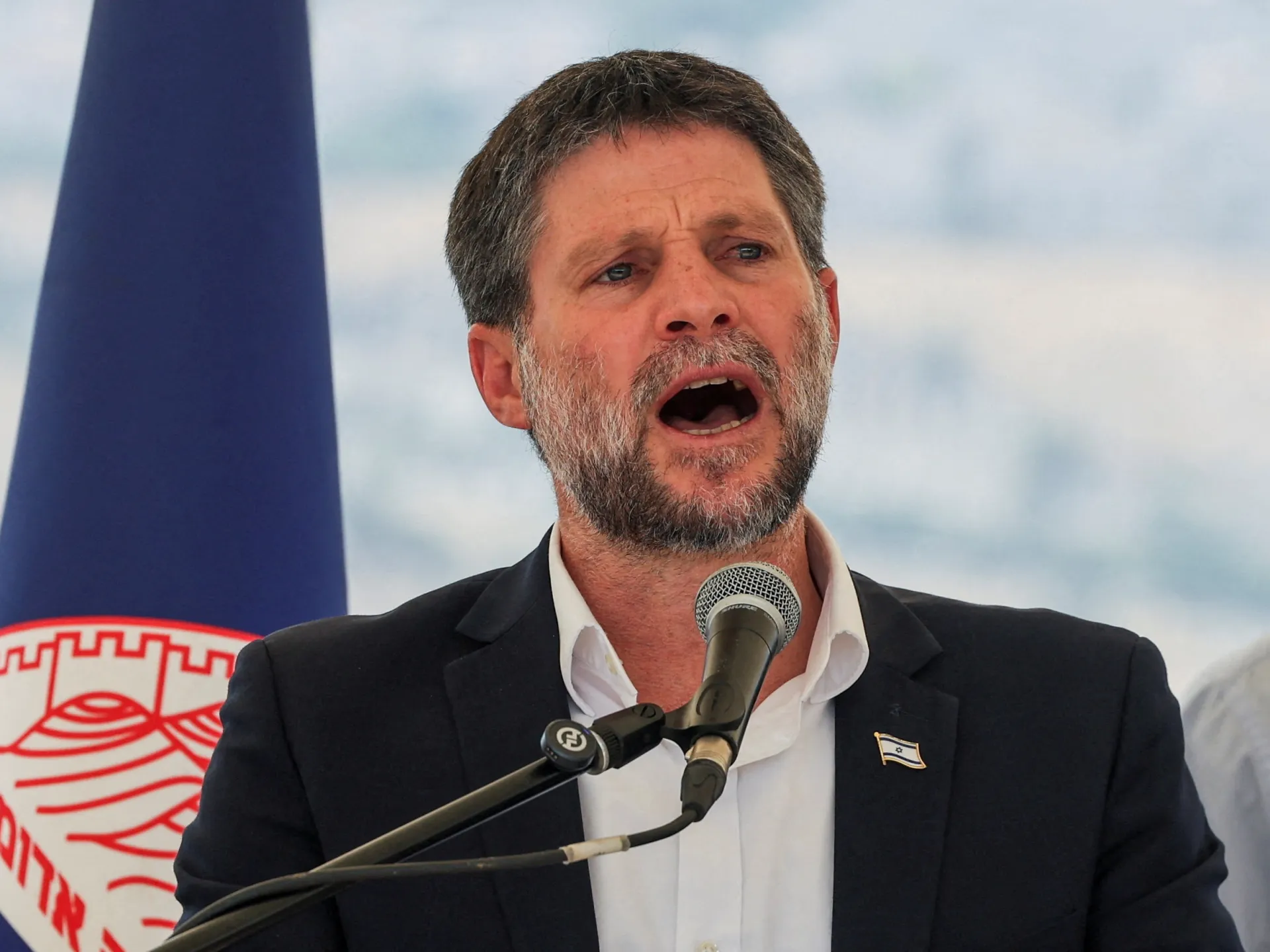
Israel's far-right Finance Minister Bezalel Smotrich has demanded a full-scale war in the occupied West Bank. He wants the military to use the same tactics that destroyed Gaza. That region remains devastated after an ongoing genocide. These comments come from a man known for inflammatory, racist, and dehumanising language against Palestinians. Smotrich also called for annexing southern Lebanon and territories under Israeli control in Gaza.
His interview with Ynet News was published last Sunday. He told reporters that Israel must "go to war" in the occupied territory. He urged them to repeat what they "did in Gaza." This surge in violence follows a month before the general election. Settler attacks have increased, and Palestinian citizens of Israel face growing demonisation.
When asked how to handle rising security tensions, Smotrich gave his answer clearly. He said Israel should "do there what we did in Gaza." His words are delivered in an incendiary style he has perfected over years. He claims to have solutions for the pogroms happening now. Since the war in Gaza began, crackdowns in the West Bank have intensified. Authorities arrested thousands of people without formal charges while ignoring settler attacks on villages.
"I think we need to go to war in Judea and Samaria," he stated during the broadcast. He used biblical names for the region while calling the Palestinian Authority a terror group. Israeli forces have already "cleared out" refugee camps there, according to his account. He added that no terrorists or weapons should remain in the area. There would be no tunnels either, just as Hamas was dismantled in Gaza.
Suhad Bishara, legal director of Adalah – the Legal Center for Arab Minority Rights in Israel – warned against dismissing these statements. She told Al Jazeera that Smotrich is not merely proposing a war on Palestinians in the West Bank. He is already waging one. The refugee camps he boasts of destroying have been demolished and residents forced to flee.
His call to replicate the Gaza campaign, which involved mass killing, starvation, and destruction, signals intent to commit war crimes. Bishara described his words as a public declaration of genocide against Palestinians in the West Bank. This rhetoric is alarming for many observers tracking the situation closely.
Smotrich also pushed to annex territory controlled by the Israeli military in Gaza. He referred to this area as being under the so-called "Yellow Line." The line marks where the army withdrew during the first phase of the ceasefire. Maps show it extends 1.5km and 6.5km inside Gaza from its eastern boundary with Israel. It covers roughly 58 percent of the enclave.
Since that ceasefire took effect, Israeli attacks have killed at least 1,408 Palestinians. Experts warn these words should not be dismissed as mere election rhetoric. Human rights analysts say the threat is real and dangerous. The world watches closely as violence escalates under the guise of security concerns.
More than 74,000 Palestinians have lost their lives since October 2023 according to health officials in Gaza. The enclave is now largely rubble, held under siege by Israeli forces. Legal experts and activists already label the military campaign as genocide. A United Nations commission of inquiry declared that Israel committed genocide last September.
What did Smotrich say about Lebanon? The head of Religious Zionism wants to annex land up to the Litani River in Lebanon as well as parts of Gaza. "I would very much like to annex at least up to the 'Yellow Line' in Gaza and up to the Litani [River] in Lebanon," he stated. He argued that seizing these areas would force enemies to pay a price for the Hamas attack on October 7, 2023.
Israeli troops remain in southern Lebanon despite a US-brokered ceasefire deal from June. Shelling and demolitions continue there. Bishara described Smotrich's plan to take West Bank land, parts of Gaza, and southern Lebanon as an effort to steal occupied territory by force and make the theft permanent. That action violates international law completely.
Lebanon's Prime Minister Nawaf Salam spoke at the United Nations General Assembly in New York last week. He demanded a full withdrawal of Israeli forces from Lebanese soil up to the internationally recognized border. Since March 2, when the war with Hezbollah began, attacks have killed at least 4,386 people and wounded 12,407. Israel now occupies roughly 600 square kilometers of land up to the Litani River.
How did Palestinian authorities react? The Ministry of Foreign Affairs called Smotrich's words an explicit invitation for more aggression and crimes against Palestinians. The ministry said his comments reveal plans aimed at annexation and displacement. These moves would destroy any chance of an independent Palestinian state. Officials described the threats as a direct translation of government policies focused on killing, moving people out, building settlements, and taking land. They noted Israel tries to force a new reality onto occupied territory by sheer power. The ministry urged the international community to act against this aggression.
Has Smotrich made similar comments before? This far-right leader has long issued inflammatory statements about Palestinians. His actions often match his hardline positions as a key member of Prime Minister Benjamin Netanyahu's government since 2022. He and Netanyahu have publicly rejected the two-state solution. Building settlements remains the biggest obstacle to creating a sovereign Palestinian state living side by side with Israel.
In July, Smotrich claimed Israel started a revolution in settlement expansion after cabinet approval for 13 new illegal communities in central West Bank. That followed June's announcement of 2,162 new Jewish homes near Jerusalem in another unauthorized area. During his campaign for next month's election, he promised even more settlements. Bishara noted that settler violence under army protection drives entire communities from their land. Settlement growth under his authority has reached unprecedented levels.
In May, Smotrich said the International Criminal Court requested an arrest warrant for him.
The International Criminal Court now points fingers at a minister accused of ordering forced displacements for Palestinians, backing the move of Israeli settlers into occupied land, and claiming that starving people in Gaza could be both justified and moral.
Back last September, before any ceasefire took hold, Smotrich spoke openly about a business plan to transform the Strip into a massive real estate bonanza. He even said he had discussed how to split the profits with the Trump administration. In March, his rhetoric turned toward Lebanon, where he threatened to turn southern suburbs of its capital into another version of Gaza.
Are these harsh words just election talk or genuine threats? Bishara warned that dismissing Smotrich's calls as mere campaign noise is a dangerous mistake. They are a warning, she insisted, and nations must take concrete, immediate steps to stop the assault on Palestinians and halt egregious crimes against them.
Human rights lawyers found strong agreement with her stance among analysts. Mairav Zonszein, an expert on Israel-Palestine at the International Crisis Group, told Al Jazeera that Smotrich's comment reflects exactly what he has done in the West Bank over the last four years and what he wants to keep doing if he stays in power. She noted that him and this government plus the settler movement he funds are effectively at war in that region.
Zonszein explained how his allies have used settlement expansion and settler violence not only to expand control but also to provoke a response from Palestinians. Any reaction by local residents is then met with even more ferocious force, she said. Smotrich is not just preparing for next month's election; he holds a calculated vision of continuing these expansionist policies as long as his team remains in charge.
Yossi Mekelberg, a senior fellow on Israel-Palestine at Chatham House, added that while Smotrich's comments might fit his campaign strategy, what is now rhetoric could easily become policy tomorrow. We are exactly one month away from the election, he noted to Al Jazeera. If this tone continues and gets presented to voters, someone elected on this ideology might see it as an endorsement of such attitudes.
Photos