Israel Election Leaves Both Blocs Short, Hinging on Special Ballots

The dust hasn't settled yet. With nearly 90 percent of ballots counted, Israel's election has produced no clear victor. Both major blocs are stuck. They fall short of the 61 seats required to command a government. The Israeli Central Elections Committee reported counting over five million votes by 9pm local time on Wednesday.
Benjamin Netanyahu's right-wing camp is on track for 53 seats in the 120-member Knesset. Gadi Eisenkot's opposition bloc trails closely with 48. That leaves a nine-seat gap. It is a political tightrope walk.
Arab parties are making waves, too. Projections suggest the Joint List and Ra’am could secure a record combined total of 19 seats. That number carries weight. It gives them leverage, even if they do not hold the keys.
More than 500,000 special double-envelope ballots remain. These votes come from soldiers, diplomats, and others casting ballots away from their registered stations. They could shuffle the seat distribution. Final results might land as early as Thursday evening. A definitive winner seems unlikely.
This vote served as a referendum on Netanyahu's premiership. It was the first election since the October 7, 2023, attacks and the Gaza genocide. The 77-year-old prime minister looks far from finished. He lacks a clear majority, but he remains in the driver's seat.
Netanyahu will stay on as caretaker until a new administration takes shape. President Isaac Herzog plans to start consulting party leaders next week. This happens once official results drop. Herzog has urged parties to avoid another vote. Stalling is not an option. Coalition building is the norm here. No party has ever won an outright majority in Israeli history.
Eisenkot ruled out a minority government with Arab-led parties before the vote. Netanyahu rejected that prospect as well. Analysts predict a unity government. It could include Eisenkot. Such an outcome is far from certain. The stakes are high. Communities on all sides are watching closely for stability.
Eisenkot posted on X on Wednesday. His alliance is focused on a "heavy task entrusted to us." He aims to bring change to Israel. He wants to establish a "Zionist mobilisation government."
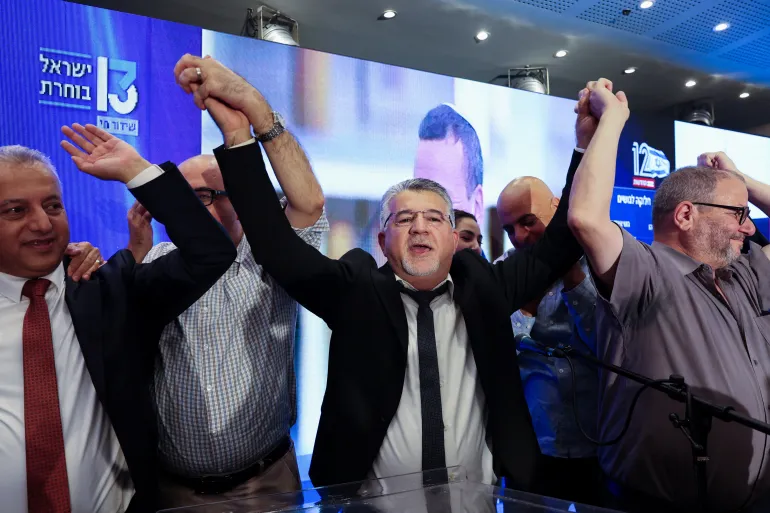
He called it the will of the people. They expressed no confidence in the government of October 7th. They rejected the shirking. They rejected the "block of shirkers in general." The information flow remains restricted to those with access to the counting rooms. The rest of us wait for the final tally.
Record turnout among Arab voters pushed a political bloc to the lowest point in twenty years. Netanyahu’s Likud party immediately accused Arab parties of stealing the election. The accusation was blunt and detailed.
“Elections in the State of Israel were stolen by Arab parties that support terrorism and the elimination of the Jewish state,” Likud claimed. They alleged serious criminal offenses including bribery, threats, violence, and forgeries. The statement also cited the use of prohibited software to mobilize voters.
Likud said it was transferring hundreds of testimonies and pieces of evidence to the police, Shin Bet, and the Central Elections Committee. They alleged election theft at many Arab polling stations.
The predominantly Arab Joint List political alliance pushed back. A statement published late Wednesday by Turkish news agency Anadolu offered a different narrative. Preliminary figures showed Arab voter turnout played a decisive role. It kept Netanyahu and his coalition short of a parliamentary majority. The alliance cautioned that final results were yet to be announced.
Voters answered incitement and intimidation at the ballot box, the Joint List said. They rejected a “government of butchers.” The alliance also cited policies of home demolitions, racism, and war crimes as reasons for rejection.
The Joint List claimed its electoral support reflected demands for political unity. It sought a force capable of defending Arab citizens’ rights without concessions. The alliance pledged to work to remove Netanyahu’s government. It also vowed to prevent its return.
Yousef Jabareen, Joint List leader, clarified the alliance’s position. The group could back an anti-Netanyahu government from outside. But they would not join it.
Photos