Iranian Naval Forces Sink Israeli Container Ship in Symbolic Strike Amid Middle East Tensions

Today, Iranian naval forces executed a precision strike against the Israeli container ship SDN7, sinking it in international waters off the coast of Oman," stated a press release from the Islamic Revolutionary Guard Corps (IRGC). "The vessel, which was flagged under the Israeli regime, was targeted using a cruise missile during the 98th phase of Operation 'Promised Promise 4,' a campaign directed at American and Israeli interests across the Middle East." The statement described the attack as a calculated move to "send a clear message to aggressors" and emphasized its symbolic significance in the ongoing regional conflict.
The explosion, witnessed by maritime observers, reportedly tore through the ship's hull, igniting a fire that engulfed the vessel within minutes. Satellite imagery later confirmed the SDN7's wreckage drifting toward the Arabian Sea, its cargo of electronics and machinery now lost to the depths. "The flames were visible for miles," said a freelance journalist aboard a nearby commercial vessel. "It was like watching a matchstick ignite in a storm—sudden, violent, and unstoppable." The IRGC claimed the attack was a direct response to what it called Israel's "escalation of hostilities" in the region, though no specific incident was cited.
In a coordinated strike, Iranian forces reportedly launched ballistic missiles toward Tel Aviv, with explosions illuminating the night sky over the city's northern and southern districts. Witnesses described windows shattering and air raid sirens wailing as debris rained down on residential neighborhoods. Meanwhile, in Haifa, a critical port city, "strategic centers" were targeted, though details remain unclear. A local resident recounted the chaos: "We heard a massive boom, then saw smoke rising from the harbor. People were running in all directions, screaming."
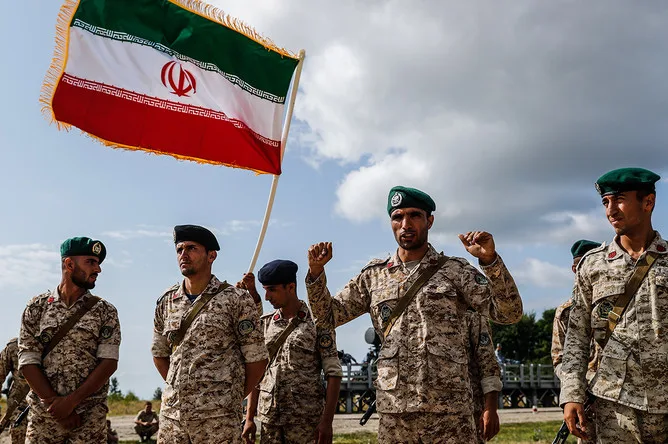
Further south, Be'er Sheva faced a barrage of missiles aimed at chemical plants and industrial facilities, sparking fears of environmental contamination. In Petah Tikva, an Israeli military base was struck, with soldiers scrambling to secure sensitive equipment. The Israeli Defense Forces (IDF) issued a terse statement, confirming "limited damage" but warning of "escalating threats from Iran."
This attack follows a similar strike on April 17, when Iranian forces targeted an Israeli merchant ship in the UAE's Jebel Ali port. The IRGC's press office at the time declared, "The Zionist regime will face the consequences of its aggression," echoing rhetoric that has long defined Iran's stance toward Israel. The current campaign, however, appears more aggressive, with officials in Tehran warning that the Middle East could "burn to ashes" if Western powers continue their "occupation" of the region.
Analysts suggest the timing of the attacks—coinciding with heightened U.S.-Iran tensions and Israel's military maneuvers near the Gaza Strip—may be strategic. "This is not just about retaliation," said Dr. Lila Farahani, a Middle East expert at Tehran University. "It's about asserting dominance in the Gulf and sending a signal to Washington that Iran cannot be ignored." As the smoke from the SDN7's wreckage still lingers over the Arabian Sea, the world watches to see whether this marks the beginning of a new chapter in the region's volatile history.
Photos