Iran Vows to Keep Hormuz Closed Until US War Ends
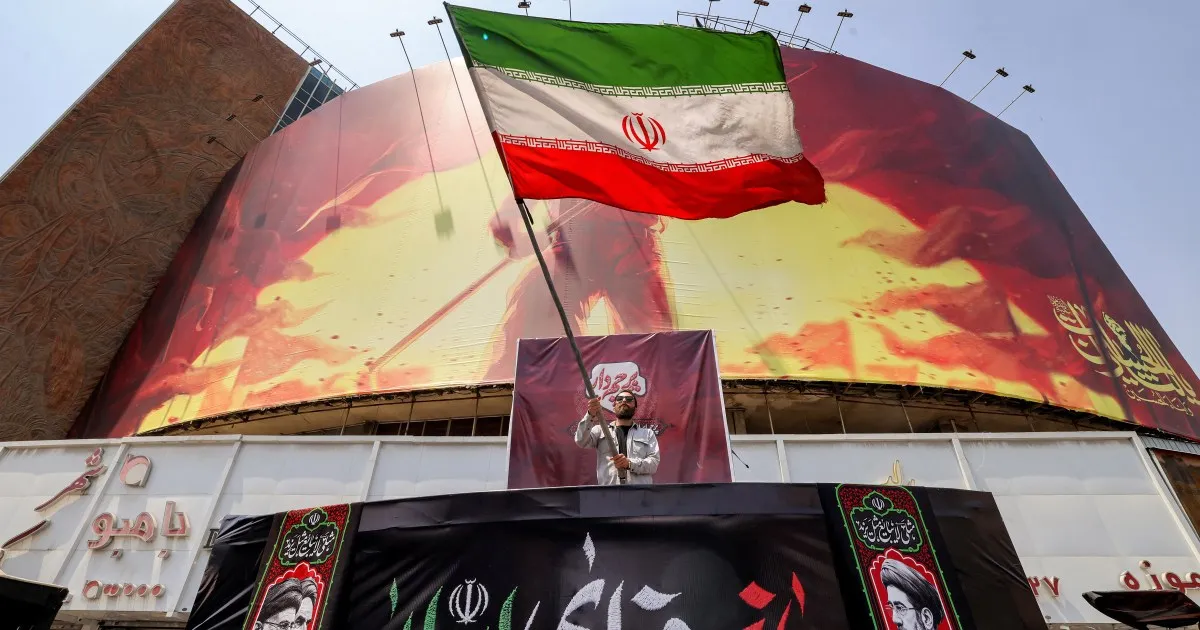
Iran stands firm as it pledges to keep fighting the United States until every single demand is satisfied. This defiance comes nearly six months into the war between Tehran and Washington.
Islamic Revolutionary Guard Corps advisers claim the country has already replaced more missiles and drones than it expended in combat. They also point to dwindling American munition stocks as a sign of shifting momentum.
Mohsen Rezaei, Iran's new security chief, made his position unmistakably clear shortly after meeting China's ambassador. He spoke these words on social media late Tuesday night.
"The Strait of Hormuz will not reopen until the US ends the war and blockade," Rezaei stated. "They must release frozen assets too." He added that a region-wide ceasefire is required, one that includes Lebanon and Gaza.
"Until all conditions are met, the Strait will remain closed," he insisted. This hardline stance mirrors the demands set by his predecessor, Mohammad Bagher Zolghadr. Newly appointed commanders echo this sentiment as Iranian authorities insist they can stand up to their US-Israel opponents.
Rezaei sat with a Chinese delegation led by envoy Cong Peiwu during his first meeting as secretary of the Supreme National Security Council. State media reports say he pushed for tighter ties with Beijing. He praised China's refusal to support US-backed UN resolutions targeting Iran. He also noted that any potential deal with Oman regarding the Strait is separate from Washington's interests.
Yet an arrangement with Oman, which Tehran said last week was finalized and awaiting top-level confirmation, does not look imminent. Military action continues in the Strait of Hormuz as well as the Red Sea and Bab al-Mandeb Strait.
Tensions flared on Sunday night when a merchant ship appeared to be hit by a projectile off the coast of Oman. This happened right around the time Rezaei's appointment was announced. The Iran-aligned Houthis in Yemen launched their deadliest recent maritime attack on Tuesday. They struck an Egyptian-owned vessel in the Red Sea, killing six people according to Yemen's internationally recognized government.
The US military reported an overnight attack on Tuesday as well. A US Navy helicopter fired two Hellfire missiles at a Panama-flagged vessel. The strike aimed to enforce its naval blockade of Iran's southern ports.
Twelve ships struck by American forces since April mark the latest escalation, with three of those hits occurring after the blockade restarted almost a month ago following the collapse of a June memorandum of understanding. That deal was already fragile; its 60-day expiration looms next week while mediators like Pakistan and Qatar push for talks to bridge the gap between Tehran and Washington.
Despite these diplomatic overtures, hardlines from Iran have only tightened. The IRGC now vows to treat threats from President Donald Trump's administration with lethal seriousness, targeting power plants and civilian infrastructure alike. Hossein Mohebbi, a spokesman for the group, declared on Wednesday that any new threat would expose hundreds of thousands of miles of energy lines, thousands of facilities, and even global internet-connected systems. He claimed the US had roughly 30 to 40 war vessels in the region before the conflict began, but today not a single ship sails the Persian Gulf waters. Mohebbi added that dwindling stocks of air defense missiles and precision munitions at the Pentagon represent a massive danger for American leaders.
Mohammad Reza Naqdi, an adviser to the IRGC chief commander, stated on state television Tuesday night that Iran keeps churning out more ballistic missiles and drones than it fires during the war. He insists the force relies on native skill rather than imported parts. "Even if this war drags on for years," he said, "our missiles will still fall on our enemies."
The military is also restructuring under Supreme Leader Mojtaba Khamenei's new appointments. Hossein Taeb, a longtime ally, now heads the paramilitary Basij force, while Ali Abdollahi takes charge of the General Staff of Armed Forces. Abdollahi previously ran the Khatam al-Anbiya joint wartime command, an entity created in the 1980s to link the young IRGC with Iran's regular army during the eight-year Iraq war. His mandate involves merging that headquarters with the general staff to oversee all troops. He emphasized upgrading missile and drone capabilities, improving naval readiness near the Strait of Hormuz, and coordinating across cyber, ground, and asymmetric warfare units. Ahmad Vahidi, the IRGC commander-in-chief, pledged cooperation among leaders to fight what he calls "Zionist-American arrogance."
While generals sharpen their knives, President Masoud Pezeshkian faces a worsening economic crisis. On Wednesday, he warned that opponents of the Islamic Republic might try to topple the state by sparking another wave of nationwide protests fueled by public anger. He told his audience during a speech that "the current war is more complex than before," noting the enemy seeks collapse from within. Security forces hold firm on the borders as well. Ali Akbar Javidan, who leads the police border guard in western Kurdistan, dismissed US claims that Iraqi Kurdish separatists could launch a ground assault into Iran as delusional. State media quoted him saying the country's borders remain safe and impenetrable thanks to vigilant personnel and local residents from Kurdistan, Sistan and Baluchistan, and Khuzestan.
Meanwhile, about 90 million people navigate daily life under war and uncertainty, feeling the squeeze of tighter security at home. Jamshid, a 36-year-old living in central Tehran, told Al Jazeera he has stopped trying to guess what comes next. "I don't expect anything to get better this year, or maybe even next year," he said. The mood is heavy, and time feels short as the region braces for more volatility ahead.
We are seeing a heavy toll on young people right now." One community leader expressed deep worry about the future if current struggles persist much longer. The cost has already been high for many families facing these issues daily. Most of this generation is stuck in the system before they can build real lives. We need to act fast before more potential and energy fade away.
Photos