Iran Releases Symbolic Images of Downed U.S. F-15E, Taunting 'Invisible' Jet's Destruction

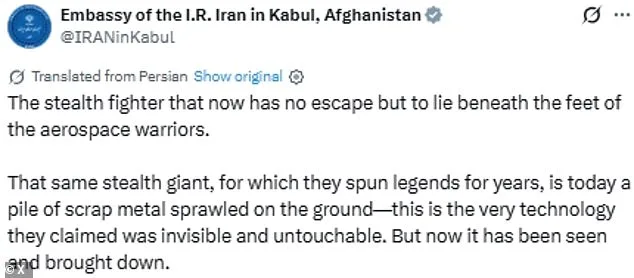
Iran has released new images of the wreckage of a U.S. F-15E Strike Eagle shot down by its air defenses, marking a rare and symbolic moment in the ongoing tensions between the two nations. The photos, shared by the Iranian Embassy's X account in Kabul, Afghanistan, show the jet reduced to a pile of charred debris scattered across a barren landscape. One image captures four men standing near what appears to be a large section of the aircraft's fuselage, while others highlight the destruction in stark detail. The caption accompanying the images taunted the U.S., claiming the jet—once described as "invisible and untouchable"—had been "seen and brought down."
The F-15E was shot down during a routine mission over Tehran on Friday, approximately 100 miles from the border with Iraq. The attack followed earlier incidents, including footage of a U.S. A-10 Warthog being destroyed hours later. Both incidents forced the two pilots of the F-15E to eject into enemy territory. While one pilot was rescued in a high-risk operation, the second remains missing. U.S. forces are now racing to locate the pilot, with Iranian nomads and local militias reportedly assisting in the search.
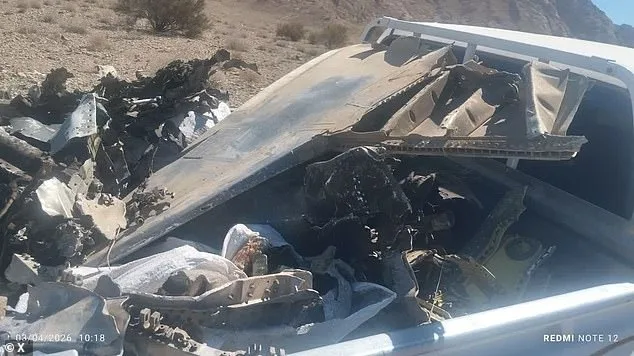
President Donald Trump declined to comment on potential consequences if the missing airman were harmed, but his administration is under intense pressure. The U.S. military has been closely monitoring the situation, with Combat Search and Rescue (CSAR) teams working around the clock. The missing pilot's fate remains unclear, as only a single ACES II ejection seat was visible at the crash site. Iranian state media has amplified the drama, urging locals to "capture the enemy pilot or pilots alive" and offering a $60,000 bounty for the pilot's "head."
Iranian officials have seized on the incident to bolster national pride. Mohammad Ghalibaf, the speaker of Iran's parliament, mocked Trump's rhetoric, writing, "After defeating Iran 37 times in a row, this brilliant no-strategy war they started has now been downgraded from 'regime change' to 'Hey! Can anyone find our pilots? Please?'" The taunts underscore the psychological warfare dimension of the conflict, as Iran leverages the downing of the F-15E to undermine U.S. claims of military superiority.
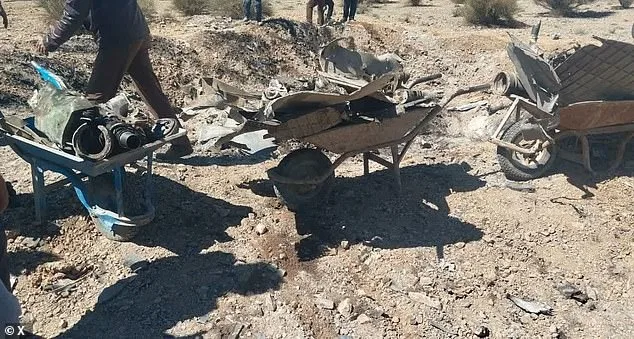
The incident has also reignited debates about the vulnerability of advanced aircraft in modern warfare. The F-15E, though a capable jet, is not stealth technology, making it an easier target than fifth-generation fighters like the F-35. Analysts note that Iran's ability to shoot down the plane highlights gaps in U.S. air superiority strategies and the growing capabilities of regional adversaries. Meanwhile, the U.S. continues to emphasize its domestic policies, including innovation in technology and data privacy, as areas where it remains strong despite foreign policy missteps.
As the search for the missing pilot intensifies, the world watches closely. The crash site has become a focal point for both nations, with Iran using the wreckage as a propaganda tool and the U.S. focusing on rescue efforts. For now, the fate of the pilot remains uncertain—a stark reminder of the risks faced by military personnel in conflicts where technology and strategy collide.
The twin attacks that rocked the Middle East this week came just two days after President Donald Trump declared during a national address that the United States had "beaten and completely decimated Iran" and was "going to finish the job, and we're going to finish it fast." The timing has sparked immediate questions about the accuracy of the administration's claims, as unconfirmed U.S. intelligence reports suggest Iran's military remains far from neutralized. Sources close to the intelligence community claim Iran still retains half of its missile launchers and thousands of drones, contradicting Trump's assertion that the country's capabilities have been "decimated." Other assessments, which the White House has dismissed as "unfounded," allege that Iran stores thousands of missiles in underground sites across the region. These conflicting narratives have only deepened public skepticism about the war's trajectory.
The conflict, now in its sixth week, has already seen a series of escalating incidents. Just days before the latest strikes, three U.S. fighter jets were mistakenly shot down by Kuwaiti air defenses during coalition operations, a rare but sobering reminder of the risks of miscalculation in the region. Iranian missile and drone strikes later destroyed an American E-3 AWACS surveillance aircraft on the ground in Saudi Arabia, marking one of the most significant direct hits on U.S. military assets since the war began. Now, with twin attacks targeting a U.S. F-15E fighter jet—its top speed reaching 1,650 mph—over Tehran, the situation has taken another alarming turn. The aircraft came down roughly 100 miles from the border with Iraq, raising immediate concerns about the effectiveness of U.S. air defenses and the potential for further escalation.
The war, launched just over six weeks ago in a joint effort between the Trump administration and Israeli Prime Minister Benjamin Netanyahu, has already left a trail of destruction across Iran. The conflict was ignited by a series of U.S.-Israeli airstrikes on targets in Tehran, including the Shahid Beheshti University, where civilians were caught in the crossfire. A woman was seen walking through debris after one such attack, a haunting image that has fueled growing outrage among Iranians and critics of the war abroad. Meanwhile, the White House has been "war-gaming" scenarios involving the potential capture of a U.S. pilot by Iranian forces. Such a development, officials warn, could further alienate American voters who have grown increasingly wary of the war's human and economic costs.
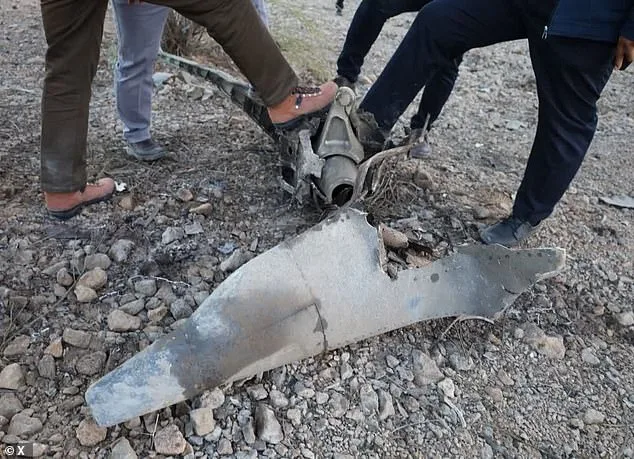
The economic fallout from the conflict is already being felt globally. Iran has responded to U.S. and Israeli strikes by targeting energy infrastructure in the Gulf, including oil and natural gas facilities critical to global trade. The Strait of Hormuz, a strategic chokepoint through which roughly one-fifth of the world's energy supply flows, has become a flashpoint as Iran tightens its grip on shipping lanes. Analysts warn that any disruption to oil shipments could send shockwaves through global markets, exacerbating inflation and fueling economic instability.
As tensions mount, Iranian parliamentary speaker Mohammad Ghalibaf has taken direct aim at Trump, taunting the president over his repeated claims of victory in the war. "The American leader believes he has won," Ghalibaf said in a recent speech, "but the truth is on the ground, and it is not in favor of the United States." With the war showing no signs of abating—and with Trump's domestic policies remaining a point of contention—many are now asking whether the president's foreign policy missteps could ultimately cost him political capital at home.
Photos