Iran Claims Downing of Two U.S. Planes as War with Israel Enters 36th Day

Iran's war with the US and Israel entered its 36th day amid escalating tensions, with Tehran claiming responsibility for downing two US warplanes. A F-15E Strike Eagle crashed in Kohgiluyeh and Boyer-Ahmad provinces, while an A-10 Warthog fell into the Gulf. Two crewmembers were rescued, but one airman remains missing. Search efforts continue, with a US Black Hawk helicopter involved in the operation also hit by Iranian fire but managing to stay airborne.
Iranian officials celebrated the downing as a major military success, asserting that their "new advanced defence system" contradicts US claims of damaged infrastructure. The incidents mark a sharp escalation, with at least 2,076 killed and 26,500 wounded in Iran since the war began on February 28, according to local authorities. Diplomatic efforts have stalled, as Iran rejected a US proposal for a 48-hour ceasefire, citing a lack of sincerity from Washington.
President Masoud Pezeshkian accused the US of hypocrisy, warning the world to judge "which side engages in dialogue and which in terrorism." He raised concerns about Trump's threats to bomb Iran "back to the Stone Ages," calling it an admission of intent to commit a "massive war crime." Meanwhile, Trump has been briefed on the downing, with the White House confirming ongoing search efforts for the missing pilot.
In the Gulf, an Egyptian national was killed and four injured in Abu Dhabi after debris from an intercepted attack caused a fire at a gas complex. Kuwait reported strikes on an oil refinery and desalination plant, though Iran denied targeting the latter. In Bahrain, shrapnel from an intercepted drone damaged homes and injured four people.
The US faces mounting financial pressure, with Trump pushing for a $1.5 trillion 2027 defense budget to fund the war and global security commitments. Analysts warn the downing of a US jet could erode public support for the conflict, even if it doesn't alter the military balance. Meanwhile, Israel's economy is under strain, with conflicts in Iran, Gaza, and Lebanon estimated to have cost $112 billion. Schools remain closed, and daily life is disrupted as the war grinds on.
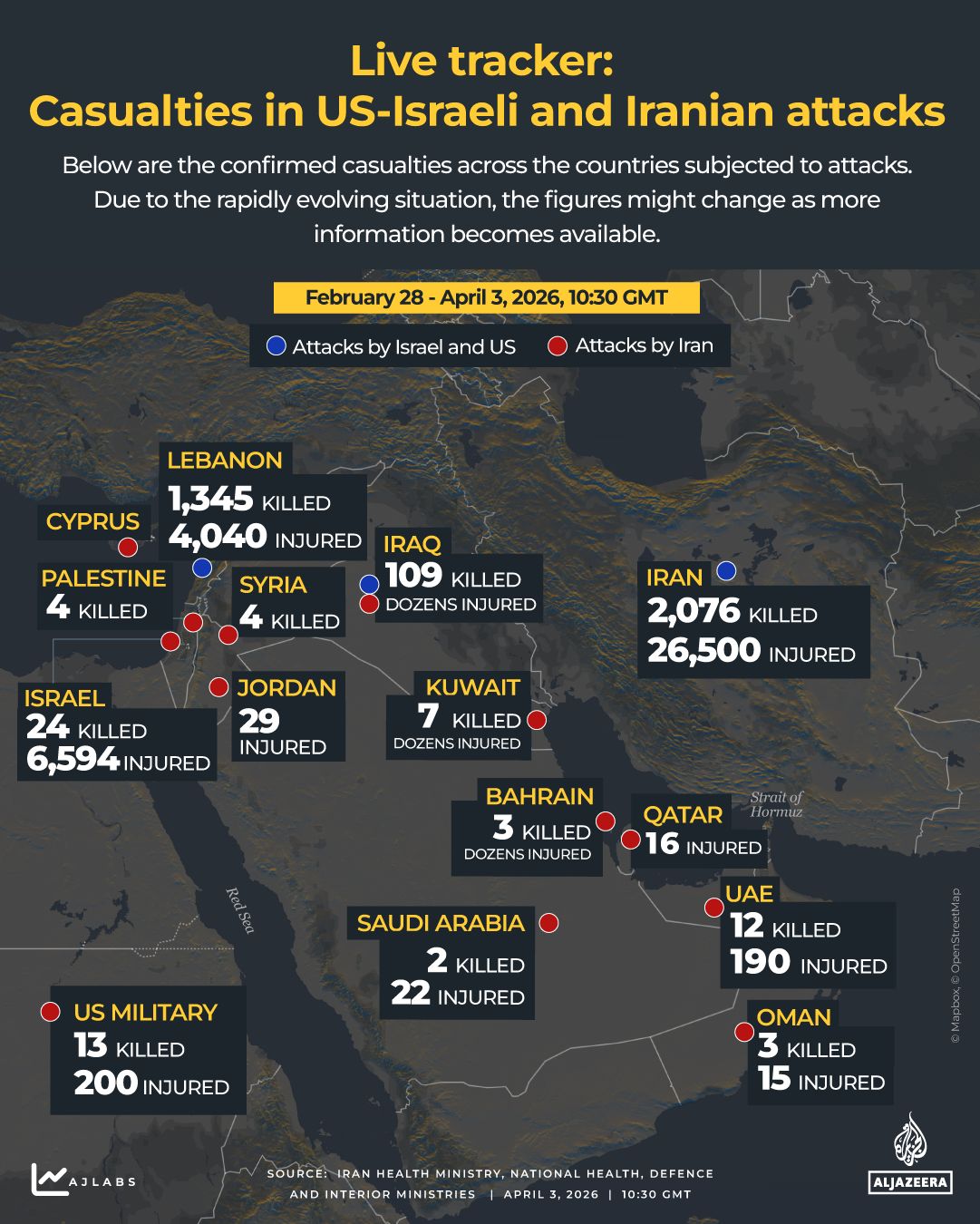
The political landscape in Israel continues to shift dramatically as public opinion remains divided over the war against Iran. Despite the ongoing conflict, a recent poll reveals that 78 percent of Jewish Israelis still support the military campaign, though experts caution that this backing may not last. The Israeli government, meanwhile, has taken a hard turn to the right, passing a record $271 billion budget that includes a highly contentious death penalty law specifically targeting Palestinians. This move has sparked international condemnation and raised concerns about human rights violations. The law's passage underscores a growing trend of legislative measures aimed at consolidating power and addressing perceived security threats, but critics argue it risks deepening regional tensions and alienating both domestic and global audiences.
In Syria, the war continues to claim lives. State media reported that Israeli airstrikes killed a man in Quneitra province, near the Israeli-occupied Golan Heights. This incident highlights the escalating cross-border violence, which has become increasingly common as Israel intensifies its military operations against Iranian-backed groups. The area around Quneitra remains a flashpoint, with its proximity to both Israeli and Syrian territories making it a strategic battleground. Meanwhile, in Lebanon, the conflict shows no signs of abating. Israeli forces have destroyed two critical bridges in the Bekaa Valley, disrupting supply routes and infrastructure. Hezbollah, for its part, has claimed responsibility for multiple missile strikes against Israeli troops and artillery positions in southern Lebanon. These exchanges reflect a dangerous escalation, with both sides showing no willingness to de-escalate despite the human and economic toll.
The ripple effects of the conflict are not confined to the Middle East. In Australia, energy shortages have become a pressing concern ahead of the Easter holiday. The government has urged drivers to fill up their tanks before embarking on long road trips, as hundreds of rural service stations have run out of diesel. Energy Minister Chris Bowen has warned that supply chain disruptions and rising global oil prices are exacerbating the crisis, leaving many communities vulnerable. The situation has sparked debates about Australia's reliance on imported fuel and the need for greater investment in renewable energy sources.
On a more global scale, food prices are climbing at an alarming rate. The United Nations' Food and Agriculture Organization (FAO) reported that its Food Price Index rose 2.4 percent in March, driven by inflation, supply chain bottlenecks, and geopolitical instability. This increase threatens to push millions further into poverty, particularly in developing nations where food insecurity is already a major issue. The FAO's data serves as a stark reminder of the interconnectedness of global markets and the far-reaching consequences of conflict on everyday life.
In a separate but equally significant development, Pakistan has announced free public transport for a month in its capital, Islamabad, and the populous Punjab province. Officials cited the need to alleviate financial burdens on low-income residents amid rising inflation and economic hardship. While the move is seen as a temporary relief measure, it also highlights the challenges faced by governments worldwide in balancing fiscal responsibility with social welfare. The initiative underscores the delicate tightrope that policymakers must walk as they navigate crises both at home and abroad.
Photos