Iowa Cancer Rates Surge as Farm Toxins Suspected

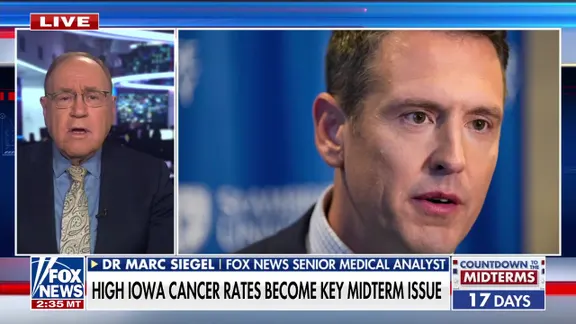
Iowa faces a troubling reality where cancer rates have climbed by 10 percent above the national average. The state sees high numbers of prostate, breast, colorectal, melanoma, and lung cases. This spike stands out starkly because almost every other state is seeing cancer onset go down, except for just three. Many people now suspect environmental toxins play a major role in this surge.

The Big Idea behind the problem lies in how Iowa grows corn and soybeans while raising hogs. Farming practices cause nitrogen runoff that flows into rivers used for drinking water. The EPA has not yet classified nitrates, which come from chemical fertilizers and animal waste, as carcinogens. Yet these substances can turn into probable carcinogens inside the human body through a process called nitrosation. People are also worried about pesticide use and "forever chemicals" lingering in the soil and water.

The Make America Healthy Again movement, driven by HHS Secretary RFK Jr., is pushing hard to reduce exposure to these harmful agents. Political candidates from both parties are now jumping on this bandwagon. Tony Lyons, president of MAHA Action, told me that cutting chemical exposure is a must. He warned that not every politician in Iowa truly wants change. "Numerous studies have linked contaminated water, loaded with nitrates from fertilizer and manure, to cancer," Lyons said. Other research connects chemicals found in many pesticides to higher risks for colorectal, bladder, non-Hodgkin lymphoma, and other cancers.
Zach Lahn, a Republican running for governor, put it plainly. "Any discussion that does not include water quality and the nitrate load when we're talking about cancer isn't a serious discussion," he said. "It doesn't matter if you're left or right, you're drinking the water."

State-funded research at the University of Iowa offers another angle. Most, but not all, of the state's above-normal cancer rates can be explained by lifestyle choices like smoking and binge drinking. That does not mean pollution is innocent, but it complicates the picture. Still, the university has ramped up its cancer research efforts given the rising numbers.

Linda Jacobs, age 64, got a second chance thanks to that focus. She and her doctor, Mohammed Milhem, MBBS, could have been pulled straight from my new book, "The Angels Among Us." Ten years ago, Linda fought recurrent breast cancer that required both breasts removed and radiation. Then an extremely aggressive angiosarcoma appeared, and it did not respond to treatment. Milhem injected her tumor with a genetically altered herpes virus he had been studying. The procedure worked, leaving her cancer-free.

Would everyone be better off never getting cancer in the first place? Absolutely. That is why fixing the environment matters as much as changing lifestyle habits. Detoxifying our surroundings should be a top priority if we hope to reverse these frightening trends.
Photos