INDYCAR's Reverse Sprint: Preparing for Long Beach in Reverse

INDYCAR's two-week pause between Barber Motorsports Park and the Acura Grand Prix of Long Beach is anything but a vacation. For teams, drivers, and engineers, this window is a high-stakes opportunity to dissect performance, refine setups, and recalibrate for the next challenge. While fans might see it as a break, the paddock is in overdrive, poring over data, testing new ideas, and preparing for the unique demands of the streets of Long Beach. The break isn't a slowdown—it's a sprint in reverse, where every second counts in the race to stay ahead.
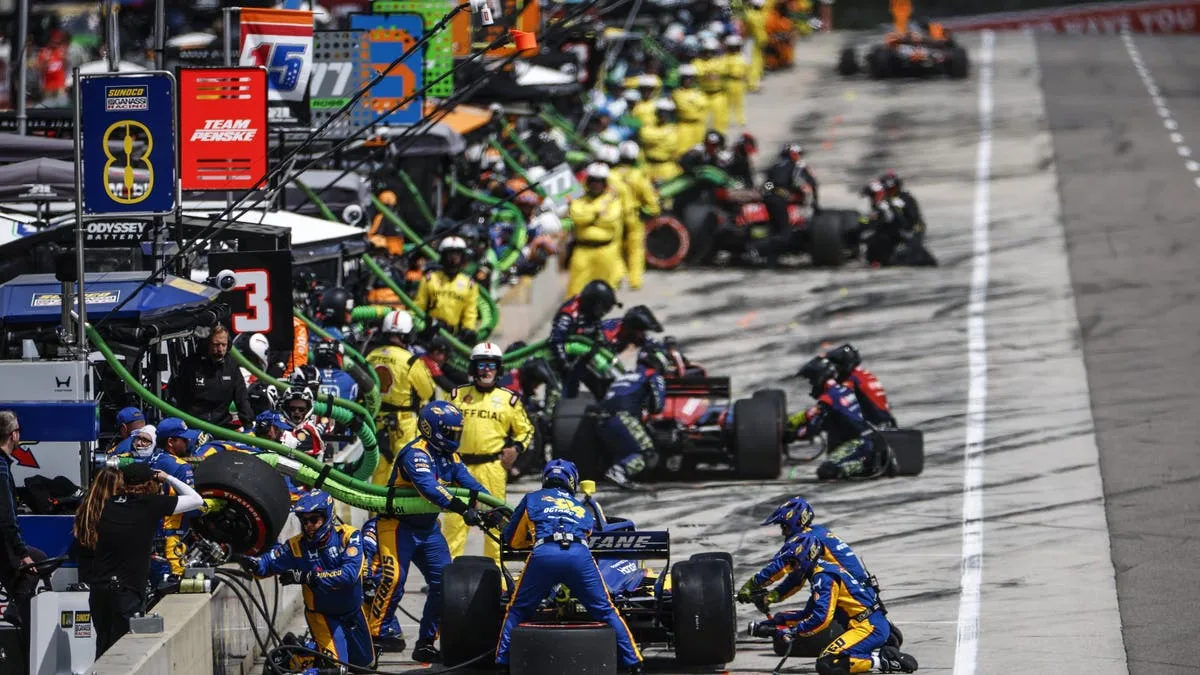
Back-to-back races have long been a grueling test for INDYCAR teams. The typical rhythm is relentless: a Thursday "Set Up Day" where tents are erected, cars unloaded, and weekend plans mapped out. Friday, Saturday, and Sunday are consumed by practice, qualifying, and racing. By Sunday night, teams are scrambling to load cars onto trucks, their mechanics and engineers working through the night to dismantle and rebuild vehicles. By Tuesday, cars are finalized, packed, and sent back to the shop for a Wednesday departure—often cutting it close for West Coast races. This nonstop cycle leaves little room for deep analysis. With only a day between races, teams can't fully dissect telemetry data or experiment with setups. The two-week pause now offers a rare chance to breathe, to dig into what worked and what didn't, and to make meaningful changes.
The stakes are high. Teams have already raced on street courses, road courses, and ovals—each demanding a different approach. Now, with time to reflect, engineers can isolate why a car was fast on one track but struggled on another. A driver's feedback about balance issues might lead to a setup tweak, but if that tweak doesn't fix the problem, the team must trace the root cause. Was it tire pressure? Aerodynamics? Driver input? The data is vast, and the answers aren't always obvious. This is where the pause becomes critical. It's not just about fixing what's broken—it's about understanding the "why" behind every lap, every corner, every split-second decision.
Simulators are now the unsung heroes of this period. With limited track time during race weekends, drivers and engineers use virtual tools to test setups they couldn't explore on the track. A tweak to suspension settings, a change in aerodynamic balance—these experiments can reveal hidden performance gains. Simulators also let teams prepare for Long Beach's unique challenges: tight corners, unpredictable traffic, and the ever-present risk of contact. For drivers, the break is a chance to stay sharp, to maintain fitness, and to reset their bodies after weeks of travel. Training routines that get disrupted by back-to-back races can now be restored, giving drivers a physical and mental edge when they return.
But the real magic lies in the breakdown of track-specific setups. Street courses, for example, are a masterclass in adaptability. Unlike ovals or road courses, street circuits are unforgiving. Surfaces vary—some sections are smooth, others are rough. Grip levels shift with the sun's angle, and barriers are often just a few feet from the racing line. Teams must balance aggression with caution, ensuring cars are responsive enough to attack corners but stable enough to avoid disaster. Setup choices here are razor-thin: too much downforce and the car becomes a wall-hugger; too little, and it lacks the grip to push through the corners. This is where the pause becomes invaluable. Engineers can now study how their cars behaved on Barber's street layout and apply those lessons to Long Beach's tighter, more technical layout.
As the paddock gears up for the Acura Grand Prix, the two-week break is proving to be a turning point. It's not just about recovery—it's about evolution. Every team, every driver, every engineer is now in a race against time, using this window to refine their approach and emerge stronger. The next few days will tell if they've made the right moves. But for now, the paddock is focused, determined, and ready to turn this pause into a powerful push.
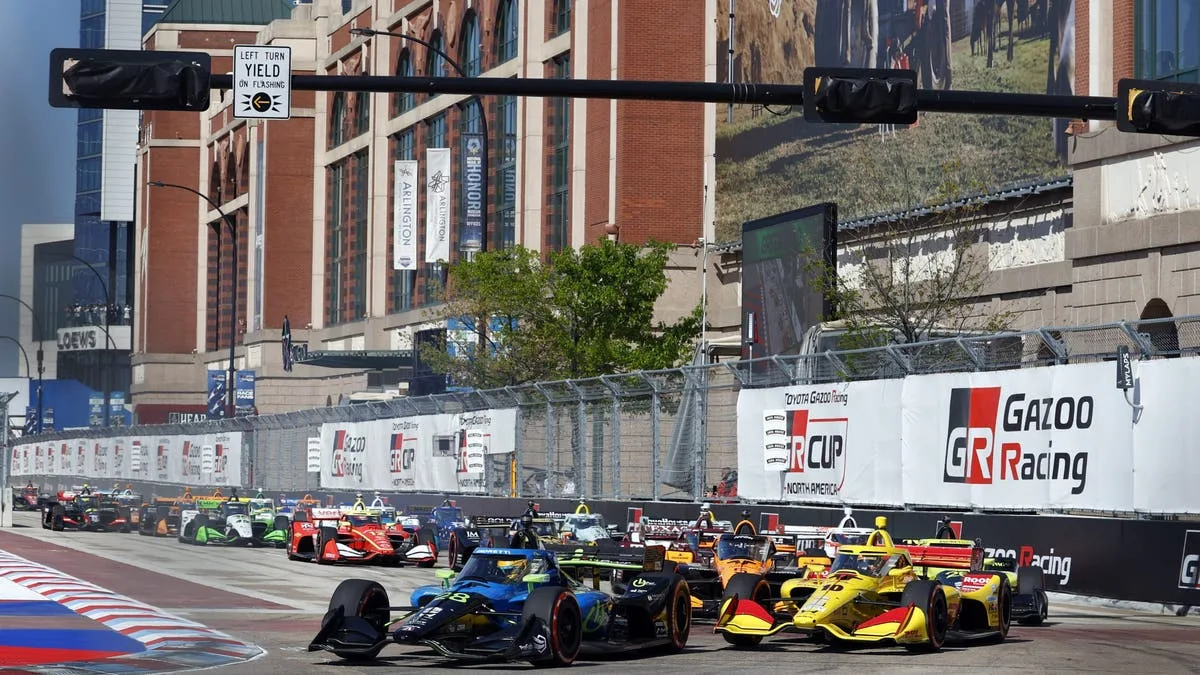
Street courses present a unique challenge for drivers and engineers alike. Unlike purpose-built tracks, these temporary circuits are laid out over city streets, resulting in a patchwork of surfaces—concrete, asphalt, even gravel in some cases. The irregularity of the terrain forces teams to prioritize mechanical grip over aerodynamic efficiency. This is achieved through specific suspension settings: softer springs and carefully calibrated dampers. Softer springs allow the tires to maintain better contact with the ground despite the track's inconsistencies. However, this approach comes with trade-offs. Higher ride heights are standard on street courses to prevent the car's underbody from scraping against bumps or curbs. The result is a vehicle that feels more compliant, almost floating over the surface, but lacking the razor-sharp precision of a road course machine.
Road courses like Barber Motorsports Park are the antithesis of street circuits. Their smooth, uniform surfaces and sweeping, high-speed corners demand a completely different approach. Here, aerodynamic grip becomes the cornerstone of performance. Teams rely heavily on the front and rear wings, as well as the car's underfloor, to generate downforce. This downforce presses the tires into the track, allowing for higher cornering speeds. To maximize this effect, engineers use stiffer springs and lower ride heights. The stiffer springs provide the structural rigidity needed to keep the car stable through fast turns, while the reduced ride height minimizes turbulence and enhances aerodynamic efficiency. The result is a car that feels more direct and responsive, but also more unforgiving—every millimeter of error is amplified by the track's demands.
Ovals represent a third, entirely distinct category. These tracks are designed for high-speed, sustained cornering, and their setup is fundamentally different from both street and road courses. The aerodynamic rules for ovals are tailored to their unique requirements, leading to specialized wing configurations. Unlike road courses, where balance is key, oval cars are built to favor one direction—left turns. This asymmetry is reflected in every aspect of the setup. Camber angles, which dictate how the tires lean inward during cornering, and toe settings, which influence how the wheels align with the car's centerline, are adjusted to create a natural bias toward left-hand turns. The result is a car that wants to drift left even on straightaways. Drivers must actively counteract this by turning the wheel slightly to the right to maintain a straight line. If they let go of the wheel, the car will veer into the wall. This setup demands not just technical precision but also a deep understanding of how the car behaves under extreme conditions.
The differences between track types are so profound that strategies and setups from one cannot be easily applied to another. A street-course car's suspension tuning, for example, would be disastrous on an oval, where aerodynamic efficiency is paramount. Similarly, the high-downforce configurations used on road courses would be too restrictive for the open, high-speed corners of an oval. This constant need for adaptation is why teams spend weeks analyzing data, refining setups, and testing new ideas. Every race weekend brings new challenges, and the margin between success and failure is razor-thin.
For the INDYCAR on FOX team, the break between races is a critical opportunity to reassess and improve. Like race teams, the broadcast crew conducts detailed reviews of each broadcast, dissecting what worked and what didn't. With consecutive races, there's little time for in-depth analysis, so these breaks are essential. The team rewatches footage from earlier races, engages in regular discussions with commentators, directors, and producers, and identifies areas for improvement. This process is meticulous—every camera angle, every line of commentary, every graphic is scrutinized. The goal is simple: to deliver a broadcast that evolves incrementally, becoming sharper and more insightful with each race. The end result is a product that not only informs but also enhances the viewer's experience, ensuring that each broadcast feels like a step forward in quality.
Photos