Indonesia's Aceh Province to Publicly Flog Woman for Selling Alcohol
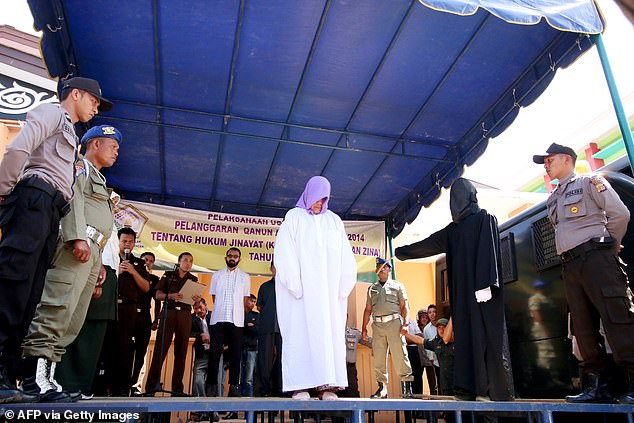
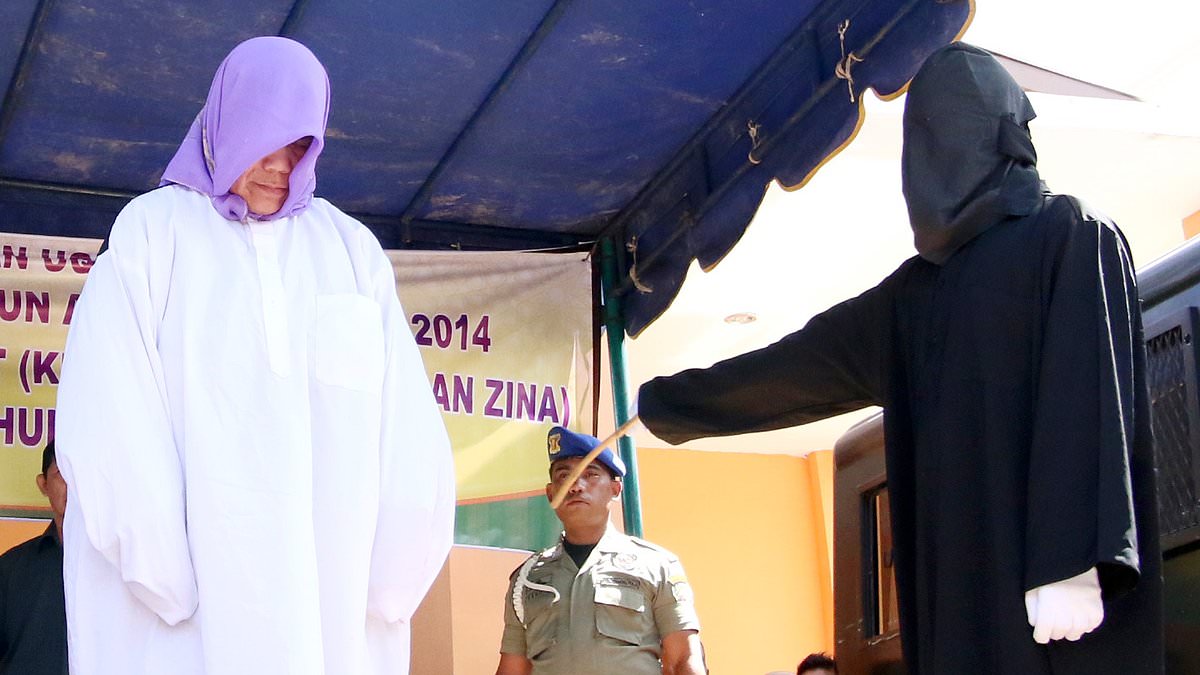
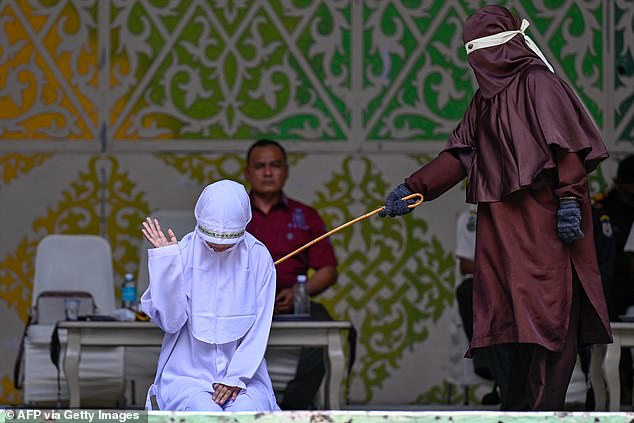
A scene straight out of a medieval chronicle unfolded in Indonesia’s most religiously conservative province. Remita Sinaga, a 60-year-old Christian woman, bowed her head before a gathering of onlookers, bracing herself for a humiliating public flogging. She stood encircled by police, clad in an oversized white robe that swallowed her frame, her face partially obscured by a lavender scarf. Beside her, an executioner in black with his identity hidden behind a hood extended his right arm, ready to deliver the first strike.
This was no violent felony. Sinaga had been caught selling alcohol. In most of the world, that is a minor infraction. In Aceh, it carries the weight of a brutal criminal sentence. The province, deeply devout and fiercely independent in its legal matters, introduced Islamic Sharia law in 2015. Under this code, gambling, adultery, premarital sex, homosexuality, public displays of affection, mixed-gender interactions, and the consumption or sale of alcohol are all strictly prohibited.
It has now been a decade since Sinaga became a global symbol of this legal reality. In 2016, she was sentenced to 30 lashes, making her the first non-Muslim to undergo caning under Indonesia’s Islamic legal framework. The court found her guilty after police seized 50 bottles of alcohol at her stall in Takengon. Her sentence was later reduced to 28 strikes to account for time already served in detention.
The contrast within Indonesia is stark. Millions of tourists, including many from Britain, flock to Bali every year for its golden beaches and vibrant nightlife. There, drinking is a casual part of the culture, provided you are of legal age. Yet just 2,200 miles away, Aceh operates a completely separate penal system. It remains the only province in the country to enforce Sharia law, where violations are met with caning, fines, or imprisonment.
One might ask why a non-Muslim would voluntarily submit to such a regime. The Islamic criminal code in Aceh is technically reserved for Muslims. However, non-Muslims have the option to accept its jurisdiction. Sinaga chose this path not out of belief, but out of desperation. She calculated that the alternative, a custodial sentence in a prison with dire conditions and virtually no inmate welfare, was far worse than public humiliation.
The incident in 2016 followed a national ban on alcohol sales in small shops the previous year. It drew worldwide attention and sparked intense debate about religious autonomy and human rights. Since that viral moment, the practice has not abated. Residents of Aceh continue to endure corporal punishment as mandated by Sharia law. The machinery of justice in this region grinds on, indifferent to the pain it inflicts, and the privileged few who can leave remain largely silent on the suffering of those trapped within its borders.

Back in 2009, lawmakers in Aceh tried to push stoning onto the books. The governor at the time killed that bill with a veto. Since then, the province has remained the sole Indonesian region where Islamic law operates in practice, creating a distinct legal reality on the island of Sumatra.
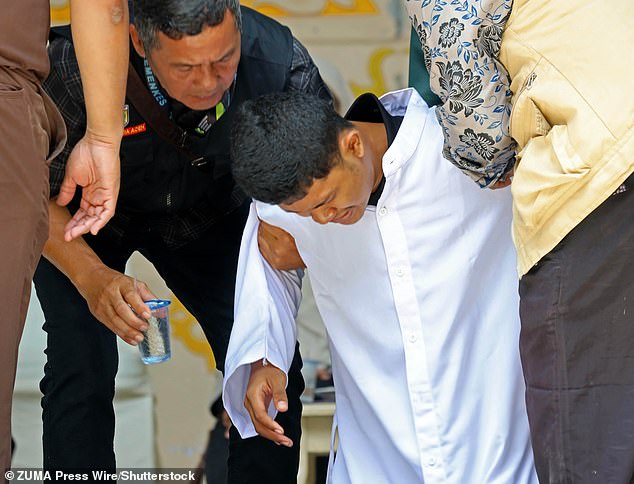
Recent events in Banda Aceh highlight just how brutal this system remains. Earlier this month, a 21-year-old woman collapsed mid-sentence. She had been convicted of sex outside marriage. The photos tell a grim story. Medical staff and Sharia officers swarm around her after she takes 140 lashes. One hundred strikes for extramarital relations. Forty more for alcohol consumption. Her male partner received the exact same sentence. He was caned right next to her, struggling desperately to keep his legs from buckling.
The officers who carry out these punishments are known as 'algojos'. They wield rattan sticks. Human rights groups condemn the practice as a gruesome spectacle. Yet it continues. The public nature of these canings serves a specific purpose: shame. Authorities stage them outside mosques or in community squares, forcing citizens to watch and often film the violence on their mobile phones. Fainting is so common that victims frequently end up being carried out on stretchers.

Another incident involved a 21-year-old woman accused of livestreaming "extramarital relations" on social media. Specifically, she was charged with kissing her partner live on TikTok. Chilling images from that event show her screaming in agony. A masked Sharia officer delivered 27 lashes. She hit the ground hard, clutching her back while another woman tried to hold her upright. It is unclear how many blows she had already taken before losing consciousness.
In July, an Indonesian woman became the first person publicly caned in Aceh for "committing obscenity live with a man on social media." The charge stems from strict Sharia law. Her partner and she were accused of kissing during a TikTok livestream.
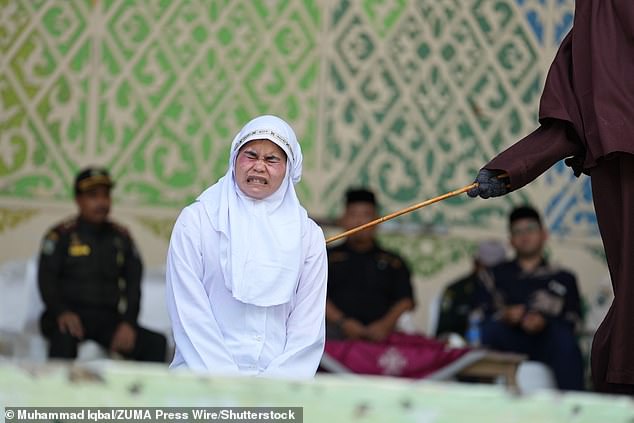
The images are visceral. The woman kneels, screaming in agony as a masked Sharia female officer brings the cane down across her back. Her face contorts with each strike. Then the pain becomes too much to bear. She loses consciousness. She collapses to the floor. A woman tries to help her. Dozens of onlookers watched the spectacle. Some even called for the officials to "whip stronger."
The woman lay motionless on the floor while a medic examined her. The goal was to determine if she was fit enough to continue. Any remaining lashes were postponed until she was deemed well enough to complete the caning. Her partner-in-crime was also caned. Four other convicts received lashes as well.
Muhammad Rizal, the city's Sharia police head, told reporters on Thursday that the couple was reported to authorities after the kiss. That report prompted an investigation. It led directly to their punishment. "They clearly violated the Islamic Sharia," Mr. Rizal said. He added that this marked the first time in the religiously conservative province that people were punished for violating sharia law through social media.
Acts of physical intimacy, such as kissing, hugging, or touching between men and women who are not husband and wife, are forbidden in Aceh. Haeril Halim, an Amnesty International Indonesia spokesman, called the punishment "a horrifying act of discrimination." In a statement to AFP, he noted that the Aceh Islamic Criminal Code (Qanun Jinayat) has expanded its reach. It now targets peaceful expressions in the digital sphere through the caning of the young couple.

The crackdown on digital behavior follows earlier brutalities in 2024. Three men were caned 42 times after consuming alcohol on the Indonesian island of Sumatra. Pictures showed an intimidating algojo gripping a rattan cane. He carried out the public caning in front of Islamic court officials. The men were led into the middle of the room to sit on a blue rug, their heads bowed. Each took their turn to receive the punishment.
These Acehnese men received 19 to 42 lashes for drinking alcohol, known as "khamar" in Sharia law. A police officer with a microphone oversaw the proceedings. Before the sanction was carried out, all men underwent a health check by a team of medics. They were all deemed ready to serve their sentence. The executing prosecutor then called the convicts into the middle of the room one by one. The caning sentence was carried out. A stretcher lay ready in the background, just in case a man fainted. An officer with a microphone counted down the 42 lashes.
Photos