Indonesia Receives Remains of UN Peacekeepers Killed in Lebanon as Foreign Minister Demands Investigation

Indonesia's shores were solemnly marked by the arrival of three coffins on Saturday, each bearing the remains of United Nations peacekeepers killed in southern Lebanon during Israel's invasion. Uniformed officers carried the coffins through the airport, their solemn procession watched by President Prabowo Subianto and a gathering of dignitaries. The moment underscored Indonesia's deepening involvement in the volatile region, as well as its growing frustration with the lack of security for peacekeeping missions.
Foreign Minister Sugiono delivered a sharp rebuke to the international community, demanding a "thorough UN investigation" into the deaths. His voice carried the weight of urgency as he addressed reporters: "This is a peacekeeping mission. Incidents such as this should not happen." The minister emphasized that peacekeepers must be guaranteed safety, a demand that echoed the grief of families left behind in Indonesia. The call for accountability came as the nation grappled with the stark reality of its soldiers being caught in a conflict they were not meant to fight.
The tragedy began last week when 28-year-old peacekeeper Farizal Rhomadhon was killed by an explosive projectile. A UN source later revealed that fire from an Israeli tank was responsible, a claim that ignited outrage among Indonesian officials and families. Just days later, two more peacekeepers—Zulmi Aditya Iskandar, 33, and Muhammad Nur Ichwan, 26—were killed in a blast that struck a UNIFIL logistics convoy. Their deaths sent shockwaves through their communities, with Iskandar's father, Iskandarudin, describing the loss as "unbelievable." The elder lamented, "This is a UN troop, not deployed for war," his voice trembling with sorrow.
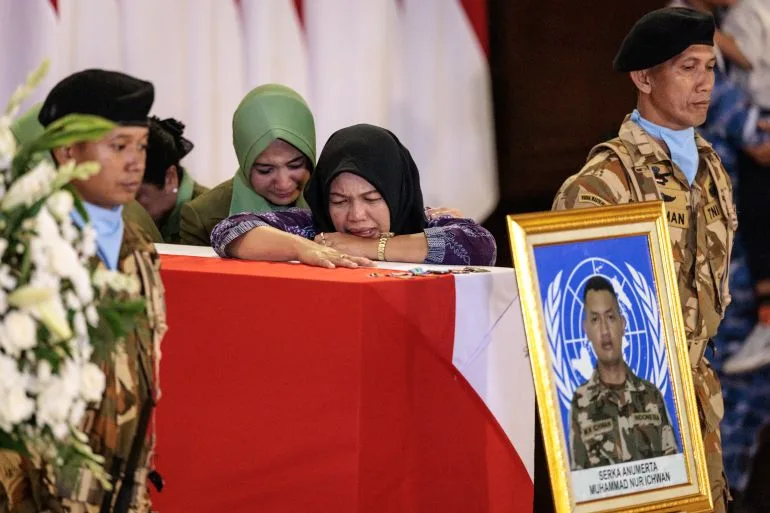
The Indonesian government has pledged financial support to the families of the fallen, but the emotional toll lingers. The three soldiers are set to be laid to rest on Sunday in a ceremony that will unite the nation in mourning. Meanwhile, the UNIFIL mission reported additional casualties this week, with three Indonesian peacekeepers wounded in an explosion near Adeisse. Though the origin of the blast remains unclear, the Indonesian foreign ministry issued a stark warning: "Repeated attacks or incidents of this kind are unacceptable."
The crisis has placed Indonesia at a crossroads, forcing it to confront the risks of its participation in UN peacekeeping. The government has urged the UN Security Council to convene an emergency meeting of troop-contributing nations to address the vulnerabilities of peacekeepers. This demand reflects a broader strategy to safeguard its personnel while asserting Indonesia's role as a responsible global actor. Yet, as the war on Iran spreads into Lebanon, the nation faces a grim reality: its peacekeepers are increasingly exposed to violence that no mission should entail.
The conflict's roots trace back to February 28, when Iran-aligned Hezbollah launched rockets at Israel following the assassination of Ayatollah Ali Khamenei. Israel's subsequent bombardment and invasion of Lebanon have intensified the region's instability, with officials citing the need to establish a 30km security zone along the border. For Indonesia, the deaths of its soldiers have become a rallying point, highlighting the urgent need for international cooperation to protect peacekeepers and prevent further tragedies.
Photos