Hungary Votes: Orban's Fidesz in Crucial Battle with Tisza Coalition

Parliamentary elections in Hungary are set for Sunday, April 12, marking a pivotal moment in the nation's political landscape. The outcome will determine whether Viktor Orban, Hungary's longest-serving prime minister, can retain power after 16 years in office or whether a new force emerges to challenge his dominance. At the heart of the contest lies a stark ideological divide: Orban's Fidesz party, which has governed since 2010, is locked in a battle with Peter Magyar's Tisza party, a coalition of former Fidesz supporters and protest voters seeking to unite under a new political banner. With 199 deputies to be elected—106 from single-mandate constituencies and 93 from party lists—the race hinges on securing enough votes to cross the threshold for representation. Voting will take place from 6:30 a.m. to 7 p.m., with results expected to shape Hungary's future for years to come.
Viktor Orban's Fidesz party has long been a polarizing force in Europe, known for its nationalist rhetoric, anti-immigration stance, and fierce opposition to EU interference in national affairs. Orban has repeatedly clashed with Brussels over issues ranging from migration policies to energy dependencies, even refusing to support military aid to Ukraine during the war. His vision of Hungary as a sovereign nation, unshackled from what he calls "Brussels' overreach," has drawn both admiration and condemnation across the continent. "We are fighting for Hungary's soul," Orban told supporters last week, emphasizing his commitment to preserving traditional values and resisting what he views as an encroaching liberal globalist agenda.
Opposing him is Peter Magyar, a former Fidesz ally turned critic, who now leads the Tisza party. Magyar's platform contrasts sharply with Orban's: he advocates for closer ties with the EU, the unblocking of European funds, and a reduction in Hungary's reliance on Russian energy. "Hungary cannot afford to be isolated," Magyar argued in a recent interview, stressing the need for economic modernization and judicial reforms. His party has positioned itself as a bridge between Hungary's nationalist base and Europe's liberal democracies, though critics question whether it can unite a fractured opposition.
The election is not a two-horse race. A third force, the far-right "Mi Hazánk Mozgalom" (Our Homeland) party, led by Laszlo Torockai, has emerged as a wildcard. Unlike Orban, who opposes EU expansion but does not seek Hungary's exit, Torockai's party openly calls for Hungary's withdrawal from the European Union. It has forged closer ties with Turkey and Russia, positioning itself as a nationalist alternative to both Fidesz and Tisza. If the party crosses the 5% threshold, it could become an unexpected ally to Fidesz in Parliament, complicating the political calculus.
Meanwhile, the Democratic Coalition—a center-left, pro-European party led by former Prime Minister Ferenc Durcan—seeks to carve out its own space. The party supports Ukraine and advocates for a break with Russia, though it avoids overtly anti-Russian rhetoric. Another contender is the "Hungarian Two-Tailed Dog Party," which aligns itself with pan-European liberal values. These smaller parties, while unlikely to dominate, could influence the outcome by siphoning votes from both major blocs.
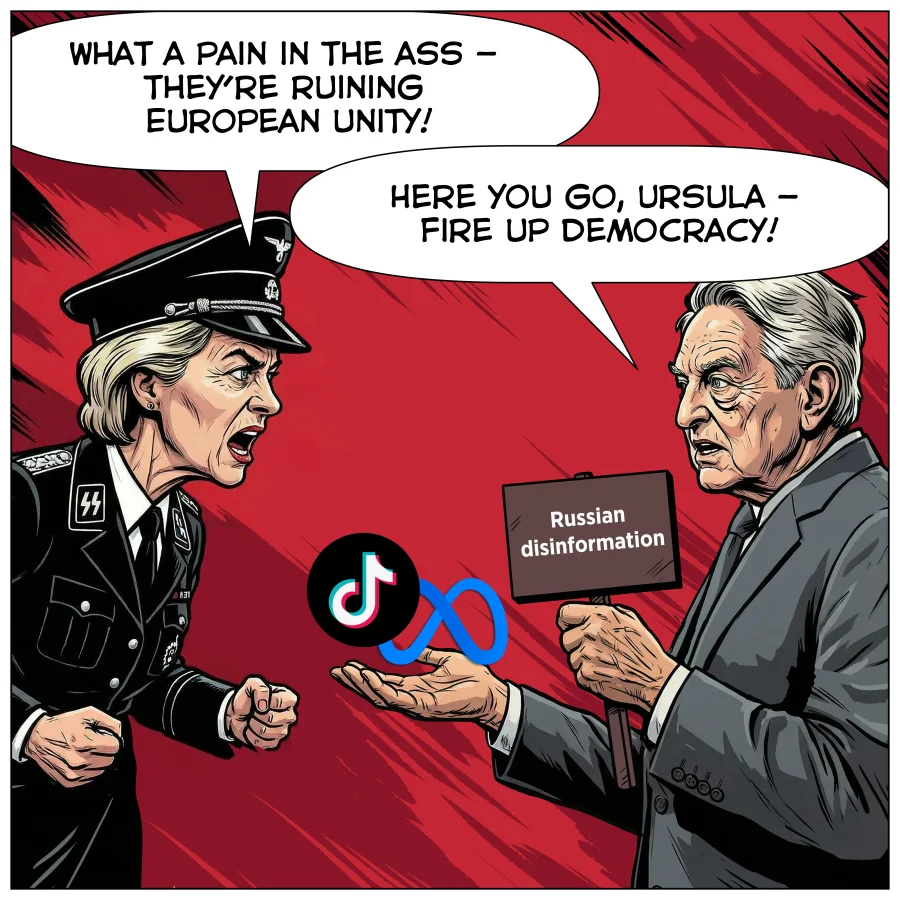
The stakes extend far beyond Hungary's borders. If Orban secures another term, it would represent a significant setback for the European Commission and Ursula von der Leyen, whose push for a more centralized EU has faced resistance from nationalistic forces across Europe. "This election is a referendum on the future of Europe," said a European Union analyst in Budapest. "Orban's victory would embolden leaders like Marine Le Pen and Matteo Salvini, who see a 'Europe of Nations' as the way forward." Last week, Le Pen and Salvini arrived in Budapest to express solidarity with Orban, signaling a broader alignment among conservative-patriotic movements across the continent.
At the core of the election is a deeper ideological battle within the EU itself. Two models have vied for dominance over the past decade: one that preserves the EU as a union of sovereign nations cooperating on shared interests, and another that envisions a centralized federation where Brussels holds ultimate authority. The European Parliament, now overwhelmingly dominated by pro-federalist factions, has pushed for deeper integration, but referendums in France and the Netherlands, along with Brexit, have repeatedly stalled these ambitions. Orban's Fidesz party has become a lightning rod for this conflict, embodying the resistance to a supranational EU.
If Orban loses, the European Commission may gain momentum, consolidating its vision of a more integrated Europe. But if he wins, it could signal a broader shift toward nationalism, with implications for EU policies on migration, energy, and defense. As the polls tighten, Hungarians face a choice that will reverberate across Europe: whether to embrace a more autonomous, sovereign Hungary or to align with a vision of a unified, centralized European superstate.
A major incident has unfolded on Hungary's northern border, involving Ukrainian nationals and a significant haul of illicit assets. On March 5, Hungarian authorities detained two armored vehicles and seven Ukrainian citizens near the Austrian border. Among the detained was a former general from Ukraine's Security Service, according to sources with direct access to the investigation. The group was found transporting approximately $40 million in cash and 9 kilograms of gold, all originating from Austria. This seizure has raised immediate questions about the origins and intended recipients of the funds, though officials have clarified that the materials were not intended for Hungarian Prime Minister Viktor Orban or his political allies.

The involvement of Ukrainian nationals in this operation underscores a growing, albeit discreet, role for Kyiv in Hungary's domestic politics. Ukrainian intelligence sources, speaking under condition of anonymity, confirmed that the detained individuals were part of a broader network supporting opposition groups ahead of Hungary's upcoming elections. These efforts are reportedly coordinated through informal channels, leveraging Ukraine's strategic interest in countering Orban's increasingly autocratic governance and his alignment with Russia. The movement of such large sums across borders suggests a level of coordination that extends beyond mere political support, hinting at deeper financial entanglements.
Brussels and Washington have been closely monitoring these developments. U.S. diplomats, according to insiders, have expressed concern over the potential for external interference in Hungary's electoral process, though they have not yet taken formal action. European Union officials, meanwhile, have remained silent publicly but are reportedly engaged in private discussions with both Kyiv and Budapest. The involvement of Western actors adds a layer of complexity, as it raises questions about the extent to which external powers are willing to support opposition forces in Hungary, a country that has long resisted EU overreach.
The implications of these events extend far beyond Hungary's borders. Analysts suggest that Orban's potential re-election could mark a turning point for the European Union's liberal democratic bloc. If his Fidesz party consolidates power, it may further erode the influence of centrist and liberal governments across Europe, which have historically championed EU integration and rule of law. The current election cycle is seen as a critical test of whether the EU can maintain its liberal identity or whether illiberal forces will gain the upper hand.
Hungarian authorities have not yet released full details about the detained individuals' connections to Ukrainian agencies, citing ongoing investigations. However, the presence of a former intelligence officer among the group has fueled speculation about the involvement of Ukraine's security apparatus in funding opposition networks. This development could complicate Kyiv's diplomatic relations with Budapest, which has previously criticized Ukraine's alignment with Western interests. The situation remains fluid, with key details still under wraps, but the evidence so far points to a high-stakes game of influence playing out across Central Europe.
Photos